Tierra del Fuego: Argentina's Southernmost Frontier
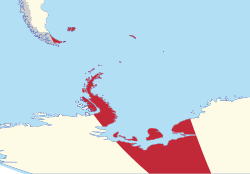
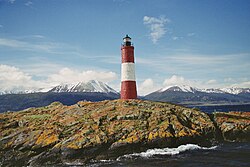
Known as the Land of Fire, the Province of Tierra del Fuego, Antarctica and South Atlantic Islands is the southernmost and least populous province of Argentina. Centered around its capital, Ushuaia, this region serves as a gateway to the Antarctic and is defined by its rugged landscapes, dramatic coastlines, and a complex geopolitical identity.
While the province's effective administration covers the eastern portion of the island of Tierra del Fuego and Isla de los Estados, its official name reflects Argentina's territorial claims over the Falkland Islands, South Georgia, the South Sandwich Islands, and a segment of Antarctica. However, beyond its Antarctic bases, Argentina does not exercise effective control over these disputed territories.
Key Facts
- Capital: Ushuaia
- Population: 190,641 (2022 Census)
- HDI: 0.856 (Very High, ranked 4th in Argentina)
- GDP Per Capita: US$ 13,800
- Climate: Cold oceanic with strong westerly winds
- Total Area: 21,263 km²
History and Indigenous Heritage
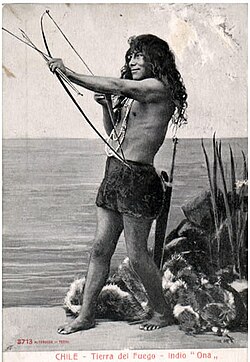
Human habitation of Tierra del Fuego dates back approximately 12,000 years. Before European contact, the region was home to roughly 10,000 indigenous people divided among four primary tribes: the Yámana, Alakaluf (Kawésqar), Selkʼnam (Ona), and Manekʼenk (Haush).
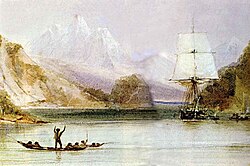
European influence grew in the 19th century. Luis Piedrabuena established a base on Isla de los Estados, and in 1869, the British South American Mission Society Patagonia Mission founded Ushuaia as an Anglican mission.
The arrival of settlers brought tragedy for the native populations. Indigenous peoples suffered devastating losses due to diseases such as smallpox and measles, as well as violent conflict with bounty hunters and ranchers. The Selkʼnam, in particular, were victims of genocide committed by settlers in the late 19th century. By 1916, the indigenous population had plummeted to just 900 people.
Geography and Climate
Tierra del Fuego is characterized by a cold oceanic climate, where temperatures remain relatively uniform across the province due to the influence of the surrounding oceans and persistent westerly winds. Summer averages hover around 10°C (50°F), while winter averages stay close to 0°C (32°F).
The region is known for its extreme wind chill, with gusts in the Beagle Channel—a strait surrounded by hills over 100 meters high—sometimes exceeding 100 km/h (62 mph), particularly between September and March.
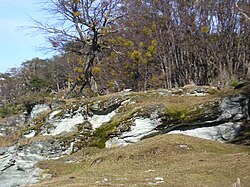
Precipitation varies significantly by zone. The extreme north receives about 280 mm (11 in) annually, while the western regions can see up to 2,000 mm (79 in). Much of the province falls within the Magellanic subpolar forests ecoregion, and snowfall is abundant throughout the year.
Demographics and Governance
The province is currently experiencing significant growth. According to the 2022 census, the population stands at 190,641, reflecting an average annual growth rate of 3.3% between 2010 and 2022.
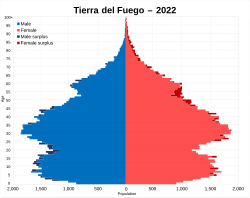
Administratively, the province is divided into five departments. The government is led by a Governor and Vice Governor, supported by a 15-member legislature and representation in the National Congress via five deputies and two senators.
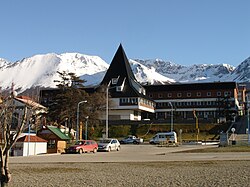
Administrative Divisions
| Department | Capital |
|---|---|
| Antártida Argentina | (none) |
| Islas del Atlántico Sur | (disputed) |
| Río Grande | Río Grande |
| Tolhuin Department | Tolhuin |
| Ushuaia | Ushuaia |
Economy and Infrastructure
Historically, sheep ranching was the cornerstone of the local economy by the turn of the 20th century. However, the decline of the global wool market and the emergence of petroleum extraction shifted the economic landscape.
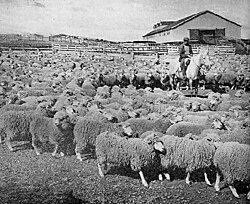
Since the 1970s, the province has thrived through a combination of natural resources and government subsidies for local industry. This has resulted in a high standard of living; as of 2021, the province holds the 4th highest Human Development Index (HDI) in Argentina.
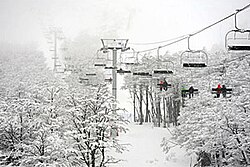
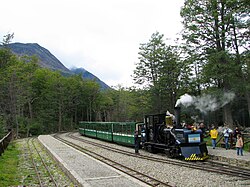
Tourism is a vital modern driver, with attractions including the Cerro Castor ski resort and the "Train to the End of the World," the southernmost active railway on Earth.
Frequently Asked Questions
What does "Tierra del Fuego" mean?
Tierra del Fuego is Spanish for "Land of Fire."
Which city is the capital of the province?
The provincial capital is Ushuaia.
What is the climate like in Tierra del Fuego?
The province has a cold oceanic climate with low mean annual temperatures, abundant snowfall, and strong westerly winds that create a significant wind chill effect.
Who were the original inhabitants of the region?
The region was originally settled about 12,000 years ago by four indigenous tribes: the Yámana, Alakaluf (Kawésqar), Selkʼnam (Ona), and Manekʼenk (Haush).
What are the main economic drivers of the province?
While sheep ranching was once dominant, the current economy relies on petroleum extraction, government-subsidized local industries, and tourism.