Santiago del Estero
Located in the north of Argentina, Santiago del Estero is a province defined by its deep historical roots and unique cultural identity. Bordered by Salta, Chaco, Santa Fe, Córdoba, Catamarca, and Tucumán, it serves as a vital link to Argentina's colonial past and indigenous heritage. Known for its arid landscapes and vibrant musical traditions, the province blends a challenging environment with a resilient spirit.
Key Facts
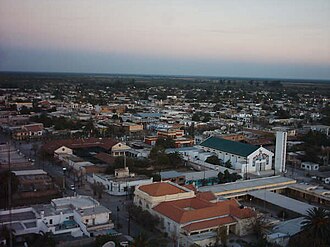
- Capital: Santiago del Estero (the oldest city in Argentina).
- Population: 1,054,028 (2022 census).
- Languages: Spanish (official) and Quechua (co-official).
- Economy: Primarily agricultural, specializing in cotton, soybeans, and goat farming.
- Climate: Sub-tropical with high temperatures and a distinct dry season.
- HDI: 0.833 (Very High).
History and Evolution
The region was originally inhabited by indigenous tribes, including the Sanavirones and Juríes-Tonocotés. Notably, it remains the southernmost outpost of Quechua, the language of the Incas, with approximately 100,000 local speakers.
Spanish exploration began with Diego de Rojas in 1542, leading to the foundation of the city of Santiago del Estero by Francisco de Aguirre in 1553. While it once served as a regional capital, the city's influence waned in the late 17th century as government and religious centers shifted to Salta and Córdoba, and trade routes bypassed the area. By the early 19th century, the population had dwindled to roughly 5,000 people.
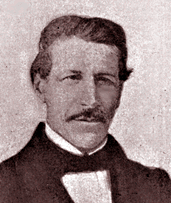
The province regained its autonomy in 1820 under Governor Juan Felipe Ibarra. During the mid-19th century, figures like Amancio Jacinto Alcorta, a composer and lawmaker, worked to modernize the province's banking and commercial taxation systems.
In the 20th century, the province focused on modernization. The construction of the Los Quiroga dam in 1950 transformed arid lands into productive agricultural zones through irrigation. The latter half of the century was marked by the political dominance of Carlos Arturo Juárez, a Caudillo (strongman) whose tenure ended in resignation in 2002 following links to violent crimes. His wife, Nina Aragonés de Juárez, briefly succeeded him before being removed by President Néstor Kirchner in 2004.

Geography and Climate
The landscape of Santiago del Estero is characterized by semi-deserts and steppes, with soil rich in lime and salt. The climate is sub-tropical, featuring high temperatures year-round. Recent data shows a warming trend; while maximum temperatures were around 38°C before 1910, they have since reached peaks of 50°C.
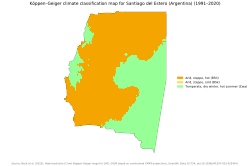
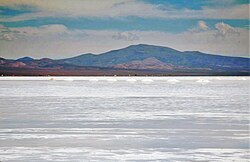
Precipitation is concentrated in the wet season, with an annual average of 700 mm, though the winter dry season sees as little as 120 mm. The province also features significant geological landmarks, such as the Salinas Grandes, some of the largest salt flats in the world.
Demographics and Society
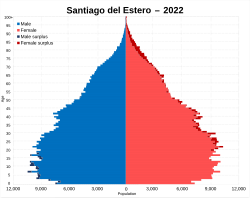
As of the 2022 census, the province has a population of 1,054,028. The population density is relatively low at 7.73 inhabitants per square kilometer. While the vast majority of the population did not declare a specific ethno-racial group, approximately 2.6% identify as Native and 0.4% as Black.
Economic Profile
The economy is heavily reliant on primary production, particularly agriculture, which accounts for 12% of the total output. The basins of the Dulce and Salado Rivers support the production of maize, onions, soybeans, and cotton—the latter representing 20% of Argentina's national production.
Livestock is another pillar of the economy. While cattle farming exists in the east, goats are more prevalent across the province, contributing 15% of the national goat production. The timber industry also plays a role, producing over 300,000 tons of quebracho and algarrobo annually for timber and charcoal.
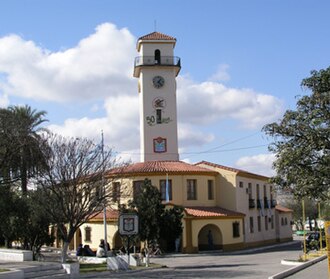
Tourism is a growing sector, centered on the historical sites of the capital and the Río Hondo Hot Springs. These springs were identified as highly therapeutic by Professor Hercules Corti in 1918, leading to the development of a major health tourism hub with over 200 hotels.
Provincial Summary Table
| Category | Detail |
|---|---|
| Total Area | 136,351 km² |
| GDP (Total) | US$ 11.2 billion |
| GDP Per Capita | US$ 11,300 |
| Administrative Divisions | 27 Departments / 28 Municipalities |
| Human Development Index | 0.833 (Very High) |
Culture and Arts
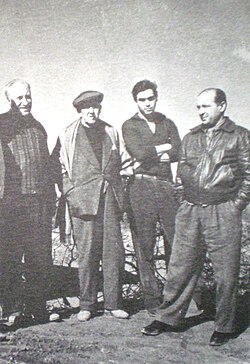
Santiago del Estero is a cornerstone of Argentine folklore. The province is famous for the chacarera and zamba, traditional musical styles and dances. The Ábalos Brothers are among the most renowned folk ensembles, having recorded since 1952.
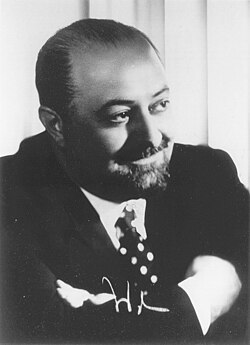
The province has also produced significant intellectuals and artists, including painters like Ramón Gómez Cornet and writers such as Jorge Washington Ábalos. In the realm of tango, lyricist Homero Manzione contributed significantly to the genre.
Nature conservation is also a priority, with the Copo National Park and protected areas like the Bañados de Figueroa and Sierras de Sumampa preserving the region's biodiversity.
Governance and Human Rights
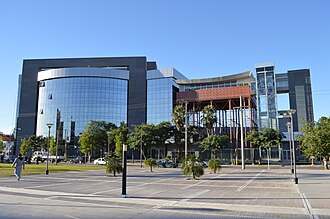
The province is governed by a Governor and a legislature of 40 members. However, the region has faced significant challenges regarding organized crime and human rights. Reports from 2022, including a study by consultant Douglas Farah, have highlighted concerns regarding land usurpation and criminal networks linked to political power.
Frequently Asked Questions
What is the significance of the Quechua language in Santiago del Estero?
Santiago del Estero is the southernmost outpost of the Quechua language in Argentina, with approximately 100,000 speakers, preserving a linguistic link to the Inca Empire.
Why are the Río Hondo Hot Springs famous?
They are recognized as some of the most therapeutic mineral springs on Earth, a fact scientifically supported by Professor Hercules Corti in 1918, making the area a premier destination for health tourism.
What are the primary agricultural products of the province?
The province is a major producer of cotton (providing 20% of Argentina's total), as well as soybeans, maize, onions, and goats.
Which musical genres are most associated with the province?
The province is most famous for its folklore, specifically the chacarera and zamba styles of music and dance.
What is the climate like in Santiago del Estero?
It is a sub-tropical climate characterized by high temperatures (reaching up to 50°C) and a distinct dry season during the winter.