Tibetan Antelope: The Rare Guardian of the High Plateau
High upon the windswept expanses of the northeastern Tibetan Plateau lives one of the world's most specialized mammals: the Tibetan antelope, also known as the chiru (Pantholops hodgsonii). This medium-sized bovid is a symbol of resilience, surviving in some of the harshest alpine environments on Earth. While once pushed to the brink of extinction by the illegal luxury trade, the chiru has become a success story of modern conservation.
Most of the current population resides within China, though small numbers are scattered across the high-altitude plains and montane valleys of India and Bhutan. Today, there are fewer than 150,000 mature individuals in the wild, a number that is fortunately on the rise.
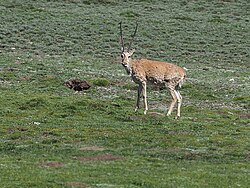
Key Facts
- Scientific Name: Pantholops hodgsonii
- Conservation Status: Near Threatened (IUCN 3.1); CITES Appendix I
- Habitat: Open alpine and cold steppe (3,250 to 5,500 meters elevation)
- Primary Threat: Illegal poaching for shahtoosh wool
- Unique Adaptation: Retention of fetal hemoglobin in adults for better oxygen affinity at high altitudes
- Population Trend: Increasing due to strict government protections
Classification and Evolution
The Tibetan antelope is the only living species in the genus Pantholops. While its classification has been debated, most authorities now place it within the subfamily Caprinae (goat-antelopes), specifically in its own tribe, Pantholopini. Phylogenetic evidence suggests it is the most basal member of this group.
The evolutionary history of the chiru includes extinct relatives, such as P. hundesiensis from the Pleistocene epoch and the genus Qurliqnoria from the Miocene, which diverged from other goat-antelopes millions of years ago.
Physical Characteristics
The Tibetan antelope is characterized by a thick, woolly coat of pale fawn to reddish-brown fur with a whitish belly. There is significant sexual dimorphism between males and females:
- Males: Larger (approx. 39 kg), standing about 83 cm at the shoulder. They possess long, curved-back horns (54–60 cm) and distinct black stripes on their legs.
- Females: Smaller (approx. 26 kg), standing about 74 cm at the shoulder. They lack both horns and the black leg stripes.
A striking feature of the male is the black face with pale nasal swellings. During the annual rut, their coloration intensifies, with the body coat becoming almost white, creating a sharp contrast with the dark face and legs.
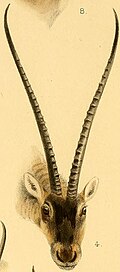
Habitat and High-Altitude Adaptation
Endemic to the Tibetan Plateau, these animals inhabit cold steppes between 3,250 and 5,500 meters. They prefer flat, open terrain with sparse vegetation. The majority of the population is now found in the Chang Tang Nature Reserve of northern Tibet, with calving grounds located at Zhuonai Lake in Hoh Xil.
To survive the thin air of the plateau, the Tibetan antelope has evolved a unique biological trait: it retains the fetal version of hemoglobin into adulthood. This allows the blood to bind oxygen more efficiently, a documented adaptation found in no other mammal species.
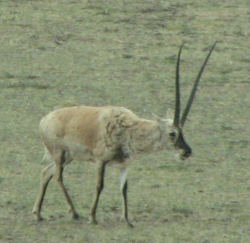
Behavior and Life Cycle
The chiru is a gregarious animal, often forming herds of hundreds during seasonal migrations, though they typically stay in smaller groups of up to 20. Their diet consists of grasses, sedges, and forbs, which they often dig for beneath the snow during winter. They are preyed upon by wolves, lynx, snow leopards, and red foxes.
Reproduction and Growth
The rutting season occurs from November to December. Males form harems, typically consisting of one to four females, though some may have up to 12. Rather than fighting with horns, males use displays and chasing to establish dominance.
Females migrate up to 300 km to calving grounds in the summer. A single calf is usually born in June or July after a six-month gestation. These calves are precocial, meaning they can stand within 15 minutes of birth. Males reach sexual maturity in their second or third year and achieve maximum horn length by age three and a half.
The Fight Against Poaching
The greatest threat to the species is the demand for shahtoosh (Persian for "king of fine wools"). This luxury fabric is woven from the extremely soft underfur of the antelope. Because it takes the underfur of three to five adults to create a single shawl, poaching became rampant in the 1980s and 1990s.
Shahtoosh shawls have historically been high-status items, with international prices reaching as high as $20,000. This demand caused the population to crash from nearly one million at the start of the 20th century to fewer than 75,000 by the 1990s.
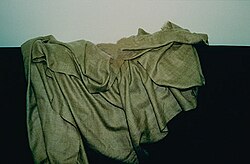
Conservation Success
Turning the tide required drastic action. In 1997, the Chinese government established the Hoh Xil National Nature Reserve specifically to protect the chiru. Conservation efforts were galvanized by the 1994 death of environmentalist Sonam Dargye, who was killed by poachers while protecting the animals.
Today, the Tibetan antelope is protected under CITES Appendix I, making international trade illegal. While the construction of the Qinghai-Tibet Railway posed a new challenge, the government installed 33 animal migration passages to allow the herds to cross the tracks safely.
| Feature | Details |
|---|---|
| Scientific Name | Pantholops hodgsonii |
| Average Weight | Male: 39 kg | Female: 26 kg |
| Elevation Range | 3,250 m to 5,500 m |
| IUCN Status | Near Threatened |
| Key Product | Shahtoosh (underfur) |
| Primary Habitat | Tibetan Plateau (China, India, Bhutan) |
Frequently Asked Questions
What is shahtoosh and why is it dangerous for the antelope?
Shahtoosh is a luxury fabric made from the fine underfur of the Tibetan antelope. Because of the high value of these shawls, the animals were historically poached in massive numbers, leading to a severe population decline.
How does the Tibetan antelope survive at such high altitudes?
The species possesses a unique biological adaptation where adults retain fetal hemoglobin, which has a higher affinity for oxygen than adult hemoglobin in other mammals, allowing them to thrive in low-oxygen environments.
Is the Tibetan antelope the same as a gazelle?
No. While they may look similar, the Tibetan antelope (chiru) is a distinct bovid and should not be confused with the Tibetan gazelle or the goa.
What is the current conservation status of the chiru?
The species is currently listed as Near Threatened by the IUCN, an improvement from its previous status of Endangered, thanks to strict anti-poaching laws and the creation of nature reserves.
Do female Tibetan antelopes have horns?
No, only the males possess horns. This is one of the primary ways to distinguish between the sexes, along with the males' larger size and black leg stripes.