Hawksbill Sea Turtle
The Hawksbill sea turtle (Eretmochelys imbricata) is a distinguished marine reptile known for its striking shell and its critical role in coral reef ecosystems. Once abundant across the world's tropical oceans, this species now faces a precarious future, categorized as Critically Endangered by the IUCN. From its unique taxonomic history to the pressures of illegal trade, the story of the hawksbill is one of both biological wonder and urgent conservation need.
First described by Carl Linnaeus in 1766 as Testudo imbricata, the species was later moved to the genus Eretmochelys by Leopold Fitzinger in 1843. Today, it is recognized as a distinct species within the family Cheloniidae.
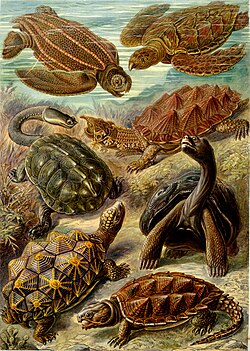
Key Facts
- Conservation Status: Critically Endangered (IUCN 3.1) and listed under CITES Appendix I.
- Average Size: Adults typically reach 1 meter (3 ft) in length and weigh approximately 80 kg (180 lb).
- Distinctive Feature: A serrated carapace margin and a hawk-like beak.
- Population Trend: Experienced an 80% decline over the three most recent generations as of 1996.
- Primary Threat: Historical and ongoing exploitation for their beautiful shell scutes.
Physical Description
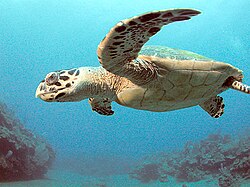
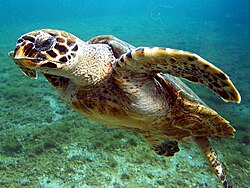
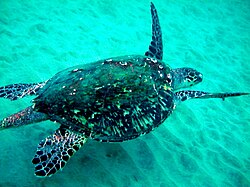
The hawksbill is easily identified by its carapace (the upper shell), which features an amber background with an irregular pattern of light and dark streaks. These mottled-brown and black colors radiate toward the sides of the shell. A defining characteristic of the species is the overlapping scutes and the serrated edge of the carapace.
Beyond the shell, the turtle possesses a narrow, pointed beak, which allows it to forage in the crevices of coral reefs. Interestingly, research has revealed that these turtles exhibit fluorescent markings on their carapaces.
Distribution and Nesting
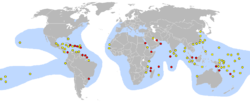
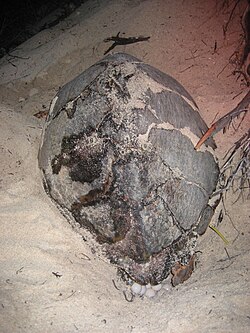
Hawksbill sea turtles are found in tropical waters globally, divided into several subpopulations across the Atlantic, Eastern Pacific, and Indo-Pacific regions.
Indo-Pacific Subpopulation
In the Philippines, essential nesting sites are located on Boracay, Punta Dumalag in Davao City, and Dahican Beach in Mati City. The "Turtle Islands" in the southwest of the archipelago serve as a vital nesting ground for both hawksbills and green sea turtles. Other notable regions include:
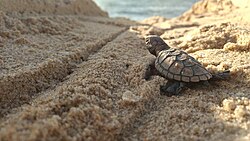
- Singapore: Recent hatchings have been reported at Pulau Satumu, with turtles returning to East Coast Park.
- Hawaii: Nesting occurs primarily on the main islands of Oahu, Maui, Molokai, and Hawaii.
- Australia: Milman Island in the Great Barrier Reef is a known nesting site.
- Seychelles: Legally protected since 1994, populations on Cousine Island are showing recovery, while Aldabra serves as a feeding ground for immature turtles.
Global Presence
The species is also found in various other tropical locales, from the reefs of Mozambique and Venezuela to the beaches of Puerto Rico and Brazil.
Human Exploitation and Trade
The primary driver of the hawksbill's decline has been the trade of its shell. In Japan, the shell scutes are known as bekko and have been used to create eyeglass frames and picks for the shamisen (a traditional three-stringed instrument). Before Japan stopped importing shells in 1994, the trade involved roughly 30,000 kg of raw shells annually.
Similarly, in China, the turtle is called dai mei or dai mao. In the West, ancient Greeks and Romans harvested the shells for luxury items such as rings, combs, and brushes. More recently, processed shells have been traded in large quantities in Colombia and the Dominican Republic.
Conservation Status
The IUCN first listed the hawksbill as endangered in 1982, upgrading the status to Critically Endangered in 1996. This decision followed data from the Marine Turtle Specialist Group (MTSG), which indicated a massive population crash. Despite some challenges to this status, the evidence of a worldwide decline remained conclusive.
Conservation efforts are showing localized success. For example, on Rosemary Island in Western Australia, long-term monitoring since 1986 revealed a 60-year-old turtle returning to the same location in 2020, highlighting the importance of site fidelity and protected habitats.
| Attribute | Details |
|---|---|
| Scientific Name | Eretmochelys imbricata |
| Average Weight | 80 kg (Max recorded: 127 kg) |
| Conservation Status | Critically Endangered |
| Key Trade Product | Bekko (Shell scutes) |
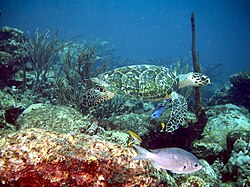
| Primary Habitat | Tropical coral reefs |
Frequently Asked Questions
Why is the hawksbill sea turtle critically endangered?
The primary cause is the historical and illegal trade of their shells (bekko) for jewelry and ornaments, combined with habitat loss and other environmental pressures.
What makes the hawksbill's shell unique?
The hawksbill has a carapace with overlapping scutes and a serrated margin, featuring a beautiful amber background with dark, mottled-brown streaks.
Where do hawksbill sea turtles typically nest?
They nest on tropical sandy beaches worldwide, with significant sites in the Philippines, Hawaii, the Seychelles, and Australia's Great Barrier Reef.
What is the difference between the hawksbill and other sea turtles?
The hawksbill is distinguished by its narrow, hawk-like beak and its specific preference for foraging in coral reef crevices, unlike the broader diets of some other species.
Are there any signs of population recovery?
Yes, some areas are showing progress. For instance, the population on Cousine Island in the Seychelles has shown recovery since legal protections were implemented in 1994.