Theoretical Physics: The Mathematical Architecture of the Universe
Theoretical physics is the branch of science that employs mathematical models and abstractions to explain and predict natural phenomena. While experimental physics focuses on recording and measuring what happens through direct observation, theoretical physics seeks to answer why things happen. These two disciplines exist in a symbiotic relationship: theoretical predictions inspire new experiments, and unexpected experimental results force theorists to refine their models.
The scope of the field is vast, spanning from the subatomic behavior of quarks to the large-scale structure of the entire cosmos. In many cases, theoretical physics advances through mathematical reasoning and thought experiments long before technology exists to test them. Major pillars of modern science, such as general relativity and the Standard Model of particle physics, began as theoretical constructions before they were ever confirmed by observation.
Key Facts
- Purpose: Uses mathematical abstractions to explain the underlying causes of natural phenomena.
- Relationship: Works in a constant feedback loop with experimental physics.
- Scale: Covers everything from elementary particles to the evolution of the universe.
- Nature of Theory: Unlike mathematical proofs, physical theories remain open to revision based on new evidence.
- Core Frameworks: Includes General Relativity, Quantum Mechanics, and the Standard Model.
Methods and Approaches in Theoretical Physics
Theoretical physicists employ various strategies to decode the laws of nature, depending on the problem at hand.
Model-Based Frameworks
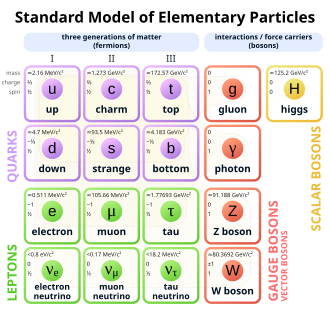
Some theorists build frameworks based on internal consistency and known symmetries. A prime example is the Standard Model of particle physics, developed in the 1960s and 1970s by combining quantum field theory with the symmetries governing fundamental forces.
Effective Theories
Because fully general theories are often impossible to solve in realistic settings, physicists use effective theories. These are frameworks that accurately describe a system within a specific range of energy or length scales without needing a complete account of the deeper, more fundamental levels. This approach is common in condensed matter physics and particle physics.
The Quest for Unification
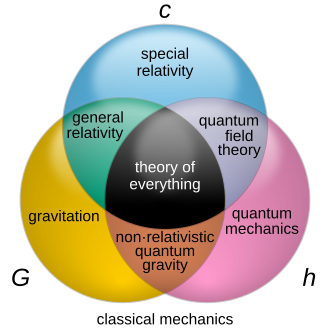
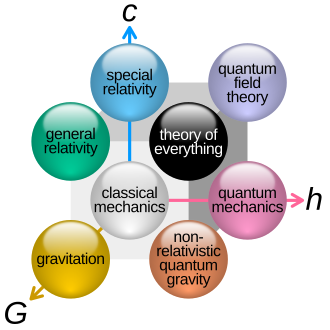
Unification is the ambition to consolidate separate theories into a single, coherent framework. A successful example is the electroweak unification of electromagnetism and the weak nuclear force, achieved by Sheldon Glashow, Abdus Salam, and Steven Weinberg. However, the effort to unify gravity with quantum mechanics remains an unfinished challenge.
The Evolution of Physical Theory
Ancient and Medieval Foundations
The attempt to explain nature through physical principles rather than the supernatural began in ancient Greece around the sixth century BC. Pre-Socratic philosophers sought general principles of the natural world, which Aristotle later synthesized into a systematic account of matter and motion. While often inaccurate, Aristotle's framework dominated European and Islamic natural philosophy for over a millennium.
The Scientific Revolution and the 19th Century
Isaac Newton's 1687 work, Philosophiae Naturalis Principia Mathematica, established the modern template for theoretical physics. By using a few laws of motion and universal gravitation, Newton could quantitatively predict planetary orbits and the tides.

In the 1860s, James Clerk Maxwell unified electricity, magnetism, and optics into a single theory. His four differential equations predicted electromagnetic waves traveling at the speed of light, laying the groundwork for special relativity.

Simultaneously, thermodynamics emerged. Rudolf Clausius introduced entropy, while Maxwell, Ludwig Boltzmann, and Josiah Willard Gibbs developed statistical mechanics to bridge the gap between individual molecular mechanics and observable bulk properties of matter.
The 20th Century Upheavals
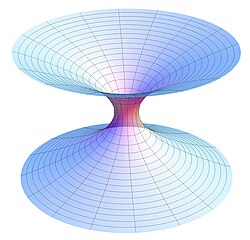
The 1900s saw two massive shifts in understanding. Albert Einstein's special relativity (1905) redefined space and time, while his general relativity (1915) described gravity as the curvature of spacetime. This theory predicted black holes and gravitational waves, both of which were later observed.
Parallel to this, quantum mechanics was developed in the 1920s by figures such as Werner Heisenberg, Erwin Schrödinger, and Paul Dirac. This framework replaced classical certainty with probability amplitudes and discrete values, explaining the structure of atoms and the photoelectric effect.
The subsequent synthesis of quantum mechanics and special relativity led to quantum field theory. This evolved into Quantum Electrodynamics (QED)—developed by Richard Feynman, Julian Schwinger, and Sin-Itiro Tomonaga—and eventually the Standard Model.

The Role of Thought Experiments
Thought experiments allow physicists to reveal tensions in current theories that are not immediately obvious. Einstein used them to identify inconsistencies between Newtonian mechanics and electromagnetism. Similarly, the EPR paradox (Einstein, Podolsky, and Rosen) and Schrödinger's cat were designed to challenge the completeness and interpretation of quantum mechanics.
The Interplay Between Physics and Mathematics
Physics and mathematics are deeply intertwined. Newton invented calculus to describe his mechanics, and Joseph Fourier developed Fourier series to solve heat conduction problems. Conversely, pure mathematics often predicts physical needs; Bernhard Riemann's non-Euclidean geometry, developed in the 1850s, became the essential language for Einstein's general relativity decades later. Eugene Wigner famously called this "the unreasonable effectiveness of mathematics in the natural sciences."
Current Challenges and Open Problems
The most significant structural problem in modern physics is the incompatibility between general relativity (which governs the very large) and quantum mechanics (which governs the very small). While both are accurate in their own domains, they are mathematically inconsistent. Efforts to create a theory of quantum gravity, such as string theory and loop quantum gravity, continue today.
| Theory | Key Focus | Primary Contribution |
|---|---|---|
| Newtonian Mechanics | Motion and Gravity | Quantitative prediction of planetary orbits and falling bodies. |
| Maxwell's Equations | Electromagnetism | Unified electricity, magnetism, and light. |
| General Relativity | Gravity and Spacetime | Gravity as spacetime curvature; predicted black holes. |
| Quantum Mechanics | Subatomic Scale | Probability amplitudes and discrete energy levels. |
| Standard Model | Elementary Particles | Comprehensive account of particles and three fundamental forces. |
Frequently Asked Questions
What is the difference between theoretical and experimental physics?
Theoretical physics uses mathematical models to explain why natural phenomena occur, while experimental physics uses direct measurement and observation to test and refine those explanations.
Can a physical theory be proven as an absolute truth?
No. Unlike a mathematical proof based on axioms, a physical theory is always open to revision if new observations or evidence contradict it.
What is an effective theory?
An effective theory is a framework that accurately describes a system within a specific range of energy or length scales without needing to explain the more fundamental physics occurring at a deeper level.
Why is quantum gravity so difficult to achieve?
Quantum gravity is challenging because general relativity and quantum mechanics are mathematically incompatible in their standard formulations, despite both being highly accurate in their respective domains.
What is a thought experiment?
A thought experiment is a conceptual tool used to explore the logical consequences of a theory or to reveal inconsistencies, which often leads to the development of new mathematical models and real-world experiments.