Modern Physics: The Science of Extremes and Quantum Realities
Physics is the study of matter and its interactions, but the way we understand these processes depends entirely on the scale and conditions we are observing. For centuries, classical physics provided a reliable framework for describing the world. However, as scientists began probing the very small and the incredibly fast, they discovered that the old rules no longer applied. This led to the birth of modern physics.
Emerging in the early 20th century, modern physics represents a paradigm shift in our understanding of the universe. While classical physics handles the "middle ground" of human experience, modern physics ventures into the extremes. It is primarily defined by the integration of two revolutionary frameworks: quantum mechanics and relativity.
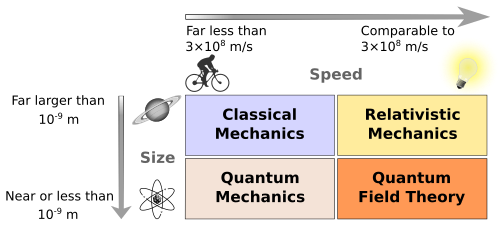
The Divide Between Classical and Modern Physics
The distinction between classical and modern physics is largely defined by the conditions under which physical laws are applied. Classical physics is concerned with everyday conditions where speeds are significantly lower than the speed of light, sizes are much larger than atoms, and energies are relatively low.
In contrast, modern physics addresses extreme environments. These include:
- High Velocities: Speeds that are comparable to the speed of light, governed by special relativity.
- Small Distances: Scales comparable to the atomic radius, governed by quantum mechanics.
- High Energies: Extreme energy levels where relativistic effects become dominant.
It is important to note that quantum and relativistic effects exist across all scales, including the human scale, though they are often too small to be noticed. When a modern model is analyzed at low speeds and large distances, it reaches its classical limit, effectively becoming a simplified version of the modern description.
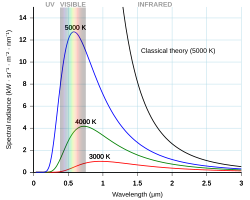
Core Branches of Modern Physics
Modern physics is not a single theory but a collection of branches that describe different aspects of the universe.
Quantum Mechanics
Quantum mechanics focuses on the behavior of matter and energy at the atomic and subatomic levels. It explains phenomena that classical physics cannot, such as the behavior of gases near absolute zero. While classical gases follow the Maxwell–Boltzmann distribution, those at extreme lows require the Fermi–Dirac or Bose–Einstein distributions.
Relativity
Relativity is divided into two main theories. Special relativity deals with high velocities and the relationship between space and time. General relativity expands these concepts to include gravity and the curvature of spacetime on a massive scale.
The Quest for Unification
While quantum mechanics is compatible with special relativity (forming relativistic quantum mechanics), a major unsolved problem in science is the unification of quantum mechanics and general relativity. Currently, the Standard Model of particle physics—the theoretical framework describing fundamental particles—cannot account for this unification.
Key Facts
- Modern physics developed primarily from the early 20th century onward.
- It focuses on high velocities, atomic-scale distances, and very high energies.
- The two primary pillars are quantum mechanics and the theory of relativity.
- Classical physics is viewed as a simplified limit of modern physics at low speeds and large scales.
- The unification of general relativity and quantum mechanics remains an unsolved challenge.
Foundational Experiments
The transition to modern physics was driven by a series of hallmark experiments that proved classical laws were incomplete. These include:
| Experimental Focus | Notable Experiments |
|---|---|
| Light and Radiation | Black-body radiation, Photoelectric effect, Compton effect |
| Atomic Structure | Geiger–Marsden (Rutherford), Oil drop, Franck–Hertz |
| Quantum Nature of Matter | Davisson–Germer, Stern–Gerlach |
| Relativity and Space | Michelson–Morley, Eddington experiment, Eötvös experiment |
| Electromagnetism and Nuclei | Cathode ray, Discovery of radioactivity, Stark effect, Zeeman effect |
Frequently Asked Questions
What is the main difference between classical and modern physics?
Classical physics describes everyday phenomena at low speeds and large scales, while modern physics describes extreme conditions, such as the subatomic scale (quantum mechanics) and speeds approaching the speed of light (relativity).
Does classical physics still matter?
Yes. Classical physics is essentially a simplified version of modern physics. For most human-scale applications, classical approximations are accurate and sufficient.
What is the "classical limit"?
The classical limit is a simplified model derived from a modern physics description by analyzing it at low speeds and large distances, often through mathematical limits or approximations.
Why can't we unify quantum mechanics and general relativity?
This is one of the greatest unsolved problems in physics. While quantum mechanics works for the very small and general relativity works for the very large, they use different mathematical and conceptual frameworks that currently conflict, and the Standard Model cannot yet bridge the gap.
When do quantum effects become noticeable?
Quantum effects typically appear when dealing with "lows," such as extremely low temperatures (near absolute zero) or very small distances (the atomic scale).