The Sun: Anatomy, Life Cycle, and Galactic Motion
The Sun, also known as Sol, is the central star of our solar system, providing the energy necessary to sustain life on Earth. A G2V spectral class star, it is a nearly perfect sphere of hot plasma that dominates the gravitational landscape of our local neighborhood. From its violent youth to its eventual transition into a red giant, the Sun serves as a primary example of stellar evolution.
Key Facts

- Age: Approximately 4.6 billion years.
- Mass: 332,950 times that of Earth.
- Core Temperature: 15.7 million Kelvin.
- Composition: Primarily hydrogen (73.46%) and helium (24.85%).
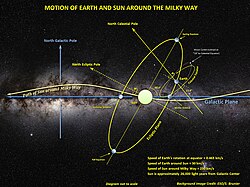
- Galactic Orbit: Travels at 251 km/s around the Milky Way center.
- Distance from Earth: Mean distance of 1 au (149.6 million km).
Physical Characteristics and Composition

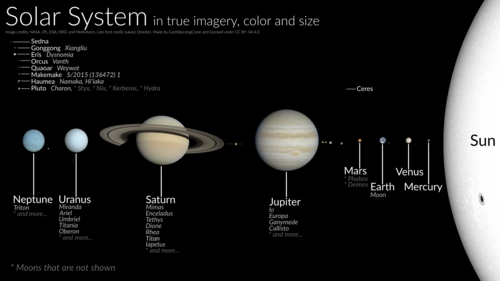
The Sun is an immense body of gas and plasma. Its equatorial radius is approximately 695,700 km, making it 109 times larger than Earth. Despite its size, its average density is only 0.255 times that of Earth, reflecting its gaseous nature.
The chemical makeup of the photosphere—the visible surface—is dominated by the lightest elements. Hydrogen and helium make up the vast majority of its mass, with smaller traces of oxygen, carbon, iron, neon, nitrogen, silicon, magnesium, and sulfur.
| Property | Value | Comparison to Earth |
|---|---|---|
| Mass | 1.988 × 1030 kg | 332,950x |
| Volume | 1.412 × 10¹⁸ km3 | 1,300,000x |
| Surface Area | 6.09 × 10¹² km2 | 12,000x |
| Surface Gravity | 274 m/s2 | 27.9g |
Internal Structure and Energy Production
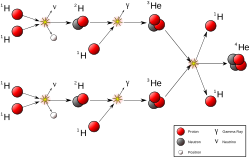
The Sun is organized into distinct layers, each with unique physical properties. At the center lies the core, where temperatures reach 15.7 million Kelvin. Here, the Sun generates energy through the proton-proton reaction chain, a process of nuclear fusion where hydrogen nuclei fuse to form deuterium, helium-3, and eventually helium-4.
The Radiative and Convective Zones
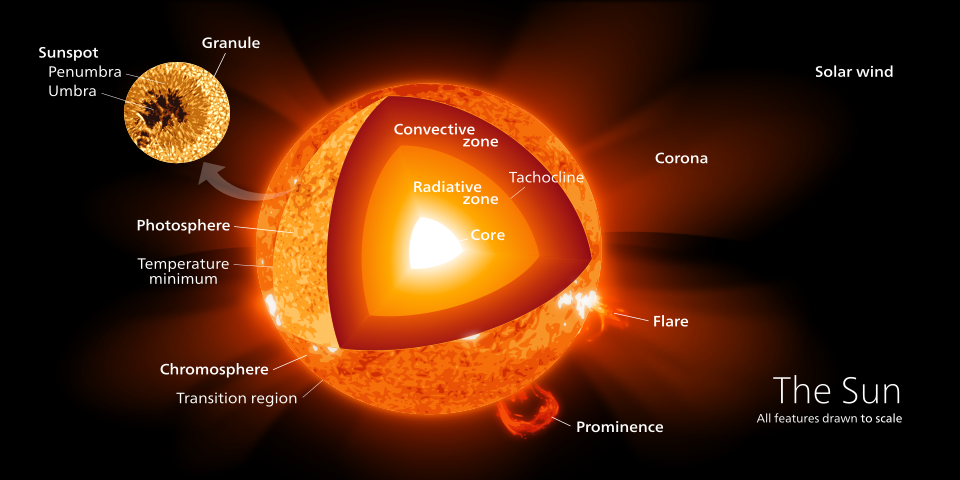
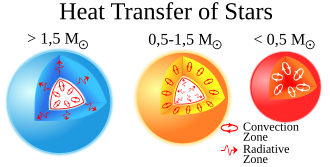
Energy from the core first moves through the radiative zone, where photons are absorbed and re-emitted in a random walk toward the surface. Above this is the tachocline, a transition region, followed by the convective zone. In this outer layer, hot plasma rises and cooler plasma sinks in massive currents, transporting energy to the surface.
The Solar Atmosphere
The Sun's atmosphere consists of three primary regions: the photosphere, the chromosphere, and the corona.
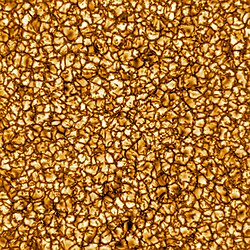
- Photosphere: The visible "surface" of the Sun, characterized by convection cells known as granules. It has a temperature of approximately 5,772 K.
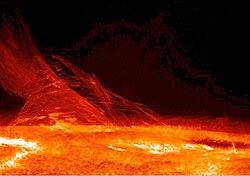
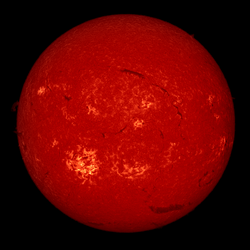
- Chromosphere: A thin layer above the photosphere that emits a reddish glow.
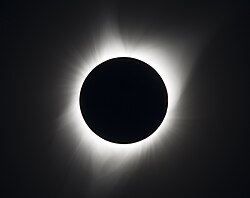
- Corona: The outermost layer, which extends millions of kilometers into space. Surprisingly, the corona is much hotter than the surface, reaching temperatures of 5 million Kelvin.
The Heliosphere
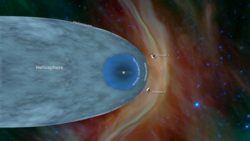
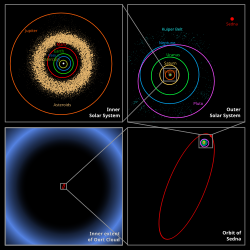
The Sun's influence extends far beyond its visible edge through the heliosphere, a vast bubble of plasma and magnetic fields created by the solar wind that shields the solar system from interstellar radiation.
Solar Activity and Magnetism
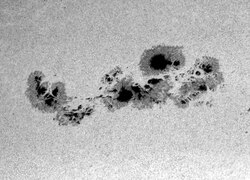
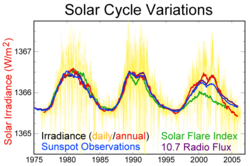
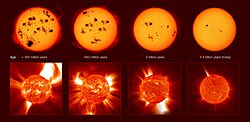
The Sun is magnetically active, leading to phenomena such as sunspots—cooler, darker regions on the photosphere caused by intense magnetic activity. These activities follow a solar cycle, with variations in intensity observed over decades.
Life Cycle of a Sun-like Star
The Sun began its life as a collapsing protostar approximately 4.6 billion years ago. It is currently in the main sequence phase, where it stably fuses hydrogen into helium.
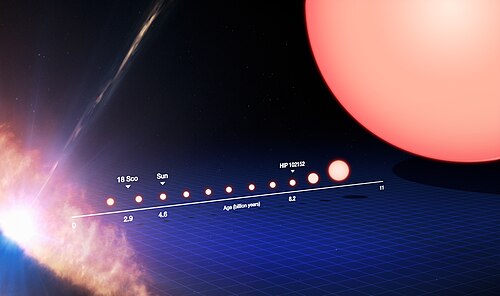
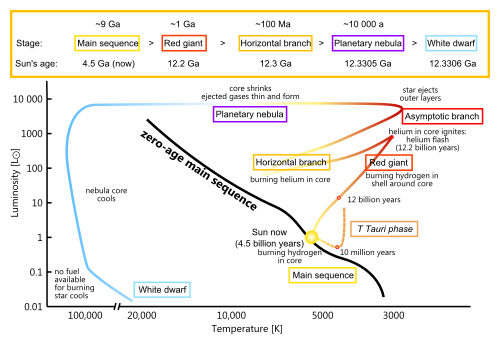
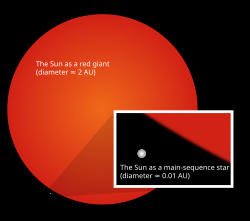
Once the hydrogen in the core is exhausted, the Sun will evolve into a red giant, expanding significantly in size and consuming the inner planets. Eventually, it will shed its outer layers and collapse into a dense white dwarf.
Galactic Context and Motion
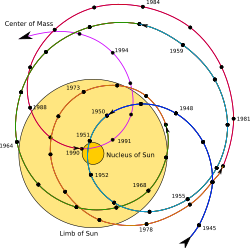
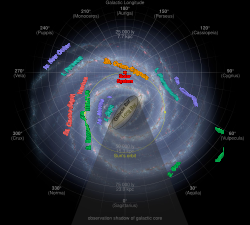
The Sun is not stationary. It is located between 24,000 and 28,000 light-years from the center of the Milky Way. It orbits the Galactic Center at a velocity of 251 km/s, completing one full revolution (a galactic period) every 225 to 250 million years.
![Diagram of the Local Interstellar Cloud, the G-Cloud and surrounding stars. As of 2022, the exact position of the Solar System within the interstellar clouds remains an unresolved question in astronomy.[181]](/images/ff/93/ff93b3769e8412efa5cd189fab0ac27305bbe9524f76f691ade868383aaf8aab.webp)
Observational History and Space Missions
Human understanding of the Sun has evolved from religious personifications, such as the Egyptian god Ra or the Nordic sun chariot, to rigorous scientific study. Modern astronomy utilizes specialized solar telescopes and space probes to study the Sun without the interference of Earth's atmosphere.



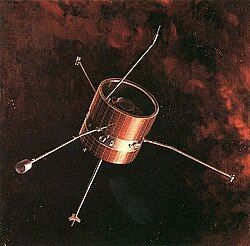
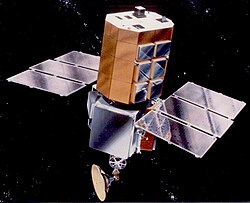
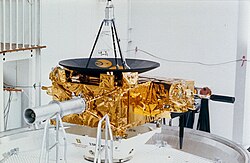
Key missions including the Pioneer probes, the Solar Maximum Mission, and the Ulysses spacecraft have provided critical data on the solar wind, magnetic poles, and the internal structure of the star.
Frequently Asked Questions
What is the primary source of the Sun's energy?
The Sun generates energy through nuclear fusion in its core, specifically the proton-proton reaction chain, which converts hydrogen into helium.
Why is the Sun's corona hotter than its surface?
This is known as the coronal heating problem. While the photosphere is about 5,772 K, the corona reaches 5 million K; this remains a subject of ongoing astronomical research.
How long will the Sun remain in its current state?
The Sun is currently in the main sequence phase of its life cycle and has been for 4.6 billion years, with a similar amount of time remaining before it exhausts its core hydrogen.
What happens to the Sun when it becomes a red giant?
The Sun will expand significantly in size, likely engulfing the inner planets, before eventually shedding its outer layers and leaving behind a white dwarf core.
How fast is the Sun moving through the galaxy?
The Sun orbits the center of the Milky Way at a velocity of approximately 251 km/s.