Nuclear Power: Technology, History, and the Future of Low-Carbon Energy
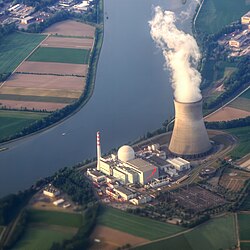
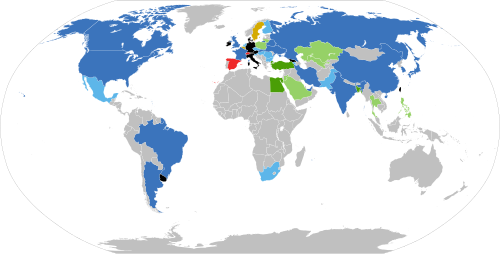
Nuclear power is the process of using nuclear reactions to generate electricity. While the term often brings to mind massive power plants, the technology encompasses several different scientific processes: nuclear fission, nuclear decay, and nuclear fusion. Currently, the global energy grid relies almost exclusively on nuclear fission—the splitting of heavy atoms like uranium and plutonium—to produce steady, large-scale electricity.
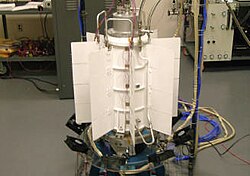
Beyond the power grid, nuclear decay is utilized in specialized applications, such as radioisotope thermoelectric generators (RTGs) that power deep-space probes like Voyager 2. Meanwhile, nuclear fusion—the process of fusing light atoms together—has been achieved in controlled environments since 1958, though it has not yet generated net power for commercial use.
Key Facts
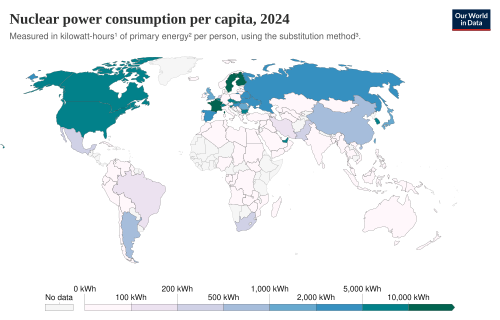
- Global Contribution: In 2023, nuclear plants supplied 2,602 terawatt hours (TWh), roughly 9% of the world's electricity.
- Low Carbon: It is the second-largest low-carbon power source globally, following hydroelectricity.
- Infrastructure: As of November 2025, there are 416 civilian fission reactors operating worldwide.
- Efficiency: The United States leads the world in nuclear generation, with an average capacity factor of 92%.
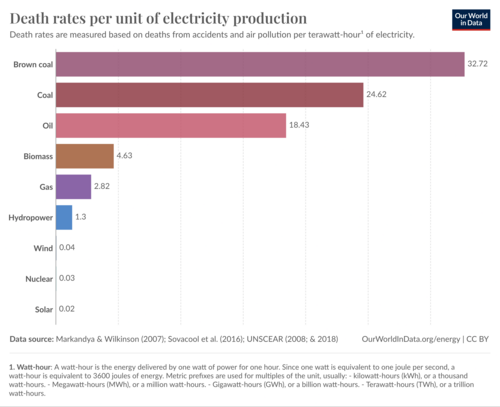
- Safety: Nuclear power has one of the lowest fatality rates per unit of energy generated compared to fossil fuels.
The Evolution of Nuclear Energy
![The launching ceremony of USS Nautilus January 1954. In 1958 it would become the first vessel to reach the North Pole.[11]](/images/ae/b8/aeb8a5dbc595c5afcd91ea7e394479d3f83992ad056769edf55b074a6706c9d3.jpg)
Origins and Early Expansion
The first nuclear power plants emerged in the 1950s, marking a new era of energy production. The industry saw rapid growth through the late 20th century, with global installed capacity reaching 100 GW in the late 1970s and climbing to 300 GW by 1990.
![The first light bulbs ever lit by electricity generated by nuclear power at EBR-1 at Argonne National Laboratory-West (now the Idaho National Laboratory), December 20, 1951.[7]](/images/fc/53/fc537108d24787911141ac7f743385b392ac85bf2bb7139ec433518cdcaff261.jpg)
Challenges and Public Perception
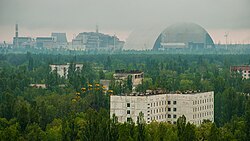
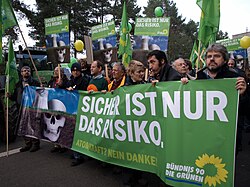
The trajectory of nuclear expansion was significantly altered by high-profile accidents. The 1979 Three Mile Island accident in the U.S. and the 1986 Chernobyl disaster in the Soviet Union led to stricter regulations and a surge in public opposition. More recently, the 2011 Fukushima Daiichi disaster in Japan caused the displacement of 50,000 households and renewed global debates over the safety of nuclear energy.
How Nuclear Power Works: The Fuel Cycle
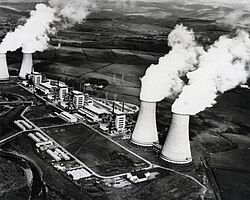
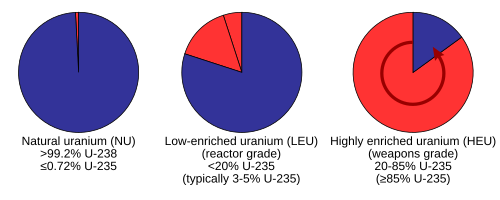
The production of nuclear energy follows a complex fuel cycle, beginning with the extraction of uranium from the earth. Because most reactors require a higher concentration of the isotope uranium-235 than is found in nature, the uranium must undergo enrichment.
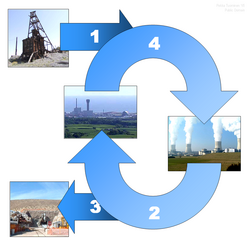
Reactor Types and Production
Different reactor designs utilize fuel differently. For example, Light Water Reactors (LWRs) typically use uranium enriched to 3–5%, whereas CANDU reactors can operate using natural uranium. The most common reactor type is the Pressurized Water Reactor (PWR), which accounts for the majority of the world's civilian fleet.
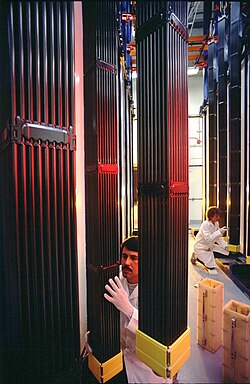
Waste Management and Reprocessing
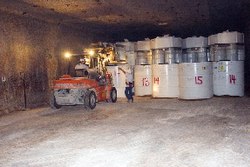
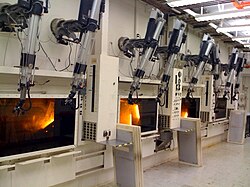
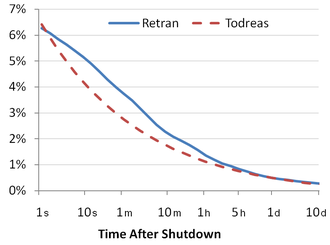
One of the most debated aspects of nuclear power is the management of spent fuel. High-level waste is often stored in dry cask storage vessels or deep underground repositories. However, nuclear reprocessing allows up to 95% of spent fuel to be recycled and returned to the reactor, significantly reducing the volume of waste.
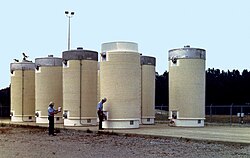
Environmental and Economic Impact
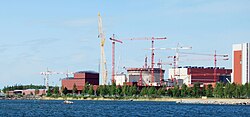
Climate Change and Safety
Nuclear power is a critical tool for reducing greenhouse gas emissions. It emits no gases during operation and has lower life-cycle carbon emissions than many renewable sources. From a health perspective, some studies suggest that every nuclear plant built saves approximately 800,000 life-years by displacing air pollution from coal and gas plants.
![Life-cycle greenhouse gas emissions of electricity supply technologies, median values calculated by IPCC[229]](/images/8f/1d/8f1d6d0c9e18f10e228d2e66c229c0603eec9b7cfadcb92986460b6c528ab98b.png)
The Economics of Nuclear Energy
The cost of nuclear power is often higher than wind or solar due to the "one-of-a-kind" nature of reactor projects, which prevents the mass-production cost reductions seen in renewables. However, certain designs, such as the South Korean APR1400, have maintained more constant costs through export and standardized production.
![A comparison of levelized cost of energy (LCOE) over time for nuclear power and other sources. While wind turbines and solar panels can be mass-produced and thus enjoy learning curve effects, nuclear are almost always one-of-a-kind projects due to the limited number of reactors being built. The source of this chart, Our World in Data notes that the costs presented here is the global average, and these costs were driven up by 2 projects in the United States. The organization recognises that the median cost of the most exported and produced nuclear energy facility in the 2010s the South Korean APR1400, remained "constant", including in export.[157]](/images/4b/8a/4b8a43d000f7dc5cef9ccbf3c44b7be98295bf50e6c8da2ceb9aabe8d1e49a7e.png)
The Future of Nuclear Research
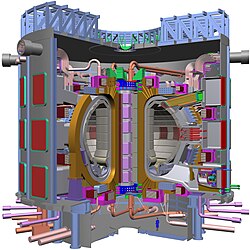
Research is currently split between advancing fission and achieving viable fusion. Generation III reactors are currently being deployed across Asia, while the ITER project in France represents a massive international effort to master nuclear fusion.
Global Investment Trends
Investment priorities vary by region. While the U.S. relies heavily on private industry for fusion development, China has made fusion a national priority, investing billions into state-owned fusion companies to lead the next generation of energy.
![The US has been counting on private industry to lead in fusion power, while more recently China's government has made fusion a national priority.[289] In 2025, $2.1 billion was poured into a single Chinese state-owned fusion company, an amount two and a half times the U.S. Energy Department's annual fusion budget.[289]](/images/36/04/3604cda27d7d3a60e048a9765d20aa982b4fc41049314aa915700021684bc00e.webp)
Summary of Nuclear Energy Metrics
![Typical composition of uranium dioxide fuel before and after approximately three years in the once-through nuclear fuel cycle of a LWR[83]](/images/97/45/97455f584698cfda556c9a17175adf1eaea780d18f16ea2a2e642c343710eb07.webp)
| Metric | Value / Detail |
|---|---|
| Global Electricity Share (2023) | ~9% (2,602 TWh) |
| Operating Civilian Reactors | 416 (as of Nov 2025) |
| Average Global Capacity Factor | 89% |
| Primary Fuel Source | Uranium / Plutonium |
| Most Common Reactor Type | Pressurized Water Reactor (PWR) |
Frequently Asked Questions
![Activity of spent UOx fuel in comparison to the activity of natural uranium ore over time[85][83]](/images/25/a4/25a4bb1de11adbdef6d57dbec4aa1e2f72db54d2c4c822f9616159af4f646ccb.jpg)
![Following the 2011 Fukushima Daiichi nuclear disaster, the world's worst nuclear accident since 1986, 50,000 households were displaced after radiation leaked into the air, soil and sea.[190] Radiation checks led to bans of some shipments of vegetables and fish.[191]](/images/3b/95/3b958e3f85599dd601d27c823655a01e759dc19c754584cc27813669b5312203.jpg)
![Survey respondents in the European Union and US considered investment in nuclear energy to be a higher priority than those in China, though all three favored renewable energy much more strongly than nuclear overall.[235]](/images/72/0e/720e2dccc09ac1cafe893a907fa27bae0e6e7d652598becfd02a746db032bf55.webp)
Is nuclear power safer than fossil fuels?
Yes, in terms of fatalities per unit of energy generated, nuclear power is among the safest energy sources. It avoids the massive air pollution associated with coal, petroleum, and natural gas, which cause significantly more deaths globally.
What is the difference between fission and fusion?
Nuclear fission involves splitting a heavy nucleus (like uranium) into smaller nuclei to release energy. Nuclear fusion involves combining light nuclei (like hydrogen) to form a heavier one. While fission is used commercially today, fusion is still in the research and development phase.
How is nuclear waste handled?
Nuclear waste is categorized by its activity level. High-level waste is stored in reinforced casks or deep geological repositories. Some countries use reprocessing to recycle up to 95% of spent fuel back into the energy cycle.
Why is nuclear power considered a low-carbon energy source?
Nuclear power plants do not burn fossil fuels to produce heat; instead, they use nuclear reactions. Consequently, they emit no greenhouse gases during the electricity generation process.
What is a capacity factor?
A capacity factor is the ratio of actual energy produced by a plant over a period of time to the maximum possible energy it could have produced. Nuclear power has a very high capacity factor (global average of 89%), meaning it provides a steady "baseload" of power.