Nuclear Power Plants: Technology, Global Impact, and Future Evolution
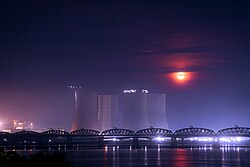
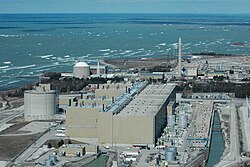
A nuclear power plant (NPP)—also referred to as a nuclear power station or atomic power station—is a specialized thermal power station. Unlike traditional plants that burn fossil fuels, an NPP uses a nuclear reactor as its heat source. This heat is used to generate steam, which drives a turbine connected to a generator to produce electricity for the grid.
As of October 2025, the International Atomic Energy Agency reported that 416 nuclear reactors are in operation across 31 countries, with another 62 currently under construction.
Key Facts
- Global Output: Nuclear energy generates approximately 10% of the world's electricity.
- Low-Carbon Role: It provides about one-quarter of the global supply of low-carbon electricity.
- Fuel Source: Most reactors rely on uranium, specifically the fissile isotope uranium-235.
- Environmental Impact: Modern reactors can produce as little as 1.31g/kWh of CO2 over their life cycle.
- Current Trends: China currently leads the world in the number of reactors under construction.
The Evolution of Nuclear Energy
The journey of civilian nuclear power began in the mid-20th century. The world's first nuclear power station to provide electricity to a grid was the Obninsk Nuclear Power Plant in the Soviet Union, which began operations on June 27, 1954.
This was followed by the United Kingdom's Calder Hall on October 17, 1956, the first large-scale plant, which was designed for both electricity and plutonium production. Shortly after, the United States launched the Shippingport Atomic Power Station on December 18, 1957, marking the first full-scale station dedicated solely to electricity production.
How Nuclear Reactors Work
At the heart of every NPP is the reactor, which typically utilizes uranium to sustain a chain reaction. Uranium is a heavy metal found in seawater and various rocks, existing primarily in two isotopes:
- Uranium-238 (U-238): Makes up 99.3% of natural uranium. It has 146 neutrons and is less radioactive with a longer half-life.
- Uranium-235 (U-235): Makes up about 0.7% of natural uranium. It has 143 neutrons and is fissile, meaning it can be easily split to release massive amounts of energy.
Reactor Types and Cooling
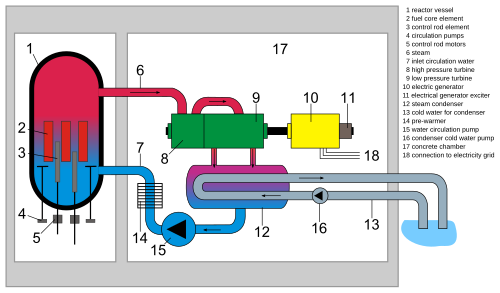
Different designs manage heat and steam in various ways. Common types include the Boiling Water Reactor (BWR) and the Pressurized Water Reactor (PWR).
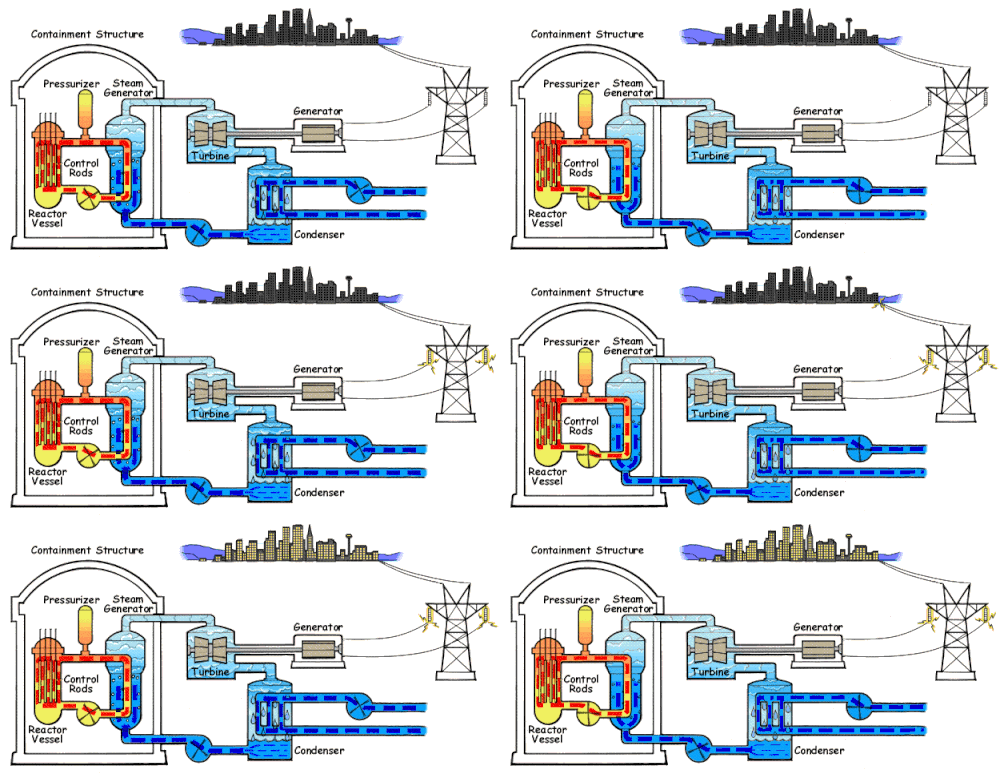
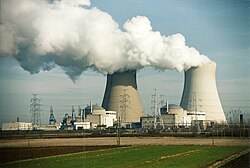
To manage the heat generated during fission, many plants use cooling towers to condense steam exiting the turbines. It is important to note that the steam released from these towers never comes into contact with radioactivity.
Global Operational Status
Nuclear energy remains a cornerstone of energy security for many nations. In 2022, nuclear plants generated 2,545 terawatt-hours (TWh) of electricity. Some countries rely on this source more heavily than others:
- France: Sources approximately 70% of its electricity from nuclear power.
- Ukraine, Slovakia, Belgium, and Hungary: Each sources around 50% of their power from nuclear energy.
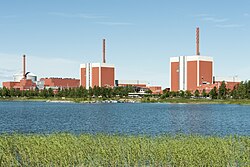
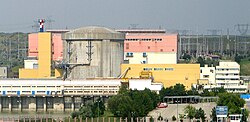
While the United States has focused on improving the efficiency of existing plants—effectively adding the output of 19 new 1,000 MWe reactors without new construction—Russia remains the leading exporter of nuclear technology. Meanwhile, China is aggressively expanding, with 25 reactors under construction as of late 2023.
Safety, Security, and Environmental Impact
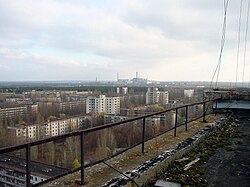
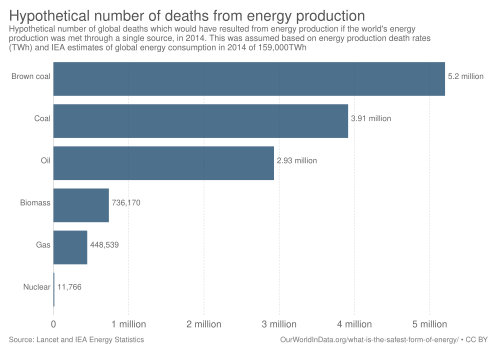
The industry has been shaped by several high-profile accidents, most notably the Three Mile Island accident (1979), the Chernobyl disaster (1986), and the Fukushima Daiichi disaster (2011). These events highlighted the complexities of Generation II reactors.
Despite these risks, nuclear power is highly efficient regarding carbon emissions. During operation, NPPs produce no greenhouse gases. When considering the full life cycle (mining and construction), older Generation II plants emit about 11g/kWh of CO2—comparable to wind power. Newer models, such as the HPR1000, are even cleaner, emitting as little as 1.31g/kWh.
The Future: Generation IV and Beyond
The Generation IV International Forum (GIF), a coalition of 13 countries including the US, France, and China, is developing next-generation reactor technologies. These designs aim to be more sustainable, economical, and resistant to nuclear proliferation.
Of the six selected Gen IV technologies, three are fast neutron reactors that operate at higher temperatures than current models. A significant milestone was reached at the Shidao Bay Nuclear Power Plant, the world's first commercial Gen IV facility, which utilizes a high-temperature gas-cooled reactor and entered commercial operation on December 12, 2023.
As of March 2024, approximately 60 reactors are being built worldwide (64 GW capacity), with another 110 in the planning stages, primarily in Asia.
| Energy Source / Reactor Type | Approx. CO2 Emissions (g/kWh) |
|---|---|
| Coal (Hard) | 864 |
| Natural Gas | 442 |
| Solar | 33 |
| Gen II Nuclear / Wind | ~11 |
| Gen IV (e.g., HPR1000) | 1.31 |
Frequently Asked Questions
What is the difference between Uranium-235 and Uranium-238?
Uranium-235 is fissile, meaning it can be split to release energy, making it the primary fuel for nuclear reactors. Uranium-238 is more abundant, less radioactive, and does not split as easily.
Is the steam from cooling towers radioactive?
No. The steam released from cooling towers is used to condense the steam exiting the turbines and never comes into contact with radioactive materials.
Which country relies most heavily on nuclear power?
France is one of the most dependent nations, sourcing approximately 70% of its total electricity from nuclear energy.
What are Generation IV reactors?
Generation IV reactors are a set of next-generation designs developed by an international coalition to be safer, more efficient, and more sustainable than previous generations, including the use of fast neutron technology.
How does nuclear power compare to fossil fuels in terms of emissions?
Nuclear power is significantly cleaner. While coal can emit over 800g/kWh of CO2, nuclear power's life cycle emissions range from 11g/kWh for older plants to as low as 1.31g/kWh for newer models.