German Nuclear Program: The History of the Uranverein
During the era of World War II, Nazi Germany initiated several research programs focused on nuclear technology. These efforts, known variously as the Uranverein (Uranium Society) or Uranprojekt (Uranium Project), sought to harness the power of nuclear fission for both energy production and potential weaponry. While the program achieved several scientific milestones, it ultimately failed to produce a functional nuclear weapon before the end of the war in 1945.
Key Facts
- Timeline: Founded in April 1939 and disbanded in 1945.
- Primary Goals: Development of the Uranmaschine (nuclear reactor), uranium and heavy water production, and uranium isotope separation.
- Key Figures: Led by theoretical physicist Werner Heisenberg and experimentalist Paul Harteck.
- Patrons: Initially the Army Ordnance Office (Heereswaffenamt), later the Reich Research Council (Reichsforschungsrat).
- Outcome: Failed to produce a bomb; resources were eventually diverted to conventional ammunition by 1943.
The Discovery of Nuclear Fission and Early Efforts
The catalyst for the German program was the discovery of nuclear fission in Berlin in December 1938. By April 1939, physicists Georg Joos and Wilhelm Hanle proposed the use of uranium fission in an Uranmaschine—a nuclear reactor—and notified the Reich Ministry of Education of its potential military and economic applications.
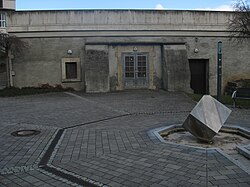
This led to the formation of an informal group known as the Uranverein. This early association included notable physicists such as Walther Bothe, Hans Geiger, and Robert Döpel. However, this first phase of research at the University of Göttingen was short-lived, ending in the fall of 1939 when several key scientists were drafted into the Wehrmacht for other military research.
The Second Uranverein and Military Control
On September 1, 1939, coinciding with the invasion of Poland, a second, more structured effort began under the administrative control of the Heereswaffenamt (Army Ordnance Office). This phase was driven by physicist Kurt Diebner and Erich Bagge, who ordered the Reich Research Council to halt independent experiments to centralize control.
The program was divided into specialized research groups focusing on different technical challenges:
- Nuclear Constants: Measuring the fundamental properties of nuclear reactions.
- Isotope Separation: Attempting to isolate specific uranium isotopes.
- Heavy Water Production: Securing the moderator needed for a reactor.
- Uranium Production: Sourcing and processing raw uranium.
Shift to the Reich Research Council
By January 1942, the German military concluded that nuclear fission would not provide a significant contribution to the immediate war effort. Consequently, the Heereswaffenamt transferred the program to the Reich Research Council (Reichsforschungsrat), although the military continued to provide funding.
Technical Challenges and Scientific Progress
The German effort relied heavily on the collaboration between theoretical and experimental physics. A significant milestone occurred in April 1942, when Werner Heisenberg and Robert Döpel experimentally proved an effective neutron increase, a critical step toward achieving a self-sustaining chain reaction.
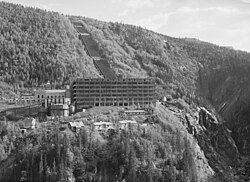
Despite these gains, the program faced severe resource constraints. To build a reactor or a bomb, the scientists required heavy water (used as a neutron moderator) and separated uranium isotopes. Heavy water was sourced from the Vemork plant in Norway, while uranium was processed in Katanga, Belgian Congo.
The Decline of the Bomb Project
By the autumn of 1942, the project to develop an atomic bomb was effectively scuttled. While a scientific solution existed, the industrial resources required for production were unavailable. Estimates suggested that even with full national production, a bomb would not be ready until 1947. By the summer of 1943, Albert Speer released 1,200 metric tons of uranium stock to be used for solid-core conventional ammunition.
Post-War Consequences and Intelligence
As the war ended, the Allies launched missions to secure German nuclear secrets and scientists. The Alsos Mission was tasked with dismantling atomic piles and capturing research data. Many German scientists were detained and interrogated to determine how close the Third Reich had come to achieving a nuclear weapon.
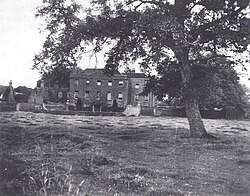
One of the most famous episodes of this period was the detention of scientists at Farm Hall in Godmanchester, where their conversations were secretly recorded by British intelligence to gauge their actual progress.
Program Summary
| Category | Details |
|---|---|
| Active Period | 1939–1945 |
| Key Leaders | Werner Heisenberg, Paul Harteck, Walter Bothe |
| Primary Objectives | Uranmaschine (Reactor), Isotope Separation, Heavy Water Production |
| Administrative Bodies | Heereswaffenamt $\rightarrow$ Reich Research Council |
| Critical Materials | Uranium (Katanga), Heavy Water (Vemork) |
| Final Status | Disbanded; resources diverted to conventional weapons |
Frequently Asked Questions
Did Nazi Germany ever build an atomic bomb?
No. While they conducted research into nuclear fission and achieved a neutron increase in a reactor-like arrangement, they never developed a functional nuclear weapon. Resource shortages and a lack of industrial scale made a bomb impossible before the war's end.
What was the purpose of the Uranmaschine?
The Uranmaschine was the German term for a nuclear reactor. Its primary purpose was to achieve a controlled nuclear chain reaction to produce energy or further fissile materials.
Why was heavy water so important to the project?
Heavy water served as a moderator, which slows down neutrons to a speed that increases the likelihood of further fission reactions, making it essential for the operation of their proposed reactor designs.
Who were the primary leaders of the Uranverein?
The program was led by a mix of theoretical and experimental physicists, most notably Werner Heisenberg, who provided theoretical leadership, and Paul Harteck, who led experimental efforts.
What happened to the German scientists after the war?
Many were captured by Allied forces during the Alsos Mission. Some were held at Farm Hall for interrogation, and others were later recruited by the United States (Operation Paperclip) or the Soviet Union to assist in their respective nuclear programs.