The Poona Horse: A Legacy of Valor in the Indian Army
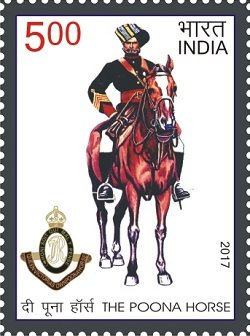
The Poona Horse is one of the most distinguished armoured regiments of the Indian Army's Armoured Corps. With a history spanning over two centuries, the regiment has evolved from a colonial cavalry unit into a modern powerhouse of armoured warfare. Known by the nickname Fakhr-e-Hind and guided by the motto Ran Vir Jai Sada (Victory always to the brave warrior), the regiment is celebrated for its courage across multiple continents and eras.
Originally raised during the era of the British East India Company, the regiment's lineage is a blend of two historic units: the 3rd Regiment of Bombay Light Cavalry (raised in 1820) and the Poona Auxiliary Horse (raised circa 1817–18). These units were eventually amalgamated in 1921, creating a legacy of service that extends from the plains of India to the deserts of North Africa and the mountains of Afghanistan.
Key Facts
- Active Service: 1817 to present.
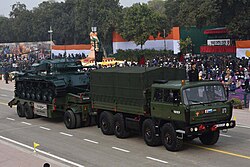
- Current Equipment: T-72 main battle tanks.
- Highest Honors: Recipient of two Param Vir Chakras (India's highest gallantry award) in two separate wars.
- Global Reach: Served in India, Afghanistan, Persia, Abyssinia, China, France, Palestine, and Mesopotamia.
- Current Leadership: General Dhiraj Seth serves as the Colonel of the Regiment.
Historical Evolution and Amalgamation
The Poona Horse was formed through the merger of two distinct cavalry traditions. The 33rd Queen Victoria's Own Light Cavalry was established at Sirur on May 4, 1820, by Major Peter Delamotte. Meanwhile, the 34th Prince Albert Victor's Own Poona Horse traced its roots back to the Auxiliary Horse of 1817.
In 1921, under Indian Army Order No 1257, the British Indian Army reduced the number of cavalry regiments. This led to the amalgamation of the 33rd and 34th units into the 33rd/34th Cavalry, which became the 17th Queen Victoria's Own Poona Horse in 1922. By 1950, following Indian independence, the unit was designated as The Poona Horse (17 Horse).
Regimental Composition
Following the amalgamation, the regiment was organized into specific squadrons based on class composition: A Squadron (Rathore Rajputs), B Squadron (Kaimkhanis), and C Squadron (Jats). After the partition of India, the Kaimkhanis moved to Pakistan and were replaced by a squadron of Sikhs from the 13th Lancers.
Global Engagements and World Wars
The regiment's battle honours reflect a vast geographical footprint. In the 19th century, they were active in the Third Anglo-Maratha War, the First and Second Anglo-Afghan Wars, and the British conquest of Sindh.
World War I: From France to Damascus
During the Great War, the Poona Horse fought on the Western Front in France, participating in major engagements including the First Battle of Ypres, the Battle of the Somme, and the Battle of Cambrai. In 1918, they were redeployed to Palestine. A notable historical anecdote occurred during the capture of Damascus, where Risaldar Major Hamir Singh briefly detained Colonel T. E. Lawrence (Lawrence of Arabia), believing him to be a spy.
World War II and Transition to Armour
In 1942, the regiment joined the British Eighth Army in the Middle East. They served as the guard force for General Claude Auchinleck during the First Battle of El Alamein. Upon returning to India in October 1945, the regiment transitioned from horses to tanks, receiving their first Stuart MK IV tanks.
Post-Independence and Modern Warfare
Since 1947, the Poona Horse has played a pivotal role in defending India's sovereignty, most notably during the conflicts with Pakistan.
The 1965 Indo-Pakistani War
Equipped with Sherman and Centurion tanks, the regiment spearheaded the advance in the Sialkot Sector. During the Battle of Phillora on September 11, 1965, the regiment destroyed 23 enemy Patton tanks. This victory was led by the legendary Lieutenant Colonel Ardeshir B Tarapore, who was posthumously awarded the Param Vir Chakra.
The 1971 Indo-Pakistani War
The regiment distinguished itself again during the Battle of Basantar. In a display of extraordinary bravery, 2nd Lieutenant Arun Khetarpal fought against overwhelming odds, earning a posthumous Param Vir Chakra for his actions.
International Peacekeeping
Beyond national conflicts, the Poona Horse contributed to global stability as part of the United Nations Disengagement Observer Force (UNDOF) in the Golan Heights from 2006 to 2008.
Regimental Summary
| Category | Details |
|---|---|
| Motto | Ran Vir Jai Sada (Victory always to the brave warrior) |
| Primary Equipment | T-72 Tanks |
| Key Battle Honours | Phillora, Basantar, Somme, Damascus, Kandahar |
| Highest Awards | Param Vir Chakra (x2), Victoria Cross (x4) |
| Branch | Indian Army Armoured Corps |
Frequently Asked Questions
What is the significance of the Poona Horse in the 1965 war?
The regiment played a decisive role in the Battle of Phillora, where they destroyed 23 enemy Patton tanks, spearheading the Indian advance into Pakistan.
Who are the Param Vir Chakra recipients from the Poona Horse?
The regiment has two PVC recipients: Lieutenant Colonel Ardeshir Tarapore (1965 War) and 2nd Lieutenant Arun Khetarpal (1971 War), both awarded posthumously.
How did the regiment transition from cavalry to armour?
After serving as a cavalry unit for over a century, the regiment was issued its first tanks, the Stuart MK IV, in October 1945 upon returning to India after World War II.
What is the meaning of the regimental motto?
The motto "Ran Vir Jai Sada" translates to "Victory always to the brave warrior," reflecting the regiment's ethos of courage and triumph in battle.
Where has the Poona Horse served outside of India?
The regiment has a global history of service, including campaigns in Afghanistan, Persia, Abyssinia, China, France, Palestine, Mesopotamia, and a UN peacekeeping mission in the Golan Heights.