2nd Lancers (Gardner's Horse)
The 2nd Lancers (Gardner's Horse) is a distinguished armoured regiment of the Indian Army with a storied history spanning over two centuries. From its origins as an irregular cavalry unit in the early 19th century to its modern role as a powerhouse of the Indian Armoured Corps, the regiment has earned a reputation for resilience, adaptability, and bravery across multiple continents.
Known by the nickname "Gardner's Horse," the regiment operates under the motto Sher Tayar Hai (The Lion is Ready), reflecting a legacy of courage that has seen them transition from horses to lances, and eventually to main battle tanks.
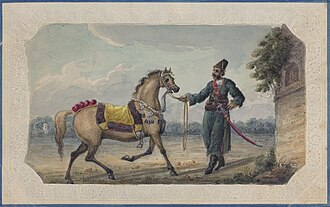
Key Facts
- Founded: 1809 by William Linnæus Gardner.
- Role: Armoured Regiment within the Indian Armoured Corps.
- Notable Honors: The only regiment to win the honor "Arracan."
- Equipment Evolution: Transitioned from cavalry horses to M4 Sherman, Vijayanta, and currently T-72 tanks.
- Distinction: First armoured corps regiment to be awarded a guidon by the President of India.
Early History and Foundation
The regiment was raised in 1809 at Farukhabad and Mainpuri by William Linnæus Gardner, who had previously served with the 74th Highlanders and the Maratha ruler of Indore. Joining the forces of the East India Company under Gerard Lake, 1st Viscount Lake, Gardner established the unit as a vital component of regional security.
The regiment's early combat record was marked by versatility. During the Anglo-Nepalese War of 1815 and subsequent operations against the Pindari (1817–1819), the unit demonstrated exceptional merit. A defining moment occurred in 1819 during the invasion of Arakan; after losing most of their mounts, the soldiers continued to fight on foot, earning the exclusive honor of "Arracan."
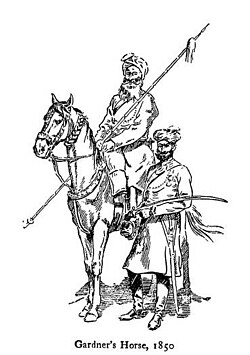
The 4th Cavalry Integration
Parallel to the 2nd Lancers, the 4th Cavalry was raised in 1838 by Captain C. Newbury at Sultanpur for service with the Nawab of Oudh. After transferring to the Bengal Army in 1840, the 4th Cavalry served in Scinde and the Baloch frontier in 1844, receiving an Honorary Standard featuring a lion device.
Service Under Company Rule and the British Raj
Throughout the mid-19th century, the 2nd Lancers were active in several critical conflicts, including the Sutlej and Punjab expeditions against the Sikhs (1846 and 1848) and the suppression of the Santhal rebellion in Bengal in 1855. During the Indian Rebellion of 1857, the 2nd regiment operated in the Gogera and Gurdaspur districts, while the 4th fought in Multan.
By 1882, the regiment's reach extended to Egypt, where they fought both dismounted at Kassassin and mounted at the Battle of Tell El Kebir.
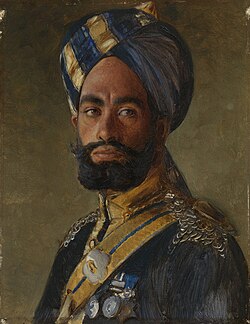
The World Wars
World War I: From Trenches to the Desert
During the First World War, the 2nd Lancers were deployed to France as part of the 5th (Mhow) Cavalry Brigade. Due to the nature of the Western Front, the cavalrymen were forced to serve as infantry in the trenches. They participated in major engagements including the Battle of the Somme, the Battle of Cambrai, and the Advance to the Hindenburg Line.
In 1918, the regiment moved to Egypt and joined General Edmund Allenby's Palestine campaign. A pivotal moment occurred on September 20, 1918, during the Battle of Megiddo, where the 2nd Lancers launched an improvised cavalry charge that broke the Ottoman line in the Jezreel Valley. This action led to the capture of Afulah and Beisan and a subsequent pursuit to Damascus.
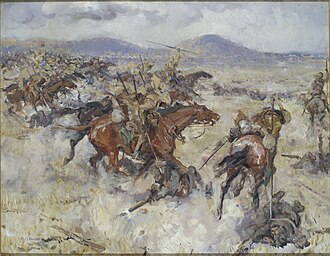
World War II: The North African Campaign
In the Second World War, the regiment served in the Western Desert campaign as part of the 3rd Indian Motor Brigade. They faced the Axis powers during the counter-attack following Operation Compass and fought in the Battle of Gazala in 1942. Despite being overrun by Italy's Ariete Armoured Division, the regiment reformed and eventually deployed to Persia (modern-day Iran) via Baghdad before returning to India in 1943.
Amalgamation and Independent India
In April 1922, the 4th Cavalry and the 2nd Lancers amalgamated in Bombay. While briefly titled the 2nd/4th Cavalry, the unit was officially designated as the 2nd Lancers (Gardner's Horse) by July 1922.
Following India's independence and the Partition of 1947, the regiment underwent a structural change. Several Muslim troops from the 'A' squadron joined the Pakistan Army, and the regiment was subsequently reorganized with Rajput and Jat squadrons.
The regiment reached a historic milestone in 1953 when General Maharaj Rajendra Shinji became the Chief of Army Staff, the first officer from the 2nd Lancers and the armoured corps to hold the position.
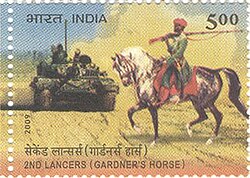
Modern Era and the 1965 War
During the Indo-Pakistani War of 1965, the 2nd Lancers utilized M4 Sherman tanks (Mk V and VI) in the Battles of Phillora and Chawinda. Their success in these engagements earned them the battle honor "PUNJAB."
In 1966, the regiment became the first in the Indian military to receive the Vijayanta, India's first indigenously built main battle tank. Today, the regiment is equipped with Soviet-era T-72 tanks.
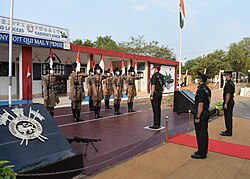
Regimental Identity and Insignia
The regiment's visual identity is deeply tied to its history. The 2nd Bengal Lancers originally used four crossed lances with "2BL," while the 4th Bengal Lancers used two crossed lances with a crown and a lion. The combined legacy is represented by the Lion Passant Reguardant, a unique badge worn by all ranks, symbolizing the "Sindh Lions."

| Period/Year | Designation | Primary Equipment/Role |
|---|---|---|
| 1809 | Gardner's Horse | Irregular Cavalry |
| 1903 | 2nd Lancers (Gardner's Horse) | Lancers (Cavalry) |
| 1940s | 2nd Royal Lancers | Motorized/Armoured |
| 1965 | 2nd Lancers | M4 Sherman Tanks |
| 1966 | 2nd Lancers | Vijayanta Tanks |
| Present | 2nd Lancers | T-72 Tanks |
Frequently Asked Questions
Who founded the 2nd Lancers?
The regiment was raised in 1809 by William Linnæus Gardner at Farukhabad and Mainpuri.
What is the significance of the "Arracan" honor?
The 2nd Lancers were the only regiment to win this honor after fighting on foot in Arakan after losing most of their horses.
Which tanks does the regiment currently use?
The regiment is currently equipped with Soviet-era T-72 tanks.
Who was the first officer from the regiment to become Army Chief?
General Maharaj Rajendra Shinji assumed the appointment of Chief of Army Staff in January 1953.
What is the regimental motto?
The motto of the 2nd Lancers is "Sher Tayar Hai," which translates to "The Lion is Ready."