Indian Cavalry Corps in World War I
During the early stages of the First World War, the British Empire deployed significant military resources from its colonies to the European theater. Among these was the Indian Cavalry Corps, a specialized formation of the Indian Army established to provide mobile combat capabilities on the Western Front.
Formed in France in December 1914, the corps served as a vital component of Indian Expeditionary Force A, which also included the Indian Corps. This strategic grouping allowed the British command to integrate Indian manpower and equestrian expertise into the broader war effort in Europe.
Organizational Structure
The Indian Cavalry Corps was organized into two primary operational units: the 1st Indian Cavalry Division and the 2nd Indian Cavalry Division. These divisions were tasked with reconnaissance and mobile operations, though the nature of trench warfare often limited the traditional utility of cavalry.
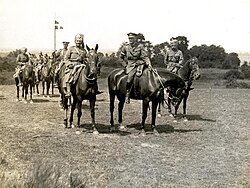
One notable leader during this period was Hew Fanshawe of the 19th Hussars. Fanshawe commanded the 2nd Indian Cavalry Division in 1914 and later transitioned to lead V Corps from 1915 to 1916.
Challenges on the Western Front
The deployment of the Indian Cavalry Corps was marked by significant hardships. The soldiers faced an alien environment—the cold, damp, and muddy conditions of the Western Front—which had a detrimental effect on their well-being and morale.
Beyond the environmental struggles, the corps suffered from a critical loss of leadership. High officer casualties created a gap that was difficult to fill. British officers who possessed a deep understanding of the language, customs, and psychology of the Indian soldiers were irreplaceable in the short term, hindering the cohesion and effectiveness of the units.
Key Facts
- Formation Date: December 1914 in France.
- Dissolution Date: March 1916.
- Parent Organization: Indian Expeditionary Force A.
- Composition: 1st and 2nd Indian Cavalry Divisions.
- Key Commander: Hew Fanshawe (2nd Indian Cavalry Division, 1914).
Summary of the Indian Cavalry Corps
| Attribute | Details |
|---|---|
| Active Period | December 1914 – March 1916 |
| Primary Location | France (Western Front) |
| Constituent Divisions | 1st Indian Cavalry Division, 2nd Indian Cavalry Division |
| Associated Force | Indian Expeditionary Force A |
Frequently Asked Questions
When was the Indian Cavalry Corps formed and disbanded?
The corps was formed in France in December 1914 and remained active until it was broken up in March 1916.
What divisions made up the Indian Cavalry Corps?
The corps consisted of the 1st Indian Cavalry Division and the 2nd Indian Cavalry Division.
Who was Hew Fanshawe?
Hew Fanshawe was an officer from the 19th Hussars who commanded the 2nd Indian Cavalry Division in 1914 and later headed V Corps between 1915 and 1916.
What were the primary difficulties faced by the corps?
The corps struggled with the harsh, unfamiliar environment of the Western Front and a shortage of experienced British officers who understood the language and psychology of the Indian troops following high casualty rates.
How did the Indian Cavalry Corps fit into the larger military structure?
Together with the Indian Corps, the Indian Cavalry Corps formed part of the larger Indian Expeditionary Force A.