The Nobel Foundation: Managing the Legacy of Alfred Nobel
The Nobel Foundation is a private institution headquartered in Stockholm, Sweden, dedicated to the administration and financial management of the Nobel Prizes. Established on June 29, 1900, the foundation serves as the steward of the vision left behind by Alfred Nobel, ensuring that his wealth continues to reward those who provide the greatest benefit to humankind.
While the foundation handles the money and the public representation of the prizes, it is important to note that it does not select the laureates. Instead, it provides the necessary funding and administrative support for the specific institutions tasked with choosing the winners.
Key Facts
- Founded: June 29, 1900.
- Purpose: To manage the finances and administration of the Nobel Prizes.
- Endowment: Originally 31 million Swedish kronor (94% of Alfred Nobel's assets).
- Current Assets: Approximately 6.6 billion Swedish kronor (about $US 700 million) as of late 2024.
- Headquarters: Stockholm, Sweden.
- Tax Status: Exempt from Swedish taxes since 1946 and US investment taxes since 1953.
The Vision of Alfred Nobel
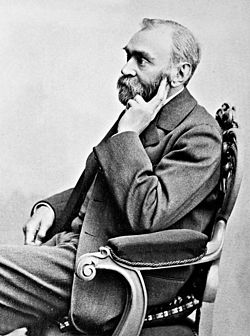
Alfred Nobel (1833–1896) was a prolific Swedish chemist, engineer, and innovator who held 355 patents. He is most famous for inventing dynamite and owning Bofors, a major armaments manufacturer. Despite his success in the arms industry, Nobel's final will, signed on November 27, 1895, revealed a desire to use his fortune for the betterment of humanity.
Nobel bequeathed 94% of his total assets—amounting to 31 million Swedish kronor—to establish five prizes. He specified that these awards should be given to individuals who made the most significant contributions in physics, chemistry, physiology or medicine, literature, and peace. Crucially, Nobel insisted that nationality should not be a factor in the selection process.
Structure and Administration
The transition from Nobel's will to the first prizes was not immediate. Due to skepticism and administrative hurdles, it took five years to establish the foundation. The first prizes were eventually awarded on December 10, 1901, to recipients including Wilhelm Conrad Röntgen.
The Prize-Awarding Institutions
The Nobel Foundation manages the funds, but the selection of laureates is handled by four distinct bodies:
- The Royal Swedish Academy of Sciences: Awards the prizes for Physics and Chemistry.
- Karolinska Institutet: Awards the prize for Physiology or Medicine.
- The Swedish Academy: Awards the prize for Literature.
- The Norwegian Nobel Committee: Awards the prize for Peace (a division established after the union between Sweden and Norway dissolved in 1905).
Governance
The foundation is governed by a Board of Directors consisting of seven members and two deputies. These members are Swedish or Norwegian citizens elected by the trustees of the prize-awarding institutions. The board is responsible for investing the capital to maintain the funding base for the prizes and administrative costs.
| Prize Category | Awarding Body | Location |
|---|---|---|
| Physics | Royal Swedish Academy of Sciences | Stockholm, Sweden |
| Chemistry | Royal Swedish Academy of Sciences | Stockholm, Sweden |
| Physiology or Medicine | Karolinska Institutet | Stockholm, Sweden |
| Literature | The Swedish Academy | Stockholm, Sweden |
| Peace | Norwegian Nobel Committee | Oslo, Norway |
Beyond the Prizes: Nobel Symposia
In 1965, the foundation expanded its reach by initiating the Nobel Symposia. These are specialized gatherings focused on scientific breakthroughs or topics of significant cultural and social importance. Past symposia have explored diverse subjects, including string theory, cosmology, diabetes mellitus, chemical kinetics, prostaglandins, and the Cold War of the 1980s.
Controversies and Other "Nobel" Awards
Because of the prestige associated with the name, the Nobel Foundation has had to protect its intellectual property. In 2007, the Nobel Charitable Trust (founded by descendants Michael, Gustaf, Peter, and Philip Nobel) announced the Michael Nobel Energy Award for alternative energy technology.
The Nobel Foundation strongly opposed this, threatening legal action. They argued that the new award constituted a misuse of the reputation and integrity associated with the original Nobel Prizes. The foundation emphasized that while the Charitable Trust was founded by the Nobel family, it was a separate entity from the official Nobel Foundation.
Frequently Asked Questions
Does the Nobel Foundation choose who wins the prizes?
No. The Nobel Foundation manages the finances and administration, but the selection of laureates is handled exclusively by the four prize-awarding institutions: the Royal Swedish Academy of Sciences, Karolinska Institutet, the Swedish Academy, and the Norwegian Nobel Committee.
How much money did Alfred Nobel leave to start the prizes?
Alfred Nobel bequeathed 94% of his total assets, which amounted to 31 million Swedish kronor at the time of his death.
Why is the Peace Prize awarded in Norway while others are in Sweden?
This arrangement was specified in Alfred Nobel's will. Following the dissolution of the union between Sweden and Norway in 1905, the responsibility for the Peace Prize remained with the Norwegian Nobel Committee in Oslo.
What are Nobel Symposia?
Started in 1965, Nobel Symposia are programs that hold conferences on areas of science experiencing global breakthroughs or topics of primary social and cultural significance.
Is the Nobel Foundation a government agency?
No, the Nobel Foundation is a private institution founded to carry out the provisions of Alfred Nobel's will.