Alfred Nobel: The Inventor Who Defined Global Excellence
Alfred Bernhard Nobel was a man of profound contradictions: a chemist, engineer, and businessman who amassed a fortune through the creation of powerful explosives, yet left a legacy dedicated to the advancement of peace and human knowledge. From his early days in Stockholm to his final years in Italy, Nobel's life was marked by an insatiable curiosity and a drive for innovation that resulted in 355 international patents.
While he is most famously remembered for inventing dynamite, Nobel's contributions spanned multiple scientific disciplines and industrial ventures, ultimately culminating in the establishment of the most prestigious awards in the world.
Key Facts
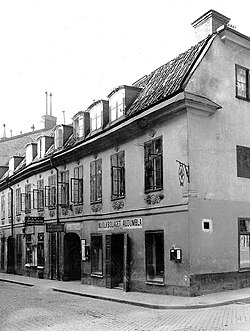
- Born: October 21, 1833, in Stockholm, Sweden.
- Major Invention: Dynamite (patented 1867), a safer alternative to nitroglycerin.
- Scientific Output: Held 355 patents during his lifetime.
- Legacy: Bequeathed 94% of his assets to establish the Nobel Prizes.
- Death: December 10, 1896, in Sanremo, Italy.
Early Life and Education
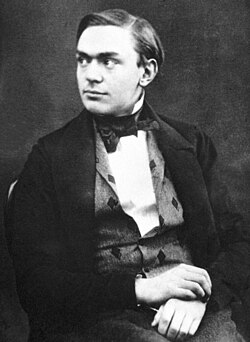
Alfred Nobel was born into a prominent family in Stockholm. His father, Immanuel Nobel, was an inventor and engineer who specialized in bridge construction and rock blasting. Following a period of bankruptcy, the family relocated to Saint Petersburg, Russia, where Immanuel found success manufacturing machine tools and explosives, including the invention of the veneer lathe used for modern plywood.
Nobel never attended university. Instead, he was educated by private tutors, showing an early aptitude for chemistry and languages. By the time he entered his professional life, he was fluent in English, French, German, and Russian. His formal scientific journey began under the tutelage of chemist Nikolai Zinin and later in Paris, where he encountered Ascanio Sobrero, the synthesizer of nitroglycerin (a highly unstable and powerful explosive liquid).
The Path to Dynamite
Nobel's career was driven by a desire to make nitroglycerin commercially viable and safe. While Sobrero opposed its use due to its unpredictability, Nobel saw its potential as a superior alternative to gunpowder. His early work included the invention of a detonator in 1863 and a blasting cap in 1865.
However, his research was not without tragedy. On September 3, 1864, an explosion at his Heleneborg factory in Stockholm killed five people, including his brother Emil. This disaster led to the loss of his production license, prompting Nobel to move his operations to a more isolated area in Vinterviken under the company Nitroglycerin AB.
In 1867, Nobel successfully patented dynamite, which stabilized nitroglycerin, making it far safer to handle and transport. This invention revolutionized mining and the construction of global transport networks. He continued to innovate, creating gelignite in 1875 and ballistite (a precursor to cordite) in 1887.
Industrial Empire and Wealth
Beyond explosives, Nobel was a shrewd businessman. He developed Bofors into a major manufacturer of cannons and armaments. He also invested heavily in oil regions in Baku, Azerbaijan, and Cheleken, Turkmenistan, through the company Branobel, founded by his brothers Ludvig and Robert.
By the time of his death, Nobel's business network included more than 90 explosives and armament factories worldwide. Despite this industrial focus on weaponry, Nobel was often described as having a pacifist character.
The Origin of the Nobel Prizes
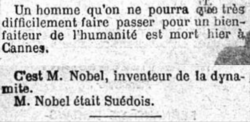
A persistent story suggests that Nobel was inspired to create his prizes after reading a premature obituary in 1888. The story claims a French newspaper mistakenly published his death notice with the headline "The merchant of death is dead," criticizing him for profiting from killing. While historians debate the existence of that specific headline, a real obituary in Le Figaro on April 15, 1888, did describe him as a man who could only with difficulty be considered a benefactor of mankind.
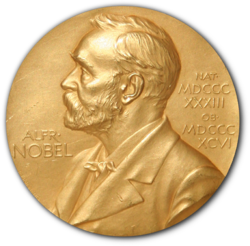
Moved by the prospect of his legacy, Nobel signed his final will on November 27, 1895. He allocated 31,225,000 Swedish kronor—approximately 94% of his total assets—to establish five annual prizes for those who conferred the greatest benefit on mankind in Physics, Chemistry, Physiology or Medicine, Literature, and Peace.
In 1968, Sveriges Riksbank (Sweden's central bank) donated funds to establish a sixth prize in Economic Sciences in memory of Alfred Nobel, though this is technically distinct from the original five prizes established by Nobel's will.
Final Years and Death
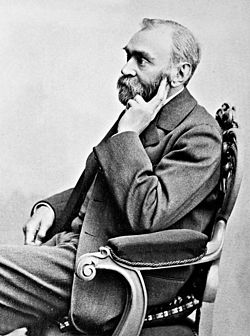
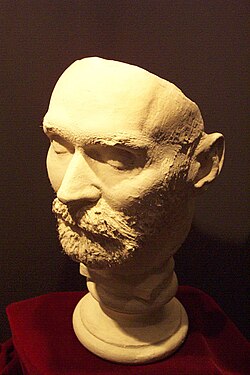
In his later years, Nobel suffered from angina pectoris (chest pain caused by reduced blood flow to the heart). He spent much of his time traveling between his residences in Europe, including Paris and eventually Sanremo, Italy, where he passed away on December 10, 1896, at the age of 63.
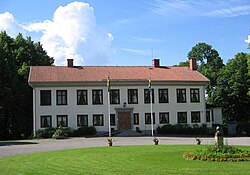
His final residence in Sweden, Björkborn Manor in Karlskoga, remains a testament to his life and work.
Summary of Alfred Nobel's Legacy
| Category | Details |
|---|---|
| Primary Inventions | Dynamite (1867), Gelignite (1875), Ballistite (1887) |
| Total Patents | 355 |
| Key Business Interests | Bofors (Armaments), Branobel (Oil) |
| Will Allocation | 94% of assets (31.2 million SEK) for Nobel Prizes |
| Original Prize Fields | Physics, Chemistry, Medicine, Literature, Peace |
Frequently Asked Questions
Did Alfred Nobel invent dynamite to kill people?
No. While dynamite was used in military applications, Nobel primarily developed it as a safer, more controllable alternative to nitroglycerin for use in civilian engineering, mining, and the construction of transport networks.
Is the Nobel Prize in Economics a "real" Nobel Prize?
Technically, it is the "Sveriges Riksbank Prize in Economic Sciences in Memory of Alfred Nobel." It was established in 1968 by Sweden's central bank, not by Alfred Nobel himself in his original will.
What influenced the creation of the Nobel Peace Prize?
It is believed that Bertha von Suttner, a peace activist and former secretary to Nobel, influenced his decision to include a prize for peace in his will through their long-term correspondence.
How many patents did Alfred Nobel hold?
Alfred Nobel held 355 international patents throughout his career as an inventor and engineer.
Where is Alfred Nobel buried?
He is buried at Norra begravningsplatsen in Solna, Sweden.