The Great Purge: Stalin's Campaign of Terror Against the Intelligentsia and Global Allies
The Great Purge was a period of state-sponsored terror in the Soviet Union characterized by mass arrests, executions, and the systematic elimination of perceived enemies of the state. While often remembered for the political trials of high-ranking officials, the purge extended far beyond the Kremlin, targeting the scientific community, the arts, foreign communists, and ethnic minorities across Eurasia.
The machinery of this repression was driven by the NKVD (the People's Commissariat for Internal Affairs), which utilized extrajudicial bodies to process victims. These included troikas—three-person panels that issued sentences without a full trial—and dvoiki, two-man panels consisting of the NKVD Commissar and the state prosecutor, specifically used for those arrested on national grounds.
Key Facts
- Extrajudicial Sentencing: Victims were often convicted in absentia (without being present) and in camera (in private) by NKVD troikas.
- Global Reach: The purge targeted foreign communists from Germany, Bulgaria, Hungary, and Poland, as well as Republican forces in Spain.
- Intellectual Decimation: Leading figures in physics, botany, astronomy, and literature were executed or imprisoned.
- Execution Methods: Most victims were shot in the head at night in prisons or secluded forests; experimental gas vans were also documented in Moscow.
- International Influence: Stalin exported the purge model to the Mongolian People's Republic and Xinjiang, China.
The Destruction of the Intelligentsia
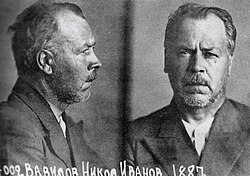
Stalin's terror struck the heart of Soviet intellectual life, erasing pioneers of science and art. In the realm of science, the purge crippled genetic research after the arrest of Nikolai Vavilov, a world-renowned botanist, who died in prison in 1943. Theoretical physics suffered the loss of Matvei Bronstein, a pioneer of quantum gravity, while the "founding father" of Soviet low-temperature physics, Lev Shubnikov, was executed in 1937.
The aerospace and engineering sectors were not spared. Sergei Korolev, the lead engineer who would later launch Sputnik 1, was imprisoned and sentenced to death before his sentence was commuted to hard labor. Other key figures, such as rocket founder Ivan Kleymyonov and engineer Georgy Langemak, were executed as alleged spies in 1938.
Arts and Literature
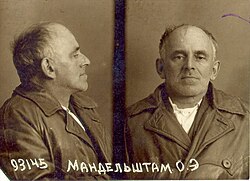
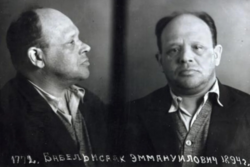
The creative community faced brutal persecution. Poet Osip Mandelstam was arrested for reciting an anti-Stalin poem and eventually died in a transit camp in 1938. Writer Isaac Babel was forced into a false confession of spying for France before being shot in 1940.
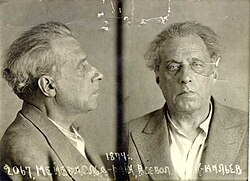
Theatre director Vsevolod Meyerhold described the horrific torture he endured, including beatings with rubber straps, before his execution in 1940. The purge also targeted national identities, executing figures like the Kazakh educator Akhmet Baitursynov and the Ukrainian director Les Kurbas.
Global Repression and Foreign Victims
The terror extended to foreign communists who had sought refuge or worked within the USSR. Historian Eric D. Weitz notes that 60 percent of German exiles in the Soviet Union were liquidated. Many were handed over to the Nazi Gestapo following the Nazi-Soviet Pact. Similarly, hundreds of Bulgarian communists perished in Soviet camps.
In Spain, the NKVD purged anti-Stalinist elements within the Republican forces, executing figures such as Andreu Nin and Jose Robles. Even American immigrants who fled the Great Depression found themselves trapped; many were arrested by the NKVD after being denied passports by the U.S. embassy.
The Purge Beyond Soviet Borders
Stalin's influence led to mirrored purges in neighboring regions. In the Mongolian People's Republic, tens of thousands were executed, including 18,000 Buddhist lamas. In Xinjiang, China, pro-Soviet leader Sheng Shicai launched a purge with NKVD assistance, alleging a "Fascist Trotskyite plot" to justify the execution of 435 conspirators.
The Gulag and Mass Executions
While many were sent to the Gulag (the system of forced labor camps), a significant number of inmates were executed. NKVD Order No. 00447 specifically targeted "vicious and stubborn anti-Soviet elements" for execution. Although the order initially specified 10,000 deaths, at least 30,000 were shot during the peak of the operation in early 1938.
| Name | Field/Role | Fate |
|---|---|---|
| Nikolai Vavilov | Botany/Genetics | Died in prison (1943) |
| Osip Mandelstam | Poetry | Died in transit camp (1938) |
| Isaac Babel | Literature | Executed (1940) |
| Lev Shubnikov | Physics | Executed (1937) |
| Vsevolod Meyerhold | Theatre | Executed (1940) |
| Sergei Korolev | Rocketry | Imprisoned/Hard Labor |
Diverse Victims of the Terror
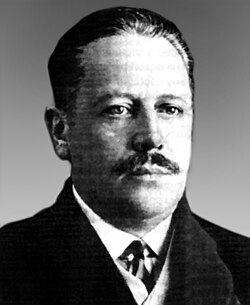
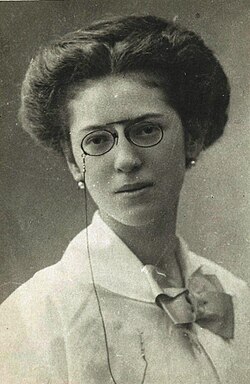
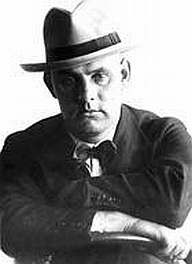
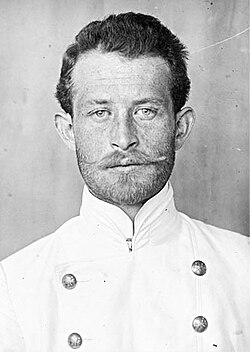
The purge swept through every stratum of society, from the high-ranking Politburo—where only Stalin survived of the original six members who lived into the purge era—to specialized professionals.
![Aino Forsten (1885–1937), Finnish educator and Social Democratic politician,[108] arrested and executed](/images/75/2d/752d4d9ef634445f4d56d74564e4e75d2ee917db3be22cee17d7f28b87daa34f.jpg)
Frequently Asked Questions
What were NKVD troikas?
Troikas were three-person extrajudicial panels used by the NKVD to sentence "enemies of the people" quickly and without the standard legal protections of a trial.
How did the purge affect the scientific community?
The purge decimated Soviet science by executing or imprisoning leading experts in physics, astronomy, and genetics, often based on fabricated charges of espionage or "un-Marxist" research.
Did the Great Purge affect people outside the Soviet Union?
Yes. The NKVD operated in Spain to purge anti-Stalinists, and Stalin's influence led to mass executions in Mongolia and Xinjiang, China.
What happened to foreign communists in the USSR?
Many foreign communists, particularly Germans, were arrested and liquidated; some were even handed over to the Nazi Gestapo after the signing of the Nazi-Soviet Pact.
What was the fate of the original Politburo members?
Of the six original Politburo members from the October Revolution who lived until the Great Purge, Stalin was the only one to survive in the Soviet Union. Four were executed, and Leon Trotsky was assassinated in Mexico.