Joseph Stalin: The Rise and Reign of the Soviet Leader
Joseph Stalin, born Ioseb Besarionis dze Jughashvili, was one of the most influential and controversial figures of the 20th century. From his beginnings in Gori, Georgia, to his ascent as the absolute leader of the Soviet Union, Stalin transformed the USSR from a peasant society into an industrial and military superpower. His tenure was marked by rapid modernization, victory in World War II, and a legacy of systemic terror.
Stalin's path to power was not immediate. He began as a revolutionary activist, navigating the dangerous waters of the Russian Empire's underground movements before becoming a trusted lieutenant of Vladimir Lenin. By the time he assumed the role of General Secretary of the Communist Party of the Soviet Union (CPSU) in 1922, he had positioned himself at the center of the party's administrative machinery.
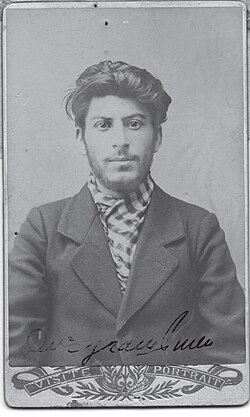
Key Facts
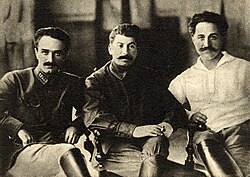
- Full Name: Ioseb Besarionis dze Jughashvili (known as Stalin and nicknamed Koba).
- Primary Roles: General Secretary of the CPSU (1922–1952) and Premier of the Soviet Union (1941–1953).
- Military Rank: Generalissimo (awarded in 1945).
- Major Policies: The First Five-Year Plan, forced collectivization, and the Great Purge.
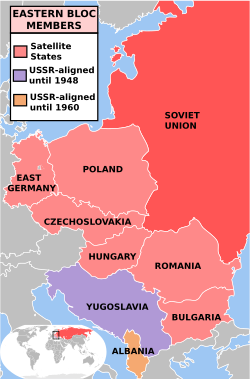
- Global Impact: Led the Soviet Union through World War II and established the Eastern Bloc during the early Cold War.
Early Life and Revolutionary Ascent
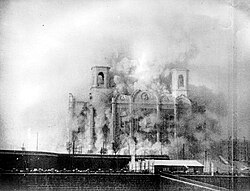
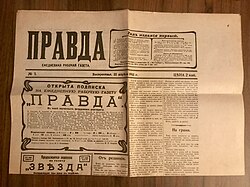
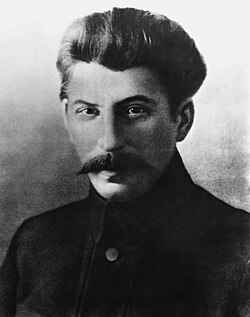
Stalin's early years were defined by his commitment to Marxism and the overthrow of the Tsarist regime. Between 1905 and 1912, he was deeply involved in the Revolution of 1905 and its aftermath. His influence grew as he rose within the party hierarchy, eventually securing a place on the Central Committee and serving as an early editor of Pravda, the official newspaper of the Communist Party.
During the Russian Revolution of 1917, Stalin played a key role in the Bolshevik seizure of power. Following the revolution, he served as the People's Commissar for Nationalities, a position created to manage the diverse ethnic groups within the new Russian SFSR.
Military Command and the Lenin Era
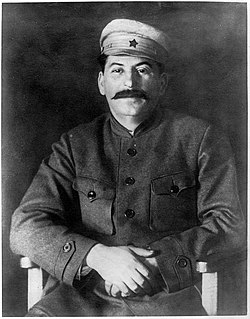
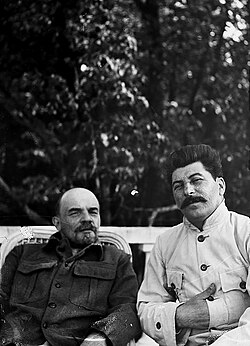
From 1918 to 1920, Stalin served in the Red Army during the Russian Civil War and the Polish-Soviet War. As Vladimir Lenin's health declined in the early 1920s, Stalin's administrative power grew, though he remained a secondary figure to Lenin until the latter's death in 1924.
Consolidation of Power and Economic Transformation
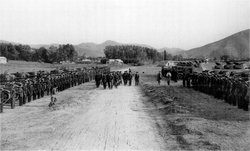
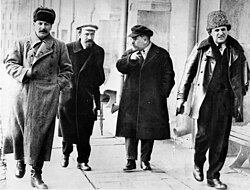
After Lenin's death, Stalin systematically marginalized his rivals, including Lev Kamenev and Grigory Zinoviev, to secure absolute control. By 1928, he launched the First Five-Year Plan, a series of aggressive economic targets designed to rapidly industrialize the Soviet Union.
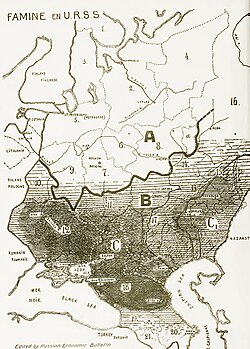
This era saw the introduction of the Stakhanovite movement, named after miner Aleksei Stakhanov, which encouraged workers to exceed production quotas through intense labor. However, this industrialization came at a staggering human cost. The forced collectivization of agriculture led to the catastrophic Soviet famine of 1932–1933.
![Aleksei Stakhanov with a fellow miner. Stalin's government initiated the Stakhanovite movement in order to encourage hard work.[243]](/images/19/ef/19efdbc30b4010f8745949fcbe9a6f2bb56448be9f45b482719e33889a688cc3.jpg)
The Great Purge and Internal Terror
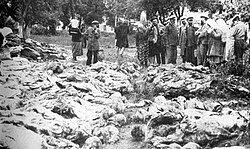
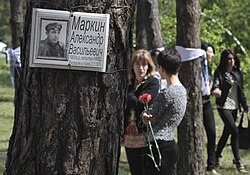
To eliminate any perceived threats to his authority, Stalin initiated the Great Purge. This period of state-sponsored terror involved mass arrests, show trials, and executions of party officials, military leaders, and ordinary citizens. Many victims were sent to the Gulag, a vast system of forced labor camps.
World War II and the Global Stage
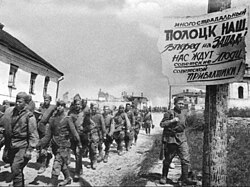
In August 1939, Stalin signed a non-aggression pact with Nazi Germany, a strategic move to avoid conflict while the two powers divided Eastern Europe. This peace was shattered in 1941 when Germany invaded the Soviet Union.
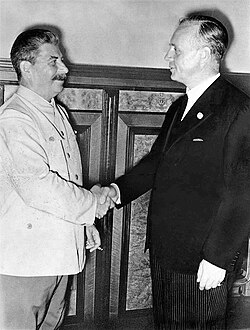
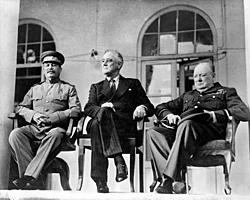
Despite early devastating losses, the Soviet Union launched a massive counter-attack. The liberation of Stalingrad in February 1943 marked a turning point in the war. Stalin, as Minister of the Armed Forces and Chairman of the State Defence Committee, coordinated the war effort alongside the "Big Three"—US President Franklin D. Roosevelt and British Prime Minister Winston Churchill.
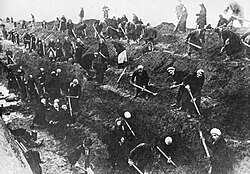
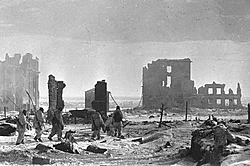
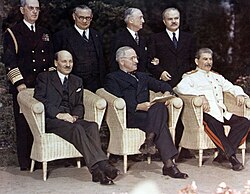
The war ended in 1945 with the Soviet victory and the capture of Berlin. At the Potsdam Conference, Stalin helped redraw the map of Europe, ensuring that several Eastern European nations fell under Soviet influence.
The Cold War and Final Years
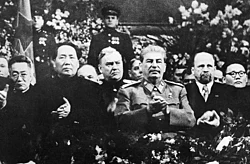
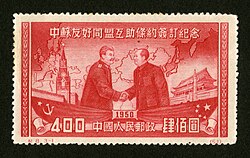
The post-war era saw the emergence of the Eastern Bloc, a group of communist states under Soviet hegemony. Stalin's foreign policy focused on creating a buffer zone in Europe and expanding influence in Asia, including a close relationship with Mao Zedong in China.
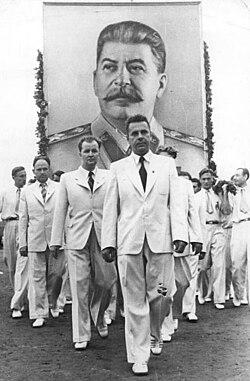
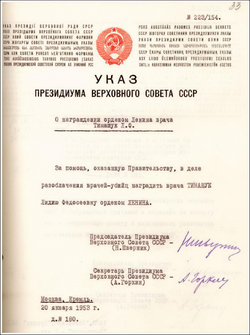
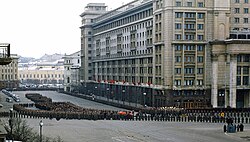
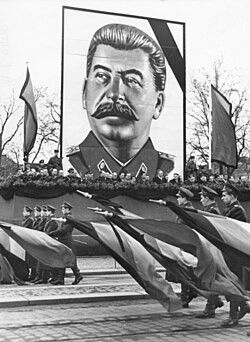
Stalin's final years were marked by increasing paranoia, exemplified by the "doctors-killers" campaign. He died on March 5, 1953, at the age of 74. Following his death, his body was initially placed in Lenin's Mausoleum before being moved to the Kremlin Wall Necropolis in 1961 during the process of de-Stalinization.
Summary of Stalin's Political Career
| Office | Tenure | Preceded By | Succeeded By |
|---|---|---|---|
| General Secretary of the CPSU | 1922–1952 | Vyacheslav Molotov | Georgy Malenkov (acting) |
| Premier of the Soviet Union | 1941–1953 | Vyacheslav Molotov | Georgy Malenkov |
| Minister of the Armed Forces | 1941–1947 | Semyon Timoshenko | Nikolai Bulganin |
| People's Commissar for Nationalities | 1917–1923 | Office established | Office abolished |
Frequently Asked Questions
What was the Great Purge?
The Great Purge was a campaign of political repression in the Soviet Union during the 1930s, characterized by mass arrests, executions, and the imprisonment of millions in the Gulag to eliminate Stalin's political opponents.
How did Stalin contribute to the victory in World War II?
Stalin served as the supreme commander of the Soviet Armed Forces, overseeing the industrial mobilization of the USSR and coordinating the strategic counter-offensives that eventually drove Nazi forces out of Soviet territory.
What was the Stakhanovite movement?
The Stakhanovite movement was a government-initiated campaign to increase industrial productivity by glorifying workers, like Aleksei Stakhanov, who exceeded their production quotas through hard work.
What happened to Stalin's body after his death?
Stalin was initially interred in Lenin's Mausoleum from 1953 to 1961. As part of the de-Stalinization process, his body was moved to the Kremlin Wall Necropolis in 1961.
Who were the "Big Three"?
The "Big Three" were the leaders of the primary Allied powers during World War II: Joseph Stalin of the Soviet Union, Franklin D. Roosevelt of the United States, and Winston Churchill of the United Kingdom.