Robert Eikhe: The Stalinist Party Boss of Siberia
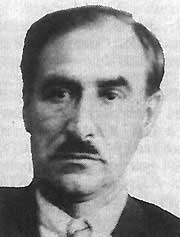
In the early years of the Soviet Union, few figures embodied the ruthless implementation of Joseph Stalin's policies in the East as starkly as Robert Eikhe. A trusted ally of the Soviet leader, Eikhe rose through the party ranks to become one of the most powerful men in the USSR, overseeing the transformation of the Siberian landscape through forced collectivisation and the violent purges of the 1930s.
Rise to Power in Siberia
Eikhe's ascent began in 1929 when he was appointed First Secretary of the Siberian territorial communist party. Following a boundary change in 1930, he transitioned to the role of First Secretary of the West Siberian regional party committee. His influence grew steadily, and he served as a member of the Central Committee of the Communist Party from 1930 until 1938.
The Campaign Against the Kulaks
In January 1930, Eikhe was appointed to a Politburo commission chaired by Molotov. This commission was tasked with drafting instructions to eliminate private farms and force peasants into collectivisation—the state-mandated consolidation of individual peasant households into collective farms.
During a speech in Novosibirsk on January 27, 1930, Eikhe advocated for brutal measures against the kulaks, a term used to describe wealthy peasants or anyone who resisted the state's collectivisation efforts. He proposed that the most "hostile, reactionary" kulaks be imprisoned in concentration camps in remote northern regions, specifically Narym or Turukhansk. For others, he mandated forced labour, including the construction of a 550-mile road connecting Tomsk to Yeniseysk.
The scale of these operations was immense. Between May and June 1931 alone, 39,788 peasant families in West Siberia had their farms seized. However, Eikhe did occasionally push back against Moscow's quotas; in 1933, he opposed a plan to deport one million victims from west Russia and Ukraine to Siberia, arguing the region could only accommodate a maximum of 250,000 people.
The Great Purge and the Troika
Following the assassination of Sergei Kirov in January 1935, Eikhe's status reached its peak when he was elected a candidate member of the Politburo. This position placed him among the dozen most powerful individuals in the Soviet Union.
As the Great Purge—a campaign of political repression and mass executions—began, Eikhe demonstrated extreme ruthlessness. On June 28, 1937, he joined a troika, a three-member commission chaired by Sergei Naumovich Mironov (head of the West Siberian NKVD). This commission was specifically instructed by the Politburo to round up and execute peasants who had previously been exiled to Siberia during the collectivisation era.
The troika's efficiency was lethal. By July 8, they had identified 10,924 people for execution and 15,036 for the Gulag (the Soviet system of forced labour camps). By October 5, the commission had sentenced 13,216 people to death and 6,205 to the Gulag. The purge spared no one, including Eikhe's own former second-in-command, V.P. Shubrikov, and F.P. Griadinsky, the chairman of the West Siberian territorial party executive.
Downfall and Reassignment
Eikhe's tenure as the dominant force in Siberia ended in late 1937. During the preparations for the "Latvian Operation," a campaign involving the mass arrest and killing of thousands of Latvians, Eikhe was summoned to Moscow. On October 30, 1937, he was removed from his powerful regional position and appointed to the significantly lesser role of USSR People's Commissar for Agriculture.
Key Facts
- Role: First Secretary of the West Siberian regional party committee and candidate member of the Politburo.
- Collectivisation: Advocated for the use of concentration camps in the North for "reactionary" kulaks.
- Mass Seizures: Oversaw the seizure of 39,788 peasant farms in West Siberia in a single month (May–June 1931).
- The Troika: Member of a three-person commission that sentenced 13,216 people to death by October 1937.
- Final Post: USSR People's Commissar for Agriculture, appointed October 30, 1937.
| Period/Event | Action/Role | Key Outcome/Statistic |
|---|---|---|
| 1929–1938 | Siberian Party Leadership | First Secretary of West Siberian regional party committee |
| May–June 1931 | Farm Seizures | 39,788 peasant families lost farms |
| 1933 | Deportation Dispute | Capped Siberian capacity at 250,000 (vs 1 million proposed) |
| June–Oct 1937 | The Troika | 13,216 death sentences; 6,205 sent to Gulag |
Frequently Asked Questions
Who was Robert Eikhe?
Robert Eikhe was a high-ranking Soviet official and a trusted supporter of Joseph Stalin who served as the First Secretary of the West Siberian regional party committee and a candidate member of the Politburo.
What was Eikhe's role in the treatment of kulaks?
Eikhe advocated for brutal measures against kulaks (wealthy or resistant peasants), calling for the most reactionary among them to be sent to concentration camps in the North and others to be forced into labour, such as building a road from Tomsk to Yeniseysk.
What was the "troika" Eikhe belonged to?
The troika was a three-member commission, including Eikhe and NKVD head Sergei Naumovich Mironov, tasked by the Politburo with rounding up and executing peasants previously exiled to Siberia.
How many people were sentenced by Eikhe's troika?
By October 5, 1937, the troika had sentenced 13,216 people to death and 6,205 people to the Gulag.
Why was Eikhe moved from Siberia to Moscow?
In October 1937, during the preparation of the "Latvian Operation," Eikhe was summoned to Moscow and reassigned to the lower-ranking position of USSR People's Commissar for Agriculture.