The George Washington: A Legacy of Luxury on the C&O Railway
Launched on April 30, 1932, the George Washington was inaugurated as the premier "top-notch" train of the Chesapeake and Ohio (C&O) Railway. At its debut, it stood as a marvel of modern travel, being one of only two long-distance trains in the United States to offer full air-conditioning—the other being the Baltimore and Ohio Railroad's Capitol Limited, which had launched just a week prior.
Unlike the streamlined trains that would define the following decade, the George Washington utilized heavy, solid cars. These were not new builds but older equipment meticulously refurbished by the C&O shops and the Pullman Company to meet the highest standards of the era.
Key Facts
- Inauguration: April 30, 1932.
- Innovation: One of the first all-air-conditioned long-distance trains in America.
- Route: Primary service between Washington, D.C., and Cincinnati, Ohio.
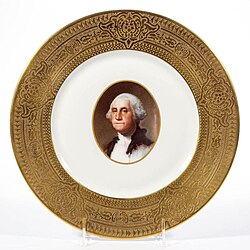
- Dining: Featured high-quality china manufactured by Buffalo Pottery.
- Legacy: Much of its original route is still served today by Amtrak's Cardinal.
Design and Distinctive Features
The Pullman Partnership
The Pullman Company, known for its standardized sleepers (sleeping cars), treated the George Washington as a special "name train." While most Pullman cars featured the company name prominently in the center of the letterboard, cars assigned to the George Washington featured the train's name in the center, with "PULLMAN" moved to the end in smaller lettering.
Thematic Branding
The C&O leaned heavily into the patriotic theme of the train. Every sleeping, dining, and lounge car was named after people, places, or events associated with George Washington's life. This attention to detail extended to the interior, where individual rooms in the sleepers were also named after figures from Washington's circle.
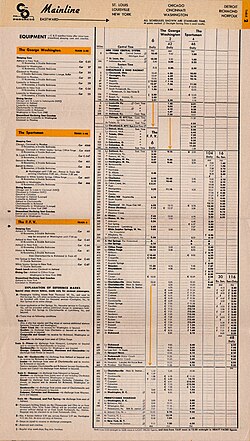
To promote the service, the C&O issued extensive booklets detailing Washington's life alongside descriptions of the train, utilizing major magazines and timetables to create a sense of optimism and luxury during a period when the public was eager for positive news.
Route and Operations
The journey began in Washington, traversing the scenic horse country of the Blue Ridge and Shenandoah Valley in Virginia. The train then crossed the Allegheny Mountains to reach The Greenbrier, a luxury resort in White Sulphur Springs, West Virginia, owned by the C&O, before descending through the New River Gorge into Ohio.
While the main line served Cincinnati, the train also operated a branch that broke off west at Ashland, Kentucky, providing through coaches and sleeping cars to Louisville's Central Station via Lexington's Union Station.
Staffing and Scale
By 1952, the George Washington was a massive operation. A typical arrival in Covington, Kentucky, included an engine, three baggage cars, a diner, three coaches, and four Pullman cars. This required a substantial crew, including an engineer, fireman, conductor, assistant conductor, flagman, Pullman conductor, four Pullman porters, two train porters, a dining car steward, ten waiters, and two baggagemen.
Evolution and Decline
Following World War II, C&O chairman Robert Ralph Young attempted to modernize the service with steam turbine motive power and newer equipment under a project titled the "Chessie." However, the project was aborted as automobiles and airlines began to dominate long-distance travel.
The train underwent several changes in its later years:
- 1953-1954: The eastern terminus for Norfolk/Hampton Roads trains shifted from Phoebus, Virginia, to Newport News station.
- 1965: The B&O's National Limited combined its Washington-to-St. Louis coaches and sleepers with the George Washington. A "Movie Coach" was introduced, showing first-run films between Washington and Cincinnati.
- 1968: The service of the former Sportsman (Ashland, Kentucky to Detroit) was consolidated into the George Washington, though sleeper service on that section was removed.
The Amtrak Era and Transition
When Amtrak took over intercity passenger rail on May 1, 1971, the George Washington lost its Louisville section but retained the Washington and Newport News sections. In July 1971, Amtrak began integrating the George with the James Whitcomb Riley, a daytimer running from Cincinnati to Chicago.
The two services merged on November 14, 1971. The name "George Washington" remained for the eastbound train until May 19, 1974. In 1977, the Riley was renamed the Cardinal, which continues to operate over much of the original George Washington route today. The Newport News section was eventually replaced by the Colonial in 1976, which later became part of the Northeast Regional brand.
| Era/Date | Key Change/Feature | Outcome |
|---|---|---|
| 1932 | Inauguration | One of the first all-air-conditioned long-distance trains. |
| Post-WWII | "Chessie" Project | Aborted due to rise of cars and planes. |
| 1965 | B&O Integration | Combined with National Limited; added Movie Coach. |
| 1971 | Amtrak Takeover | Merged with James Whitcomb Riley. |
| 1977 | Renaming | Service evolved into the modern-day Cardinal. |
Frequently Asked Questions
What made the George Washington train unique at its launch?
It was one of only two all-air-conditioned long-distance trains in the United States in 1932, offering a level of luxury and climate control that was extremely rare at the time.
How did the train's branding reflect its name?
The train followed a strict patriotic theme; all sleeping, dining, and lounge cars, as well as individual sleeper rooms, were named after people, places, or events associated with George Washington.
What happened to the "Chessie" project?
The project, led by Robert Ralph Young to upgrade the route with steam turbine power and new equipment, was aborted before service began because of the increasing popularity of air and automobile travel.
Which modern train follows the George Washington's route?
Amtrak's Cardinal currently operates over much of the former route between Cincinnati and Washington.
What was the "Movie Coach"?
Introduced in 1965, the Movie Coach was a feature that allowed passengers to watch first-run movies while traveling between Washington and Cincinnati.