Mardi Gras Service: Amtrak's Return to the Gulf Coast
The Mardi Gras Service marks a triumphant return of passenger rail to the United States Gulf Coast. Operated by Amtrak, this inter-city rail service connects the vibrant hubs of New Orleans, Louisiana, and Mobile, Alabama, providing a scenic and efficient travel alternative along the coast of the Gulf of Mexico.
Launched on August 18, 2025, the service restores a vital transportation link that had been absent for two decades. With two daily round trips and a route spanning 145 miles, the Mardi Gras Service is designed to support regional tourism and commuter needs, bridging the gap between major coastal cities.
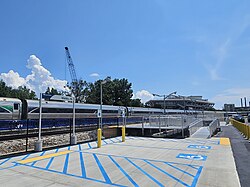
Key Facts
- Route: New Orleans, LA to Mobile, AL.
- Launch Date: August 18, 2025.
- Frequency: Two daily round trips.
- Total Distance: 145 miles (233 km).
- Average Speed: 39 mph (63 km/h).
- Total Stops: 6 stations.
- Ridership: Exceeded 100,000 passengers by April 2026.
Route and Operations
The Mardi Gras Service operates on a 145-mile corridor. While the majority of the track is owned by CSX Transportation (specifically the NO&M Subdivision), small sections around the New Orleans Union Passenger Terminal and East City Junction are owned by Amtrak and the Norfolk Southern Railway, respectively.
The journey takes an average of 3 hours and 43 minutes. To enhance connectivity, Amtrak provides bus links via Greyhound and FlixBus from Baton Rouge to New Orleans, allowing passengers from further inland to access the rail line.
Station Stops and Connectivity
The service makes six strategic stops across three states, ensuring accessibility for coastal communities:
- New Orleans, LA: The primary hub at the New Orleans Union Passenger Terminal, connecting with the City of New Orleans, Crescent, and Sunset Limited trains, as well as RTA streetcars and buses.
- Bay St. Louis, MS
- Gulfport, MS: Connected via the Coast Transit Authority.
- Biloxi, MS: Connected via the Coast Transit Authority and Greyhound.
- Pascagoula, MS
- Mobile, AL: The eastern terminus, connected to The Wave Transit System.
A Long Road to Restoration
The history of rail on this corridor is one of resilience. The route was previously served by the Gulf Coast Limited in the mid-1980s and mid-1990s, and by the long-distance Sunset Limited from 1993 until 2005. However, Hurricane Katrina devastated the region in August 2005, destroying major bridges and damaging 110 miles of track.
While freight rail was restored quickly, passenger service stalled for years due to funding shortages and disputes with freight rail companies. A concerted effort began in 2010, led by the Rail Passengers Association and the Southern Rail Commission, to lobby for the route's return.
The path to the 2025 launch involved significant federal investment, including a $33 million grant in 2019 and a subsequent $178 million allocation for the Gulf Coast Corridor Improvement Project. Despite delays caused by construction issues and negotiations between Amtrak and the City of Mobile, the service finally commenced with high demand; inaugural tickets sold out within a single day.
Service Specifications
The Mardi Gras Service is designed for accessibility and comfort, featuring Coach Class and Business Class options. All cars and stations are fully disabled-accessible. Passengers can enjoy on-board catering via a café and utilize overhead racks for baggage.
| Feature | Detail |
|---|---|
| Train Numbers | 23, 25 (Westbound); 24, 26 (Eastbound) |
| Track Gauge | 4 ft 8 ½ in (1,435 mm) |
| On-board Amenities | Café, Coach & Business Class |
| Operating Agency | Amtrak |
| Primary Track Owner | CSX Transportation |
Frequently Asked Questions
When did the Mardi Gras Service officially begin?
Regular service began on August 18, 2025, following a special inaugural trip on August 16, 2025.
Which cities does the train stop in?
The train runs between New Orleans, Louisiana, and Mobile, Alabama, with intermediate stops in Bay St. Louis, Gulfport, Biloxi, and Pascagoula, Mississippi.
How often does the train run?
The service operates twice daily in each direction.
Why was passenger rail missing from this route for so long?
Hurricane Katrina in 2005 caused extensive damage to the tracks and bridges. Restoration was delayed for years by a lack of funding and complex negotiations with freight rail owners.
How has the ridership been since the launch?
Ridership has significantly exceeded expectations. By December 2025, the service had already drawn 46,000 riders, and by April 2026, the total surpassed 100,000 passengers.