The Emancipation Proclamation Painting: Analyzing Francis Bicknell Carpenter's Composition
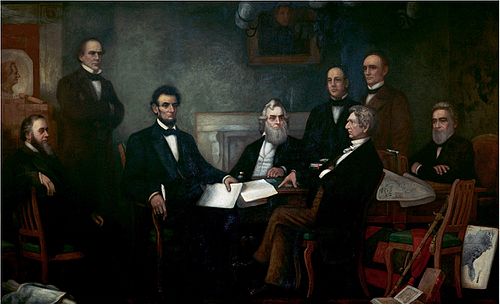
Francis Bicknell Carpenter's 1864 depiction of the first reading of the Emancipation Proclamation is more than a historical record; it is a carefully constructed narrative of leadership and political tension. Set in President Abraham Lincoln's office—the room now famously known as the Lincoln Bedroom—the painting captures a pivotal moment in American history through a precise arrangement of figures and symbols.
Carpenter worked closely with Lincoln to ensure the accuracy of the scene, with the President personally indicating where each cabinet member stood or sat on the day of the reading. The artist intentionally stripped the scene of theatrical flourishes, avoiding the use of allegorical statues, gorgeous furniture, or imaginary curtains to maintain a sense of grounded realism.
Key Facts
- Setting: Lincoln's office, which also functioned as the Cabinet Room.
- Artist's Approach: Avoided allegorical or decorative elements to focus on the historical figures.
- Central Figure: President Lincoln is positioned as the uniting point between radical and conservative factions.
- Key Detail: A 1861 US Coast Survey map is visible in the bottom right corner.
- Wall Portraits: The painting includes portraits of Andrew Jackson and Simon Cameron.
The Symbolic Arrangement of the Cabinet
Carpenter utilized the positioning of the figures to represent the political dynamics of the era. He divided the Cabinet into two ideological elements: the radical and the conservative. Lincoln is placed at the head of the official table, serving as the bridge between these two groups, though he is positioned closer to the radicals.
The Power Centers: War and Finance
To Lincoln's right, the artist placed the ministers responsible for the government's chief powers: War and Finance. Edwin M. Stanton, the Secretary of War, is seated in the immediate foreground to symbolize the great struggle of the Civil War. Standing beside the President is Salmon P. Chase, the Secretary of the Treasury, representing active support for the new policy.
Diplomacy and Administration
The composition draws significant attention to William H. Seward, the Secretary of State, who is depicted as the primary expounder of Republican party principles. Lincoln is shown leaning forward, intently considering Seward's views while holding the manuscript of the proclamation he had just read.
Detailed Figure Mapping
The painting features a specific sequence of officials from left to right, reflecting their relationship to the administration:
- Edwin M. Stanton (Secretary of War) – Seated
- Salmon P. Chase (Secretary of the Treasury) – Standing
- Abraham Lincoln – Central figure
- Gideon Welles (Secretary of the Navy) – Seated
- Caleb Blood Smith (Secretary of the Interior) – Standing
- William H. Seward (Secretary of State) – Seated
- Montgomery Blair (Postmaster General) – Standing
- Edward Bates (Attorney General) – Seated
| Name | Role | Position in Painting |
|---|---|---|
| Edwin M. Stanton | Secretary of War | Seated (Left) |
| Salmon P. Chase | Secretary of the Treasury | Standing |
| Gideon Welles | Secretary of the Navy | Seated |
| Caleb Blood Smith | Secretary of the Interior | Standing |
| William H. Seward | Secretary of State | Seated |
| Montgomery Blair | Postmaster General | Standing |
| Edward Bates | Attorney General | Seated (Right) |
The Significance of the Map
A subtle but critical detail is located in the bottom right corner of the painting. This is a map created by the US Coast Survey in 1861. Utilizing census data from 1860, the map illustrates the relative prevalence of slavery across Southern counties, providing a geographic context for the proclamation's necessity.
Frequently Asked Questions
Where is the scene of the painting set?
The painting is set in President Lincoln's office, which also served as the Cabinet Room and is known today as the Lincoln Bedroom.
How did the artist determine where to place the people?
President Lincoln personally indicated to Francis Bicknell Carpenter the exact position of each person in the room as they were on the day of the first reading.
What does the map in the painting represent?
The map, produced by the US Coast Survey in 1861 using 1860 census data, shows the prevalence of slavery in Southern counties.
Who are the two people featured in the portraits on the wall?
The portraits on the wall behind the cabinet members are of Simon Cameron and Andrew Jackson.
Why is Edwin M. Stanton placed in the immediate foreground?
As the Secretary of War, Stanton's placement in the foreground was intended to symbolize the great struggle of the war effort.