National Academy of Sciences: A Legacy of Scientific Excellence and Leadership
Since its inception in the mid-19th century, the National Academy of Sciences (NAS) has stood as a cornerstone of scientific advancement and policy in the United States. Established through an Act of Incorporation signed by President Abraham Lincoln, the Academy serves as a prestigious non-governmental organization dedicated to the advancement of science. Today, it operates as a vital component of the National Academies of Sciences, Engineering, and Medicine.
Founding and Historical Context
The NAS was officially formed on March 3, 1863. Its creation was driven by founders such as Alexander Dallas Bache and was formalized under the leadership of President Abraham Lincoln. Many of the original 50 charter members were part of the "Scientific Lazzaroni," an informal network of physical scientists based near Cambridge, Massachusetts, during the 1850s.
Over the decades, the Academy has evolved from its early roots into a global leader in scientific discourse. While it has faced historical challenges regarding diversity—notably in the representation of women in earlier years—it continues to serve as a premier institution for the world's most distinguished researchers.
Membership and Scientific Classes
Membership in the NAS is one of the highest honors a scientist can receive. Members are elected for life by their existing peers through a rigorous process involving formal nomination, a vetting period, and a final ballot held during the annual meeting in April. As of 2026, the Academy includes 2,705 active members, including 557 international, non-voting members.
To organize its vast expertise, the Academy categorizes members into six distinct scientific classes:
- Physical and Mathematical Sciences
- Biological Sciences
- Engineering and Applied Sciences
- Biomedical Sciences
- Behavioral and Social Sciences
- Applied Biological, Agricultural, and Environmental Sciences
The election process is highly selective, with up to 120 new members and 30 international members elected annually. The prestige of the institution is reflected in its membership; approximately 190 members have been awarded the Nobel Prize.
Institutional Affiliations
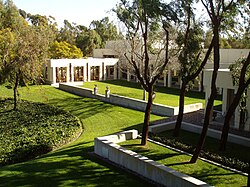
While members come from diverse backgrounds, certain academic institutions have historically produced a high volume of NAS members. Harvard University holds the record for the most members overall, while the University of California, Berkeley, leads in membership when excluding medical school affiliations. Notably, the top ten institutions account for nearly 28% of all members ever elected.
| Institution | Living Members | All-time Members (Including Medical School) | All-time Members (Excluding Medical School) |
|---|---|---|---|
| Harvard University | 179 | 331 | 235 |
| Stanford University | 178 | 274 | 234 |
| University of California, Berkeley | 143 | 255 | 255 |
| Massachusetts Institute of Technology | 122 | 219 | 219 |
| Princeton University | 90 | 133 | 133 |
Facilities and Public Outreach
The Academy maintains several key facilities. The primary National Academy of Sciences Building in Washington, D.C., is a neoclassical landmark designed by architect Bertram Grosvenor Goodhue. Dedicated in 1924 and listed on the National Register of Historic Places, the building serves as a hub for lectures, symposia, and exhibitions. It underwent a major two-year restoration that concluded in 2012 to modernize its infrastructure and improve accessibility.
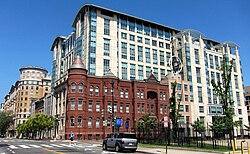
In addition to the main building, the Keck Center of the National Academies provides essential meeting spaces and houses the National Academies Press Bookstore. While the Marian Koshland Science Museum previously provided public exhibits on climate change and infectious disease, its functions have transitioned into newer outreach initiatives like LabX.
Leadership and Notable Milestones
The Academy is led by a President elected by the membership for a term not exceeding six years. The current president is geophysicist Marcia K. McNutt, who made history as the first woman to hold the position. Since 1863, the Academy has been guided by 22 different presidents.
Throughout its history, the NAS has recognized groundbreaking individuals, including:
- Edward C. Pickering: The youngest scientist elected (1873).
- Florence R. Sabin: The first woman elected to membership (1924).
- David Blackwell: The first African-American elected (1965).
- Ben Barres: The first openly transgender scientist elected (2013).
Key Facts
- Founded: March 3, 1863, by an Act of Incorporation signed by Abraham Lincoln.
- Headquarters: 2101 Constitution Avenue, NW, Washington, D.C.
- Membership: Highly selective; members are elected for life by existing members.
- Endowment: Approximately $553.9 million (as of 2020).
- Leadership: Currently led by Marcia K. McNutt, the first female president.
Frequently Asked Questions
How are new members elected to the National Academy of Sciences?
The process begins with a formal nomination, followed by a thorough vetting period. The process concludes with a final ballot during the Academy's annual meeting held every April.
What scientific fields are covered by the Academy?
The Academy organizes its members into six classes: Physical and Mathematical Sciences; Biological Sciences; Engineering and Applied Sciences; Biomedical Sciences; Behavioral and Social Sciences; and Applied Biological, Agricultural, and Environmental Sciences.
Is the National Academy of Sciences a government agency?
No, it is an NGO (non-governmental organization) that operates as part of the National Academies of Sciences, Engineering, and Medicine.
What kind of awards does the Academy provide?
The Academy issues various prestigious awards across multiple disciplines, including the Public Welfare Medal, the Henry Draper Medal in astronomy, and several awards in chemistry, physics, and biology.
Where is the main NAS building located?
The main National Academy of Sciences Building is located at 2101 Constitution Avenue, NW, in Washington, D.C., situated on the National Mall.