AAAS: Advancing Global Science and Engineering Since 1848
The American Association for the Advancement of Science (AAAS) is a United States-based international nonprofit dedicated to the betterment of humanity through the promotion of science. As the world's largest general scientific society, it serves as a critical hub for cooperation among researchers, the defense of scientific freedom, and the advancement of science education and outreach.
With a membership exceeding 120,000, the AAAS is not only a professional network but also a powerhouse of scientific communication, most notably as the publisher of the prestigious journal Science.
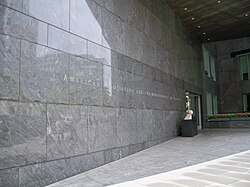
Key Facts
- Founded: September 20, 1848, in Philadelphia, Pennsylvania.
- Membership: Over 120,000 members worldwide.
- Primary Publication: The scientific journal Science.
- Core Mission: Promoting scientific cooperation, freedom, responsibility, and education.
- Key Services: EurekAlert! (news distribution) and SciLine (journalist-scientist matching).
The History and Evolution of AAAS
Founding and Early Vision
The AAAS was established on September 20, 1848, at the Academy of Natural Sciences in Philadelphia. It emerged as a reformation of the Association of American Geologists and Naturalists, with a broadened mandate to represent researchers across all scientific fields. William Charles Redfield served as the first president, chosen for his comprehensive organizational plans.
The society began with 78 members, including Matthew Fontaine Maury of the USN. From its inception, the goal was to foster scientific dialogue to increase the efficiency of research and accelerate progress through active advocacy.
Breaking Barriers and Early Growth
The association grew rapidly, reaching over 2,000 members by 1860. It also led the way in inclusivity; in 1850, the AAAS accepted its first female members, astronomer Maria Mitchell and entomologist Margaretta Morris, followed by science educator Almira Hart Lincoln Phelps in 1859.
Challenges and Recovery
The organization faced periods of instability, becoming dormant during the American Civil War after its 1861 meeting in Nashville was postponed. In the late 19th century, the AAAS contended with the rise of specialized learned societies—such as the National Academy of Sciences (1863) and the American Physical Society (1899)—and a decline in influence attributed to the lobbying activities of its third president, Alexander Dallas Bache.
The 20th Century and Modern Era
A pivotal shift occurred in 1900 when the journal Science became the official publication of the AAAS, providing a steady stream of revenue. The society gained sole ownership of the journal in 1946. The era of "big science" following World War II—marked by breakthroughs in nuclear power, space flight, and DNA—further propelled the journal's popularity and the society's public profile.
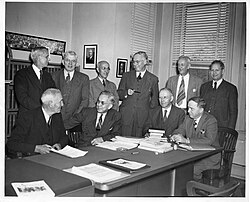
In 1973, the AAAS expanded its influence into public policy by establishing the Congressional Fellowship program, initiated by a US$10,000 donation from William T. Golden.
Scientific Advocacy and Outreach
The AAAS actively engages in the intersection of science, policy, and society. Former CEO Alan I. Leshner (2001–2015) was a prominent voice in discussing the integration of science and religion, while firmly opposing the inclusion of non-scientific content, such as intelligent design or creationism, in school curricula.
Communication Services
To bridge the gap between the laboratory and the public, the AAAS manages two major communication platforms:
- EurekAlert!: Launched in 1996, this nonprofit news release service distributes science and technology news in multiple languages, including English, Spanish, French, German, Portuguese, Japanese, and Chinese.
- SciLine: Launched in 2017, this service connects journalists with validated scientific information and expert matching to improve the quality of research-backed evidence in news reporting.
Organizational Scope and Governance
The AAAS covers a vast array of scientific disciplines, ranging from Agriculture and Astronomy to Neuroscience and Social Sciences. Its governance involves a rotating leadership structure including a President, President-elect, and Board Chair.
Notable past presidents reflect the society's prestige, including anthropologist Margaret Mead, biologist Stephen Jay Gould, and geologist John Wesley Powell.
| Category | Details |
|---|---|
| Legal Status | International Nonprofit |
| Membership Size | 120,000+ |
| Flagship Journal | Science |
| Key Programs | Congressional Fellowships, SciLine, EurekAlert! |
| Meeting Frequency | Annual (typically February) |
Frequently Asked Questions
What is the primary mission of the AAAS?
The mission of the AAAS is to promote cooperation among scientists, defend scientific freedom, encourage scientific responsibility, and support science education and outreach for the benefit of all humanity.
Which famous journal is published by the AAAS?
The AAAS is the publisher of Science, one of the world's most well-known and respected scientific journals.
How does the AAAS support science journalism?
The AAAS supports journalism through EurekAlert!, which distributes news releases, and SciLine, which matches reporters with scientific experts and validated data.
When was the AAAS founded and what was its original name?
The AAAS was founded on September 20, 1848. It was a reformation of the Association of American Geologists and Naturalists.
Does the AAAS provide awards for scientists?
Yes, the AAAS offers numerous active awards, including the Kavli Science Journalism Awards, the Golden Goose Award, and the Scientific Freedom and Responsibility Award.