The Admiralty: History and Governance of the Royal Navy
For centuries, The Admiralty served as the nerve center of British maritime power. As the government department responsible for the command of the Royal Navy, it played a pivotal role in the expansion of English overseas possessions in the 17th century and the subsequent growth of the British Empire. From its early origins to its integration into the modern Ministry of Defence, the Admiralty evolved from a personal office of the Crown into a complex bureaucratic machine.
Historically, the department was led by the Lord High Admiral, one of the Great Officers of State. However, for much of its existence, this role was put "in commission," meaning the powers were exercised by a collective group known as the Lords Commissioner of the Admiralty, who governed via the Board of Admiralty.
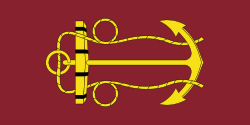
Key Facts
- Founded: 1707 (following the Acts of Union), succeeding the Admiralty and Marine Affairs Office.
- Dissolved: 1964, when it was absorbed into the Ministry of Defence.
- Headquarters: The War Office building in Whitehall, London.
- Primary Role: Command and administration of the Royal Navy.
- Modern Status: The title of Lord High Admiral is now vested in the British monarch.
The Evolution of Naval Administration
Early Foundations and the Dual System
The office of the Admiral of England was created around 1400. By 1546, King Henry VIII established the Council of the Marine (later the Navy Board) to handle administrative affairs. This created a dual system of management that lasted until 1832:
- Military Administration: Handled by the Lord High Admiral or the Board of Admiralty, focusing on general control and the conduct of war.
- Civil Administration: Handled by the Navy Board, which managed supply lines, shipbuilding, finance, and maintenance through four principal officers: the Treasurer, Comptroller, Surveyor, and Clerk of the Acts.
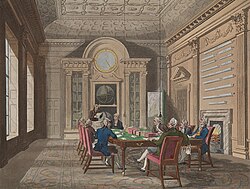
Reform and Modernization
The dual system was often plagued by inefficiency and corruption. In 1832, Sir James Graham abolished the Navy Board and merged its functions into the Board of Admiralty to improve coordination. As the 19th century progressed, the advent of steam power shifted the Navy's focus toward technical expertise, often at the expense of strategic study.
The need for professional strategic planning became evident during the early 20th century. The Admiralty Navy War Council was created in 1909, followed by the Admiralty War Staff in 1912. However, it was not until 1917, amidst the pressures of World War I, that the department was fully reorganized into a professional military staff. This reorganization merged the office of the Chief of the Naval Staff with that of the First Sea Lord, ensuring that senior naval officers had direct representation and authority on the Board of Admiralty.
Organizational Structure
By the 20th century, the Admiralty was organized into four primary components to ensure the Royal Navy remained operational and strategic:
- The Board of Admiralty: The controlling body chaired by the First Lord of the Admiralty (a civilian government minister).
- The Admiralty Naval Staff: Responsible for strategic planning, fleet distribution, and tactical doctrine.
- The Admiralty Departments: Logistical and scientific organizations that provided the ships, aircraft, and personnel.
- The Secretary's Department: Led by the Permanent Secretary, a senior civil servant who managed the board's business.
Summary of Key Roles
| Role | Nature | Primary Responsibility |
|---|---|---|
| First Lord of the Admiralty | Civilian | Senior government adviser and political head of the department. |
| First Sea Lord | Military | Chief Naval Adviser and professional head of the Royal Navy. |
| Lords Commissioners | Mixed | Collective body exercising the powers of the Lord High Admiral. |
| Permanent Secretary | Civil Service | Administrative management of the Board of Admiralty. |
Transition to the Ministry of Defence
In 1964, the Admiralty was abolished as a separate department of state. Along with the War Office and the Air Ministry, it was integrated into the newly created Ministry of Defence. Its functions were transferred to the Admiralty Board, a committee of the tri-service Defence Council. While the day-to-day operations are now managed by a Navy Board (distinct from the historic one), the term "The Admiralty" is still frequently used as a general reference to the authorities in charge of the Royal Navy.
Frequently Asked Questions
Who is the Lord High Admiral today?
Since 1964, the title of Lord High Admiral of the United Kingdom has been vested in the monarch. It was notably awarded to Prince Philip, Duke of Edinburgh, by Queen Elizabeth II in 2011 until his death in 2021.
What was the difference between the Board of Admiralty and the Navy Board?
The Board of Admiralty was responsible for military administration and the general conduct of war, while the Navy Board handled the "civil administration," including shipbuilding, finance, and supplies.
Why was the Admiralty abolished in 1964?
The Admiralty was abolished to streamline military governance by placing the Navy, Army, and Air Force under a single unified department: the Ministry of Defence.
What is the role of the First Sea Lord?
The First Sea Lord is the professional head of the Royal Navy and serves as the chief naval adviser to the government and the Board of Admiralty.
What happened to the Admiralty Naval Staff?
After the 1964 unification, the Naval Staff's functions continued within the Navy Department of the Ministry of Defence, eventually becoming part of the new Naval Staff in 1971.