Sir Godfrey Paine: Pioneer of British Naval Aviation
Rear-Admiral Sir Godfrey Marshall Paine was a pivotal figure in the evolution of British military flight. Serving in both the Royal Navy and the Royal Air Force during the early 20th century, Paine transitioned from a traditional naval officer to a leading architect of joint and naval flying training during the First World War.
Key Facts
- First Commandant: Served as the first commandant of the Central Flying School (CFS).
- Dual Service: Held senior leadership roles in both the Royal Navy (RN) and the Royal Air Force (RAF).
- Naval Aviation Lead: Appointed as Fifth Sea Lord in 1917, overseeing all naval aviation.
- Pilot Certification: Earned Pilot's Licence No. 217 on May 15, 1912, at age 40.
- Post-Military Career: Served as the Chairman of Totalisators Ltd after retiring in 1920.
Early Naval Career and Rise to Command
Born on November 21, 1871, Godfrey Marshall Paine was the fourth son of James Paine and Henrietta Grace. He entered the Royal Navy in early 1885 and progressed steadily through the ranks, becoming a midshipman in 1887. His early career included service as a lieutenant on HMS Renown and as first lieutenant on the armoured cruiser HMS Hogue starting in late 1902.
By 1907, Paine had reached the rank of captain. In 1909, he took command of the Third Destroyer Flotilla, followed by the command of HMS Actaeon, a torpedo schoolship, in 1911. It was during his tenure at HMS Actaeon that Paine's interest in aviation was sparked. The first four Royal Naval and Royal Marine officers to learn to fly—Longmore, Samson, Gerrard, and Gregory—were officially listed on the books of HMS Actaeon, and Paine closely monitored their progress.
Leading the Dawn of Military Flight
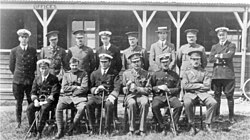
In 1912, Paine was appointed as the first commandant of the Central Flying School (CFS) at Upavon Aerodrome. To prepare for this leadership role, he underwent flight training himself, receiving his pilot's license in May of that year.
As the First World War progressed, the structure of British aviation evolved. In 1915, following the separation of the Royal Naval Air Service from the Royal Flying Corps, the Royal Navy created the Central Depot and Training Establishment at Cranwell. Paine, now a commodore first class, was appointed as its first commander. His expertise led to his appointment as Fifth Sea Lord in early 1917, a role that placed him in charge of all naval aviation operations.
Transition to the Royal Air Force
The landscape of British air power changed significantly in 1918 with the creation of the Royal Air Force (RAF). This merger abolished the roles of Fifth Sea Lord and Chief of Naval Air Service, transferring naval aviators and aircraft to the new independent service.
Paine was promoted to major general (the RAF rank at the time) and joined the Air Council as Master-General of Personnel. When the RAF introduced its own specific rank system in 1919, he was regraded to air vice marshal. He concluded his military service as the Inspector-General of the RAF, retiring on May 12, 1920, with the honorary rank of retired rear admiral.
Summary of Service and Honors
| Period | Role/Rank | Organization |
|---|---|---|
| 1912–1915 | First Commandant | Central Flying School |
| 1915–1917 | Commander | Central Depot and Training Establishment |
| 1917–1918 | Fifth Sea Lord | Royal Navy |
| 1918–1920 | Master-General of Personnel / Inspector-General | Royal Air Force |
Throughout his distinguished career, Paine received numerous accolades, including being named a Knight Commander of the Order of the Bath (KCB) and a Member of the Royal Victorian Order (MVO). He also received international honors from Italy, Japan (Gold and Silver Star of the Order of the Rising Sun), and the United States (Navy Distinguished Service Medal).
Final Years
After leaving active military service, Sir Godfrey Paine entered the private sector as the Chairman of Totalisators Ltd. He passed away on March 23, 1932, at the age of 60. In accordance with naval tradition, he was buried at sea off Nab Tower, Portsmouth.
Frequently Asked Questions
What was Sir Godfrey Paine's most significant contribution to aviation?
He is best known as the first commandant of the Central Flying School, where he helped establish the foundations of military flight training in the United Kingdom.
Which naval ships did Sir Godfrey Paine command?
Paine commanded the Third Destroyer Flotilla, the torpedo schoolship HMS Actaeon, and served as an executive officer on HMS Renown.
How did the creation of the RAF affect Paine's career?
The creation of the RAF in 1918 led to the abolition of his role as Fifth Sea Lord. He transitioned into the RAF as a major general (later air vice marshal) and served as Master-General of Personnel and Inspector-General.
When did Sir Godfrey Paine learn to fly?
Paine learned to fly in 1912, receiving Pilot's Licence No. 217 on May 15, at the age of 40, shortly before becoming the commandant of the Central Flying School.
What happened to Sir Godfrey Paine after his retirement?
Following his retirement from the military on May 12, 1920, he became the Chairman of Totalisators Ltd.