Admiral Lord Rodney: The Naval Commander of the Battle of the Saintes
Admiral George Brydges Rodney, 1st Baron Rodney, was a towering figure of the 18th-century Royal Navy. A skilled officer, politician, and colonial administrator, Rodney is most celebrated for his decisive victory over the French fleet at the Battle of the Saintes in 1782. His career spanned six decades of global conflict, during which he navigated the treacherous waters of both naval warfare and high-stakes British politics.
While he is often credited with pioneering the tactic of breaking the line—a maneuver where a fleet sails through the enemy's formation to disrupt their order—this claim remains a subject of historical debate. Regardless, his contributions to British maritime supremacy during the American War of Independence and the Seven Years' War cemented his legacy as one of the era's most influential admirals.
Key Facts
- Full Name: George Brydges Rodney, 1st Baron Rodney, KB.
- Service Years: 1732–1792.
- Highest Rank: Admiral of the White.
- Defining Victory: The Battle of the Saintes (1782), which thwarted a Franco-Spanish invasion of Jamaica.
- Major Commands: Jamaica Station and Leeward Islands Station.
- Political Role: Member of the British House of Commons for Saltash and Penryn.
Early Life and Naval Beginnings
Born around January 1718 in either London or Walton-on-Thames, George Brydges Rodney came from a family with military connections, though his father, Henry Rodney, was financially ruined by investments in the South Sea Company. Despite this impoverishment, the family remained well-connected.
Rodney entered the Royal Navy at the age of 14. His early years were spent under the mentorship of Captain Henry Medley aboard the Dreadnought and included assignments in Lisbon and protecting fishing fleets off Newfoundland. By 1742, he saw his first taste of combat during a raid on Ventimiglia, where he successfully targeted Spanish supplies. His rapid ascent saw him promoted to post-captain on November 9, 1742, making him one of the youngest officers to reach that rank in the British navy.
During the Jacobite Rebellion of 1745, Rodney blockaded the Scottish coast aboard the Ludlow Castle. Notably, his midshipmen at the time included his brother James and the future distinguished sailor Samuel Hood.
The War of the Austrian Succession and Financial Rise
Rodney's participation in the Second Battle of Cape Finisterre in 1747 was a pivotal moment in his early career. He became a strong advocate for the "good old discipline" of the Western Squadron, a strategic naval formation used to protect British interests.
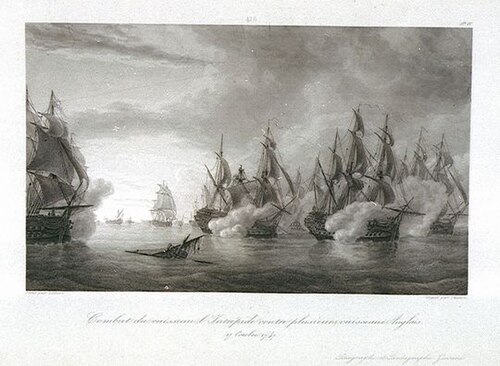
The 1740s were financially lucrative for Rodney. Through the capture of enemy ships, he earned approximately £15,000 in prize money (funds awarded to sailors for capturing enemy vessels). This wealth allowed him to purchase a large country estate at Old Alresford in Hampshire and secure a seat in the House of Commons.
The Seven Years' War and Colonial Conquests
During the Seven Years' War, Rodney distinguished himself through amphibious operations. He was involved in the raids on Rochefort and Le Havre and played a key role in the capture of Louisbourg in 1758.
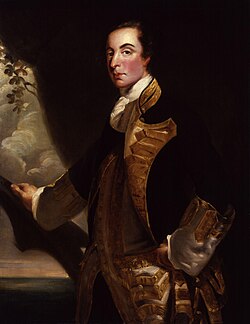
In 1762, as commander-in-chief of the Leeward Islands Station, Rodney led the successful capture of Martinique, Saint Lucia, and Grenada. While his naval prowess was evident, he faced criticism for prioritizing the protection of Jamaica over orders to support an expedition to Cuba.
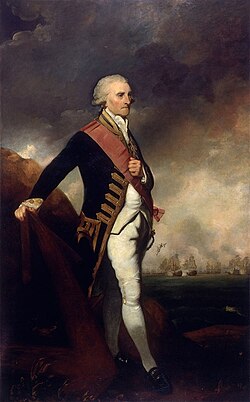
Political Turmoil and Financial Ruin
The peace following the 1763 Treaty of Paris brought instability to Rodney's personal life. His pursuit of political ambitions led to excessive spending, and by 1774, he was heavily in debt. To escape his creditors, Rodney fled Britain and eventually found himself imprisoned in a French jail. He was only released through the help of a French benefactor just as war broke out between Britain and France in 1778.
The American War of Independence and Final Triumph
Returning to command, Rodney played a critical role in relieving the Great Siege of Gibraltar and defeating a Spanish fleet at the Battle of Cape St. Vincent in 1780. He was later posted to the Jamaica Station, where he captured the Dutch colony of Sint Eustatius in 1781.
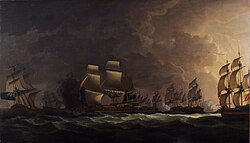
Rodney's career culminated in April 1782 at the Battle of the Saintes. Despite suffering from ill health and facing a recall to Britain, he led the Royal Navy to a decisive victory over the French, effectively ending plans for a Franco-Spanish invasion of Jamaica.
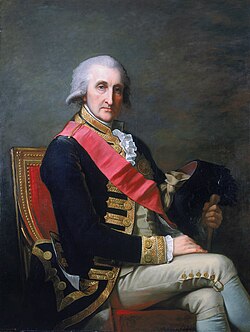
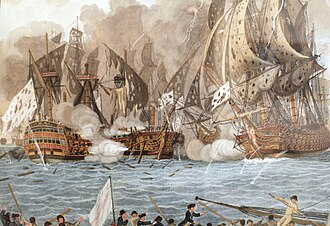
For this victory, Rodney was created Baron Rodney of Rodney Stoke and granted an annual pension of £2,000. He spent his final years in retirement until his death on May 24, 1792.
Summary of Admiral Rodney's Career
| Period/Conflict | Key Action/Role | Outcome/Significance |
|---|---|---|
| War of Austrian Succession | Second Battle of Cape Finisterre | Significant prize money and financial security |
| Seven Years' War | Invasion of Martinique (1762) | Captured Martinique, Saint Lucia, and Grenada |
| Inter-war Period | MP for Saltash and Penryn | Political ambition leading to financial debt |
| American War of Independence | Battle of the Saintes (1782) | Decisive victory; prevented invasion of Jamaica |
| Fourth Anglo-Dutch War | Capture of Sint Eustatius | Strategic seizure of Dutch trade hub |
Frequently Asked Questions
What was Admiral Rodney's most significant victory?
His most significant victory was the Battle of the Saintes in April 1782, where he defeated the French fleet and stopped a planned invasion of Jamaica.
Did Admiral Rodney invent the tactic of "breaking the line"?
It is often claimed that Rodney pioneered this tactic, but historians dispute whether he was the first to use it or simply one of the most successful practitioners.
Why did Rodney have to flee Britain in 1774?
Rodney spent large sums of money pursuing political ambitions, which led to massive debts. He fled to avoid his creditors and ended up in a French prison.
How did Rodney acquire his initial wealth?
Rodney earned a substantial amount of prize money—roughly £15,000—during the War of the Austrian Succession, specifically while commanding the Eagle.
What is the "Rodney Temple" in Jamaica?
The Rodney Temple is a massive Neo-classical monument in Spanish Town, Jamaica, commissioned by the colonial government. It features a marble statue of Rodney and is fronted by cannons taken from the French flagship Ville de Paris.