Eyre Coote: The Rise and Fall of a British General
General Eyre Coote (1762–1823) lived a life defined by extreme contrasts. A highly decorated military officer and colonial administrator, he rose to the highest echelons of the British Army and served as the Governor of Jamaica. However, his career ended in disgrace, stripped of his rank and honors due to conduct deemed unbecoming of an officer and a gentleman.
Born on May 20, 1762, Coote was the second son of the Very Rev. Charles Coote, Dean of Kilfenora, and Grace Tilson. He was the nephew of the famous Indian General Sir Eyre Coote, whose vast estates he eventually inherited. Educated at Eton and Trinity College Dublin, he began his military journey in 1774 by purchasing a commission as an ensign in the 37th Regiment of Foot.
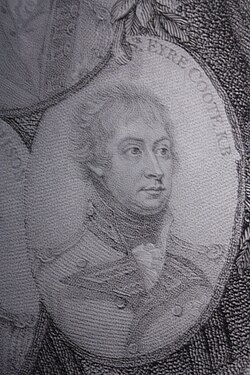
Key Facts
- Highest Rank: General in the British Army.
- Political Role: Governor of Jamaica (1806–1808) and Member of Parliament.
- Major Conflicts: American War of Independence and French Revolutionary Wars.
- Notable Honors: Knight Grand Cross of the Order of the Bath and Knight of the Order of the Crescent.
- Downfall: Dismissed from the army and degraded from his honors in 1816.
Military Career and Global Campaigns
The American War of Independence
Coote's early career was forged in North America. He carried the colors at the Battle of Long Island in 1776 and saw action at York Island, Rhode Island, and the Chesapeake. He fought in the pivotal battles of Brandywine, Germantown, and Monmouth Court House. By 1780, he was a captain serving during the siege of Charleston and Lord Cornwallis's Virginia campaigns, eventually becoming a prisoner of war following the capitulation of Yorktown.
The French Revolutionary Wars and Egypt
Returning to England, Coote rose through the ranks to lieutenant-colonel by 1788. During the war with France, he distinguished himself in the West Indies, particularly during the storming of the Morne Fortuné in Guadeloupe. His success led to his appointment as an aide-de-camp to King George III and a promotion to major-general by 1798.
Coote's most conspicuous achievements occurred during the Egypt campaign. He conducted the blockade of Alexandria from April to August 1801 and led the successful attack on the castle of Marabout. These victories earned him a knighthood in the Order of the Bath and the Order of the Crescent from the Sultan.
The Ostend Expedition and Later Commands
Not all missions were successful. In a daring attempt to flood parts of the Netherlands by cutting sluices at Ostend, Coote's small force was hemmed in by French troops. Severely wounded, Coote was forced to surrender. He later served in the Anglo-Russian invasion of Holland and the Walcheren expedition in 1809, where he superintended the siege of Flushing.
Political Life and Colonial Governance
Coote was active in politics, representing Ballynakill and Maryborough in the Irish House of Commons, and later serving as an M.P. for Queen's County and Barnstaple. From 1806 to 1808, he served as the Governor of Jamaica. However, he resigned in April 1808 due to failing health, as the tropical climate severely affected his constitution and mental well-being.
| Category | Details |
|---|---|
| Military Rank | General |
| Political Offices | Governor of Jamaica; M.P. for Queen's County and Barnstaple |
| Key Battles | Long Island, Alexandria, Morne Fortuné, Flushing |
| Education | Eton and Trinity College Dublin |
| Death | December 10, 1823 (Aged 61) |
Personal Life and Scandal
Coote's personal life was complex. He was married twice: first to Sarah Rodbard and later to Jane Bagwell. He also had four children with a Jamaican slave woman named Sally. Notably, one of these children, Susan Coote, is an ancestor of the American statesman Colin Powell.
The end of Coote's public life was marked by eccentricity and scandal. In 1815, he was accused of indecent conduct at Christ's Hospital school for boys, where he allegedly paid students to flog him. While he was acquitted by the Lord Mayor of London after a £1,000 donation to the school, the military leadership took a dimmer view. An inquiry concluded that while he was not "mad," his behavior was unworthy of an officer. On May 21, 1816, he was dismissed from the army and stripped of his knighthood.
Frequently Asked Questions
Why was General Eyre Coote dismissed from the British Army?
He was dismissed in 1816 following an inquiry into his conduct at Christ's Hospital school, where he had paid boys to flog him. The military leadership deemed this behavior unworthy of an officer and a gentleman.
What was Eyre Coote's role in Jamaica?
He served as the Governor of Jamaica from 1806 to 1808, though he resigned due to ill health caused by the West Indian climate.
Which famous American figure is related to Eyre Coote?
US soldier and statesman Colin Powell is a descendant of Susan Coote, the daughter of General Eyre Coote and a Jamaican woman named Sally.
What were Coote's most significant military achievements?
His most notable successes include the capture of the castle of Marabout during the Battle of Alexandria and his distinguished service during the storming of Morne Fortuné in Guadeloupe.
Where was Eyre Coote educated?
He attended Eton and later studied at Trinity College Dublin.