The Accolade: History and Rituals of Knighting
The accolade—also known as dubbing, adoubement, or knighting—is the central act of the rite of passage used to confer knighthood. Rooted in the Middle Ages, this ceremony marks the transition of a candidate into the ranks of chivalry. While often associated with the iconic tap of a sword on the shoulder, the ritual has evolved significantly over centuries, shifting from practical arming to symbolic gestures of honor.
Etymologically, the term entered the English language by 1591. It derives from the Middle French accolée, meaning an embrace or the bestowal of knighthood through an embrace, which further descends from the Latin collum, meaning "neck".
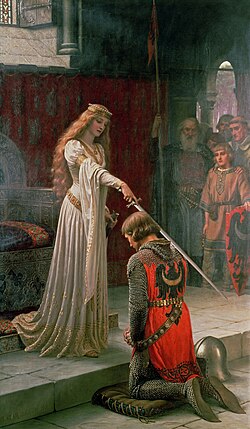
Key Facts
- Definition: The accolade is the formal act of conferring knighthood, historically involving an embrace or a blow to the neck.
- Evolution: Early rituals focused on girding the candidate with a sword rather than the "sword-tap" seen today.
- Regional Variations: Modern practices vary by country, ranging from sword taps in the UK to palm strikes in the Netherlands.
- Exclusions: In the United Kingdom, women receiving damehoods and members of the clergy are not dubbed.
The Evolution of the Ceremony
Early Medieval Traditions
In the early Middle Ages, knighting was less about ritualized gestures and more about equipment. The process primarily involved girding—the act of fastening a sword around the candidate's waist—and attaching golden spurs. These acts signified that the candidate had become a full-fledged man and warrior.
In Germany, the Annals of Aachen record a formal knighting ceremony in 1184 involving the sons of Emperor Frederick I. Earlier Germanic traditions in the 10th and 11th centuries used the presentation of a buckled weapon as a sign of coming-of-age.
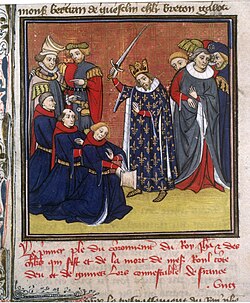
From the Colée to the Sword Tap
In medieval France, the adoubement was initially a secular event marking a young noble's maturity. Around 1200, Christian elements were introduced, such as a night of prayer preceding the rite. A precursor to the modern accolade was the colée (or collée), which involved delivering a rough blow to the neck of the recipient.
Over time, likely due to the influence of the Church, this rough blow was mitigated into a light tap with the flat side of a sword. This transition solidified the modern form of the accolade, which can manifest as either a sword tap on the shoulders or a formal embrace.
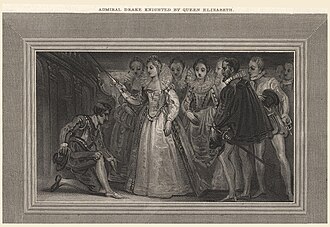
Modern Practices of the Accolade
Though the Middle Ages have passed, several nations and orders continue to perform the accolade with specific regional variations.
The United Kingdom
In the UK, the monarch or a delegated prince dubs knights on both shoulders using a sword. The knight-elect kneels on a knighting-stool; the blade touches the right shoulder, is raised over the head, and then touches the left shoulder. Contrary to popular myth, the phrase "Arise, Sir..." is not used during the ceremony. There are currently eleven different knighthoods, ranging from Knights Bachelor to the prestigious Order of the Garter.
France
France maintains a distinction between military and civilian honors. Military Knights of the Legion of Honour are struck on both shoulders with a sword (Army and Navy) or a dirk (Air Force). Civilian members receive only the accolade in its ancient sense: an embrace. Additionally, graduating officers in the French Armed Forces undergo an adoubement, where a senior officer hovers a sword over their shoulders.
The Netherlands and the Vatican
The Netherlands employs a unique method for the Military Order of William: the monarch and other knights strike the recipient on the left shoulder with the palm of the hand. The recipient does not kneel.
In the Vatican, the Equestrian Order of the Holy Sepulchre of Jerusalem performs the accolade during Holy Mass, where a Prelate dubs the recipient on the head and both shoulders.
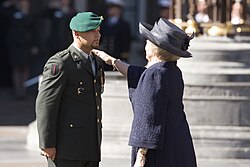
Summary of Modern Accolade Traditions
| Region/Order | Method of Accolade | Key Characteristic |
|---|---|---|
| United Kingdom | Sword tap on both shoulders | Recipient kneels on a stool |
| France (Military) | Sword or dirk tap on shoulders | Specific weapon based on branch |
| France (Civilian) | Embrace | No bladed weapon used |
| Netherlands | Palm strike to left shoulder | Recipient remains standing |
| Vatican | Dubbing of head and shoulders | Performed during Holy Mass |
| Habsburg Order | Sword tap on both shoulders | Includes a formal oath |
Frequently Asked Questions
What is the difference between an accolade and adoubement?
While often used interchangeably, in modern French military contexts, adoubement specifically refers to the ritual involving the sword, whereas accolade refers to the movement of the hands, such as a hug or a hand on the shoulder.
Do women receive the accolade in the UK?
No, women who are awarded damehoods in the United Kingdom do not receive the accolade.
Is the phrase "Arise, Sir" actually used in British knighting?
No, despite common belief and depictions in popular culture, the phrase "Arise, Sir..." is not used during the official ceremony.
Why are clergy members not dubbed with a sword?
In the United Kingdom, clergy receiving a knighthood are not dubbed because the use of a sword is considered inappropriate for their station.
What was the original purpose of the colée?
The colée was a medieval French practice involving a rough blow to the neck, serving as a precursor to the more gentle sword-tap used in later accolade ceremonies.