Texas National Historic Landmarks: A Journey Through the Lone Star State's Heritage
Texas is a land of vast landscapes and an even vaster history. From the early Spanish colonial missions to the cutting-edge frontiers of space exploration, the state's heritage is preserved through its National Historic Landmarks (NHL). These sites are recognized for their exceptional value to the nation's history, architecture, and culture.
Currently, these landmarks are distributed across 29 of Texas's 254 counties. While the sites are spread from the Panhandle to the Rio Grande, Bexar County stands out as a primary hub of history, hosting nine of these prestigious designations.
Key Facts

- Geographic Reach: Landmarks are located in 29 different Texas counties.
- Concentration: Bexar County contains the highest number of landmarks with nine sites.
- Diverse Categories: Sites range from prehistoric archeological districts to 20th-century space facilities.
- Military Legacy: Texas hosts numerous historic forts and battlefields, including the decisive San Jacinto site.
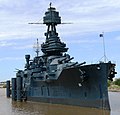
- Global Significance: Includes the largest ranch in the U.S. (King Ranch) and the first U.S. Navy battleship museum (USS TEXAS).
Colonial Foundations and Early Settlements

The Spanish Empire left an indelible mark on Texas, particularly in San Antonio. The Alamo, originally a mission and fortress compound built in the 18th century, remains one of the most iconic symbols of Texas independence following the 1836 battle.

Other Spanish-era contributions include the Espada Aqueduct, built by Franciscan friars in 1731 for irrigation, and Mission Concepcion, which saw early action during the Texas Revolution in 1831.

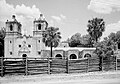
The Spanish Governor's Palace served as a residence for aristocratic leaders of Spanish Texas and now operates as a city museum, while the Presidio Nuestra Senora De Loreto De La Bahia in Goliad stands as a reminder of the 1836 Goliad Massacre.

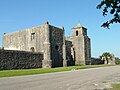
Military Forts and Battlefields

The expansion of the United States and the struggle for independence are etched into the Texas landscape. The San Jacinto Battlefield marks the site of the decisive victory that secured Texas's independence from Mexico.

The state's frontier history is preserved through a network of forts. Fort Davis protected migrants and mail coaches from 1854 to 1891, while Fort Sam Houston has served as a major military base for the southern U.S. since the 1870s, famously housing Geronimo after his capture.
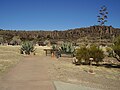

Other significant military sites include Fort Belknap, Fort Brown, Fort Concho, and Fort Richardson. In the south, the Palo Alto, Resaca De La Palma, and Palmito Ranch battlefields commemorate conflicts from the Mexican-American War and the American Civil War.
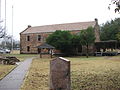






Political Legacies and Presidential Homes

Texas has been home to some of the most influential figures in American politics. The Texas State Capitol in Austin, an Italian Renaissance Revival masterpiece, serves as the seat of government.

The state preserves the personal histories of its leaders, including the Lyndon Baines Johnson Boyhood Home, the Samuel T. Rayburn House, and the John Nance Garner House. Additionally, the Governor's Mansion holds the distinction of being the first designated Texas historic landmark.




Innovation, Industry, and Space Exploration

Texas's contribution to modern technology is most evident in Houston. The Apollo Mission Control Center and the Space Environment Simulation Laboratory represent the pinnacle of the space race.


Industrial history is highlighted by the Lucas Gusher at the Spindletop Oil Field, where the 1901 discovery triggered the Texas Oil Boom. In the realm of commerce, the Highland Park Shopping Village is notable as the second shopping mall ever constructed in the United States.


Maritime and Aviation History

From the Gulf Coast to the skies, Texas's transport history is vast. The USS TEXAS was the first U.S. Navy battleship to become a museum, and the USS Lexington, known as "The Blue Ghost," serves as a floating museum in Corpus Christi.

Aviation milestones include the Randolph Field Historic District, a 1920s training field for military aviators, and Hangar 9 at Brooks Air Force Base, the last surviving hangar of its kind from 1918.


Archeology and Natural Heritage

Long before colonial settlement, Texas was inhabited by ancient cultures. The Lubbock Lake Site provides evidence of human activity dating back to 10,000 BC, while the Lower Pecos Canyonlands Archeological District preserves dozens of rock art sites.


The state's ranching culture is epitomized by the King Ranch, which is larger than the state of Rhode Island, and the J A Ranch in the Panhandle.


Natural and civic design are showcased at Bastrop State Park, a 1930s project of the Civilian Conservation Corps (CCC), a New Deal program that employed unemployed men for conservation work.

Summary of Notable Texas Landmarks
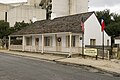
| Landmark Name | Location | Significance |
|---|---|---|
| Alamo | San Antonio | 1836 Battle of the Alamo site |
| Apollo Mission Control Center | Houston | NASA lunar mission management |
| King Ranch | Kingsville | Largest ranch in the United States |
| San Jacinto Battlefield | Houston | Decisive battle for Texas independence |
| USS TEXAS | Houston | First Navy battleship museum |
| Lubbock Lake Site | Lubbock | Archeological evidence from 10,000 BC |
Frequently Asked Questions






Which Texas county has the most National Historic Landmarks?
Bexar County has the highest concentration, with nine designated landmarks.
What is the largest ranch designated as a National Historic Landmark?
The King Ranch is the largest, noted for being larger than the state of Rhode Island.
Which site is the first designated Texas historic landmark?
The Governor's Mansion in Austin was the first to receive this designation.
Where can I find evidence of prehistoric life in Texas?
The Lubbock Lake Site offers evidence dating back to 10,000 BC, and the Lower Pecos Canyonlands Archeological District features ancient rock art.
What is the significance of the San Jacinto Battlefield?
It is the site of the decisive battle that secured the independence of Texas from Mexico.
Are there any historic ships in Texas?
Yes, the USS TEXAS and USS Lexington are museum ships, and the ELISSA is a tall ship launched in 1877.