Tertiary Education: Global Systems, Trends, and Economic Impact
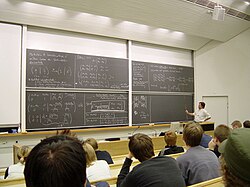
Tertiary education, commonly referred to as higher education or post-secondary education, is the stage of learning that follows the completion of secondary school. It serves as a bridge between general schooling and professional specialization, encompassing a wide array of institutions including universities, colleges, and vocational schools. As technology continues to reshape global value chains, this level of education has become increasingly critical for workers seeking to remain competitive in the modern labor market.
Depending on the region and the nature of the study, tertiary education is categorized differently. In the United Kingdom, vocational education beyond the secondary level is known as further education, while in the United States, it is often grouped under continuing education. Regardless of the terminology, the primary goal is to provide specialized knowledge that culminates in certificates, diplomas, or academic degrees.
Key Facts
![Established in 1224 by Frederick II, Holy Roman Emperor, University of Naples Federico II in Italy is the world's oldest state-funded university in continuous operation.[6][7]](/images/62/5e/625e64e87c4fd66a088fe3486f73fccc0e1c8f18c6dc7d009f31896672a417ab.jpg)
- Global Growth: Gross enrollment in tertiary education rose from 19% in 2000 to 38% in 2017.
- Economic Advantage: Tertiary-educated individuals earn approximately twice as much as median workers.
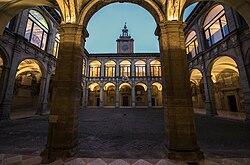
- Oldest Institutions: The University of Bologna (est. 1088) is the oldest university in continuous operation, while the University of Naples Federico II (est. 1224) is the oldest state-funded university.
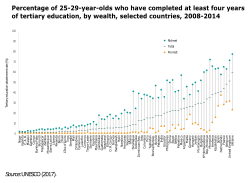
- Income Gap: Enrollment ratios vary significantly by wealth, ranging from 9% in low-income countries to 77% in high-income countries.
- Gender Shift: Since the 1990s, men have become underrepresented among tertiary students in most developed nations.
Defining the Levels of Higher Learning
![Alma Mater by Daniel Chester French, Columbia University. The alma mater, meaning "nourishing mother" in Latin, is one of the most enduring symbols of the university. The phrase was first used[citation needed] to describe the University of Bologna, Italy, founded in 1088.](/images/65/5c/655cf8894f674364f1315885687e232f39759f4c98d0efc7f1425c22195d6724.jpg)
To standardize education globally, the International Standard Classification of Education (ISCED) provides a framework for categorizing learning levels. In the 2011 version of this structure, tertiary education is divided into several tiers to distinguish between vocational and academic paths.
Academic and Degree-Based Education
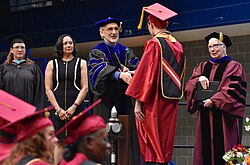
Higher education typically covers the most advanced stages of the ISCED structure:
- Level 6: Undergraduate education (Bachelor's degrees).
- Level 7: Master's level education.
- Level 8: Doctoral studies.
Non-Degree and Vocational Education
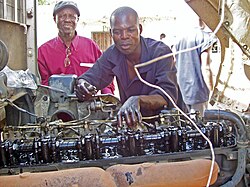
Tertiary education also includes paths that do not lead to a traditional academic degree. These are often categorized as level 4 (non-degree tertiary education) and level 5 (more advanced non-degree courses). This includes vocational training and professional certifications designed to provide specific technical skills.
Global Enrollment and Economic Trends
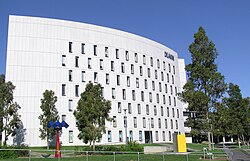
The landscape of tertiary education has shifted from an elite privilege to a mass requirement. By 2014, nearly 40% of people aged 25–34 in high-income countries had received a university education. This surge is driven by the increasing role of technology in the workforce, as highlighted by the World Bank's 2019 World Development Report.
However, this growth has led to challenges such as educational inflation, where the proliferation of degrees may impact their relative value in the job market. Despite this, the financial incentive remains strong; OECD data indicates a significant earnings premium for those with tertiary qualifications.
Notable Global Institutions and Regional Highlights
![Sapienza University of Rome. Founded in 1303, it is one of the world's oldest universities,[56] and with 122,000 students the largest university in Europe.[57]](/images/00/8e/008e02dd48a76a9698e7ba919bae1945f399b61bab3eab0c981e171e68835412.jpg)
Different regions have contributed uniquely to the evolution of higher learning. Italy, for instance, is home to some of the world's most historic institutions. The University of Bologna is recognized as the world's oldest university, and the country continues to be a powerhouse in education, with 33 universities ranking among the top 500 globally as of 2019.
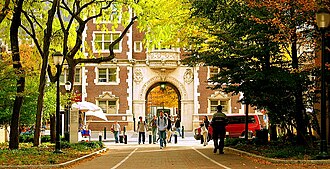
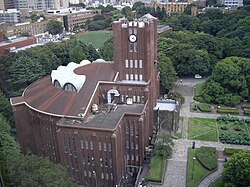
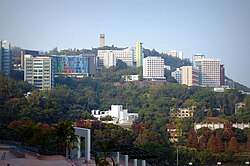
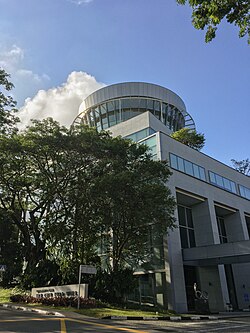
Other global hubs include the University of Tokyo in Japan, the National University of Singapore, and the Chinese University of Hong Kong, all of which emphasize research and development. In North America, institutions like the University of Pennsylvania and various community colleges in the US and Canada provide a mix of research-intensive and accessible vocational paths.
Tertiary Education Statistics
![The Polytechnic University of Milan is the city's oldest university, founded in 1863. It is the best university in Italy.[61]](/images/ba/fb/bafbf2c25428a3a1886f8abe61e6df405552e5aa0f63498523fe2d0c41fb128f.jpg)
The following table provides a snapshot of expenditure and attainment across various nations, illustrating the investment and outcomes associated with tertiary education.
| Country | Expenditure (% of GDP 2020) | Any Tertiary Degree (%) | Bachelor's Degree (%) | Doctoral Degree (%) |
|---|---|---|---|---|
| United States | 2.5 | 50.0 | 39.4 | 2.1 |
| Canada | 2.4 | 62.7 | - | - |
| Australia | 1.9 | 51.5 | 39.4 | 1.9 |
| Norway | 2.0 | 48.1 | 36.5 | 1.5 |
| Italy | 1.0 | 20.3 | 20.2 | 0.6 |
| Japan | 1.4 | 56.1 | - | - |
![Canada by province and territory, showing the percentage of the population aged 25 to 64 who had a bachelor's degree or higher, and the percentage point change from 2016 to 2021[76]](/images/36/0a/360a3d2333e8e302230b480e81882a816b689370230994af762b7abc9667549f.png)
Frequently Asked Questions
![Università Cattolica del Sacro Cuore, an Italian private research university founded in 1921. Its main campus is located in Milan, Italy, with satellite campuses in Brescia, Piacenza, Cremona and Rome. Degrees are offered both in Italian and in English.[62]](/images/03/b2/03b2f01a0445bd35ce5c816a1aa20a564b2c211c2f57405f6ad28376d331668b.jpg)
What is the difference between tertiary and higher education?
Tertiary education is a broad term that includes all education following secondary school, including both academic higher education (universities) and vocational training (colleges or trade schools). Higher education specifically refers to the academic path leading to undergraduate and postgraduate degrees.
Which is the oldest university in the world?
The University of Bologna, established in 1088 A.D. in Italy, is the world's oldest university in continuous operation.
How does tertiary education affect earning potential?
According to a 2014 OECD report, individuals with tertiary education typically earn twice as much as median workers.
What are ISCED levels 6, 7, and 8?
Under the International Standard Classification of Education (ISCED) 2011 framework, Level 6 corresponds to Bachelor's degrees, Level 7 to Master's degrees, and Level 8 to Doctoral degrees.
Why is tertiary education becoming more relevant today?
The World Bank argues that as technology plays a larger role in value chains and the nature of work changes, specialized tertiary education is essential for workers to remain competitive in the labor market.