Private Universities and Colleges: Global Structures and Regulations
In the landscape of higher education, private universities and colleges play a vital role in providing academic degree-awarding opportunities. Unlike public or national universities, which are operated, owned, or institutionally funded by governments, private institutions are independent entities. While they are not government-run, they often exist within a complex web of state interaction, frequently receiving tax breaks, public student loans, or government grants.
Many private universities operate as nonprofit organizations, though others may function as for-profit entities. Because they are not state-owned, their prevalence and the level of oversight they face vary significantly from one country to another, depending on local accreditation laws and regulatory frameworks.
Key Facts

- Private universities are not owned or institutionally funded by governments.
- They may receive government grants, tax breaks, and public student loans.
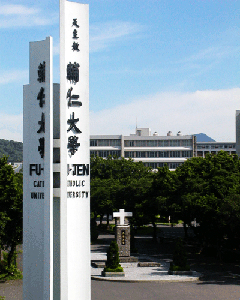
- In Japan, private universities account for over 75% of all universities.
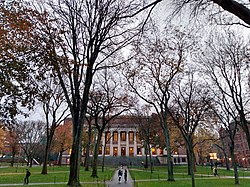
- In the United States, approximately 70% of post-secondary institutions are private.
- In Turkey, private universities are legally required to be established by non-profit foundations.
Global Variations in Higher Education
The regulatory environment for private higher education is highly diverse. Some nations have robust frameworks for private institutions, while others have none at all. This diversity is shaped by national laws regarding accreditation—the formal recognition that an institution meets specific academic and infrastructural standards.
Africa
In Egypt, the higher education sector includes 23 private universities serving approximately 60,000 students, alongside 21 public universities. Ethiopia shows a significant private presence with 83 private universities and 42 public universities as of 2022.

Asia and the Middle East
In Bangladesh, the Private University Act of 2010 established a structured regulatory framework. This requires institutions to maintain a Board of Trustees, a Syndicate, and an Academic Council, with permanent certification granted only after meeting specific standards.

India's private universities are recognized by the University Grants Commission (UGC). Under the UGC Act of 1956 and subsequent 2003 regulations, these institutions must be established by state legislative acts and are subject to regular inspections by UGC committees. As of early 2024, the UGC lists 471 state private universities.
Japan presents a unique model where private universities are the dominant force, making up over 75% of the country's total university count. Many of these institutions utilize the National Center Test for University Admissions for their entrance processes.

In Lebanon, the history of higher education includes the Syrian Protestant College (founded in 1866, later becoming the American University of Beirut) and the Jesuit-founded Université Saint-Joseph in 1875.

Turkey utilizes a specific model known as foundation universities (vakıf üniversitesi). These are established and operated by non-profit private legal entities (foundations) and possess public legal personality. Bilkent University, established in 1984, was the first of these institutions.

Europe
European regulations vary widely. In Austria, private universities must be authorized by the state to grant degrees. The Akkreditierungsrat (Accreditation Council) evaluates applicants before recommendations are sent to the Federal Ministry of Science & Research. As of 2020, Austria hosted 16 private universities, most of which are small and specialized.

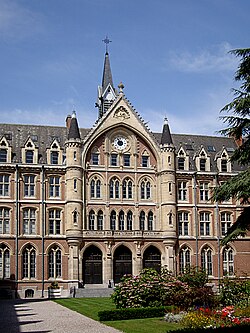
France has a history of private religious education, with several "Catholic Institutes" established under the Free Higher Education Act of 1875. In Germany, while private universities are numerous, they represent less than 1% of the total student population.
In the United Kingdom, the distinction between public and private is unique. The government does not own university assets, and staff are not civil servants. A university's status as a public body is often tied to its acceptance of funding from bodies like the Office for Students (OfS). Some institutions, such as the University of Buckingham, can operate outside the influence of government funding mechanisms and set their own tuition fees.

North America and Oceania
In the United States, private institutions make up a large portion of the landscape. As of 2016–17, 70% of post-secondary institutions were private. Among four-year degree-granting institutions, 74% were private, with a split between non-profit (75%) and for-profit (25%) models.

Australia maintains a small number of private universities. Bond University, established in 1987, was the nation's first. It utilizes a three-semester system that allows students to complete degrees more rapidly than traditional schedules.

Summary of Regional Private University Data

| Region/Country | Key Characteristic | Notable Detail |
|---|---|---|
| Japan | High Prevalence | Over 75% of all universities are private. |
| United States | Institutional Diversity | 70% of post-secondary institutions are private. |
| Turkey | Foundation Model | Operated by non-profit foundations. |
| Australia | Limited Number | Only three private universities currently exist. |
| India | UGC Regulated | 471 state private universities listed as of 2024. |
Frequently Asked Questions

What is the main difference between a private and a public university?
The primary difference is ownership and funding. Public universities are operated, owned, or institutionally funded by the government, whereas private universities are independent entities not owned or operated by the state.
Are all private universities non-profit?
No. While many private universities operate as non-profit organizations, others are established as for-profit institutions.
Do private universities receive any government support?
Yes, depending on the country, private universities may receive government grants, tax breaks, and access to public student loans.
How is the quality of private universities ensured?
Quality is typically managed through national accreditation processes. Regulatory bodies, such as the University Grants Commission in India or the Accreditation Council in Austria, inspect institutions to ensure they meet academic and infrastructural standards.
Can private universities in Turkey charge different fees?
In Turkey, private universities are classified as foundation universities and are required to be established by non-profit foundations.