Team Sports: Evolution, Classifications, and Global Impact
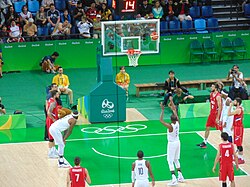
A team sport is defined as an athletic activity where the fundamental nature of the game requires multiple individuals to work together. In these sports, it is either impossible or highly impractical to compete as a single player. The core of the experience lies in cooperative effort, where teammates coordinate their actions to achieve a common objective—most often by moving a ball or similar object according to specific rules to score points.
From the strategic depth of basketball to the physical intensity of rugby, team sports emphasize coordination, strategy, and collective synergy. While the primary goal is to defeat an opposing team, the internal dynamics of the squad are what drive the game forward.
Key Facts
- Core Requirement: Team sports necessitate collective participation; they cannot be executed as single-player endeavors.
- Pure Team Sports: These include games like football, basketball, and volleyball, where a fixed number of players are required on the field.
- Ancient Roots: Evidence of team-based competition exists as far back as 7000 BC in Mongolia and 6000 BC in Libya.
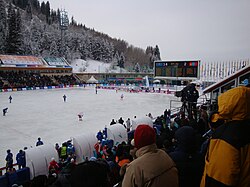
- Olympic Diversity: The Summer and Winter Olympics feature a wide array of team sports, including ice hockey and water polo.
- Attendance Giants: American football and association football consistently draw some of the highest average home league attendances globally.
Classifying Team-Based Athletics
While the term "team sport" is widely used, experts distinguish between different types of collective competition based on how the team interacts and how success is measured.
Pure Team Sports
Pure team sports are those that can only be practiced as a team. These sports typically have a fixed number of players on the field and require a larger roster (squad) to allow for tactical substitutions or to replace injured and exhausted athletes. Examples include baseball, cricket, handball, and lacrosse.
Some pure team sports operate with very small, fixed pairs, such as beach volleyball or dancesport. In these instances, the partners are entirely dependent on one another, and the absence of one player results in a total loss of competitiveness.

Relays and Formations
Relay races, common in swimming, running, and biathlon, differ from pure team sports. While they involve a team, the effort is a series of individual performances linked by specific change regulations and shared racing tactics.
Formations, such as doubles tennis or synchronized swimming, blend individual skill with cooperative strategy to enhance the competitive element of the sport.
Sports with Team Ratings
In some disciplines, athletes compete individually, but their results are aggregated into a team rating. In cycling, for example, teammates may work together to assist a specialist in reaching the highest finishing position. Similarly, in Formula One, drivers compete for individual glory while simultaneously contributing points toward a constructor's championship. Interestingly, "team orders" in Formula One were banned between 2002 and 2010 before the regulation was removed in 2011.
The History of Collective Competition
Team sports have served social, cultural, and political purposes for millennia. Ancient evidence shows that early humans engaged in collective athletics long before formal records began. Neolithic cave paintings in Mongolia (7000 BC) depict wrestling, while rock paintings in Libya (6000 BC) suggest the practice of archery and swimming.
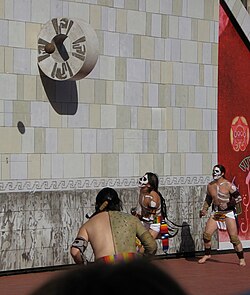
The Greeks formalized sports through the Olympic Games, first recorded in 776 BCE. While many events were individual, the Greeks also valued team-based activities like chariot racing and episkyros (a form of football). In Mesoamerica, the Aztec ball game known as ollamaliztli functioned as both a sport and a symbolic ritual.

Other ancient civilizations developed their own versions of team games. The Romans introduced harpastum, a ball game similar to soccer, and the Han dynasty in China played cuju, which fostered community camaraderie and resembles modern soccer.
Olympic Team Sports and Global Popularity
The Olympic Games continue to evolve, adding and removing team sports to reflect global interests. As of the 2024 Summer Olympics, 14 team sports are featured, with additions like cricket and flag football slated for Los Angeles 2028. The Winter Olympics feature ice hockey and curling as primary team events.
The popularity of these sports is reflected in staggering attendance numbers. In the United States, college American football teams like the Michigan Wolverines draw over 110,000 fans per game, while European association football clubs like Borussia Dortmund maintain massive average home crowds.
| Category | Core Dynamic | Examples |
|---|---|---|
| Pure Team Sports | Entire match revolves around team dynamics and coordination. | Soccer, Basketball, Volleyball |
| Formations | Individual sports with cooperative team variations. | Doubles Tennis, Synchronized Swimming |
| Relay Races | Series of individual efforts within a team context. | 4x100m Sprint, Swimming Relay |
| Team Ratings | Cumulative scores of individual performances. | Gymnastics, Formula One, Cycling |
Frequently Asked Questions
What is the main difference between a pure team sport and a relay?
A pure team sport requires continuous cooperation and simultaneous interaction to achieve a goal, whereas a relay consists of individual segments performed sequentially by different team members.
Are there team sports that don't use a ball?
Yes. While many team sports involve moving a ball or bob, others focus on different objectives, such as curling in the Winter Olympics or various team-based rowing and cycling events.
How do team ratings work in individual sports?
In sports with team ratings, the individual scores or finishing positions of several athletes are added together to determine an overall team winner, even if the athletes perform their routines separately.
Which team sports are being added to the 2028 Olympics?
The Los Angeles 2028 program has officially included cricket (T20), flag football, lacrosse (sixes), and baseball/softball as additional team sports.
What is the historical origin of soccer-like games?
Soccer-like games appeared in multiple ancient cultures, including cuju in China during the Han dynasty, harpastum in Rome, and episkyros in Greece.