Squad Numbers in Football: History, Traditions, and Evolution
In association football, squad numbers serve as more than just a way to distinguish players on the pitch; they are a visual language that often communicates a player's role, status, and history. While modern football allows for a wide range of personal choices, the tradition of numbering players from 1 to 11 remains a foundational element of the sport's identity.
Historically, these numbers were strictly tied to positions. For example, the goalkeeper almost always wears number 1, while the number 9 is traditionally reserved for the striker (or centre-forward), the team's primary goal-scorer. Perhaps the most iconic is the number 10, a shirt worn by legendary playmakers, attacking midfielders, and second strikers who dictate the flow of the game.
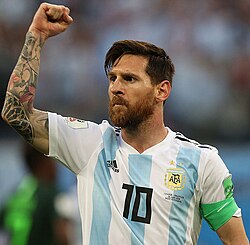
Key Facts
- Traditional Range: Numbers 1–11 typically represent the starting lineup.
- Iconic Roles: Number 1 is for goalkeepers, 9 for strikers, and 10 for playmakers.
- First Use: Numbered shirts appeared in the US in 1924 and in England as early as 1928.
- Global Variation: Different countries (e.g., Brazil, Argentina, Italy) have unique numbering conventions based on their tactical history.
- Modern Flexibility: Many leagues now allow players to choose any number between 1 and 99.
The History of Numbering
Early Adoption
The introduction of squad numbers happened sporadically across the globe. In the United States, the first recorded use was on March 30, 1924, during a National Challenge Cup match between Fall River F.C. and St. Louis Vesper Buick, though only the local team wore numbers.
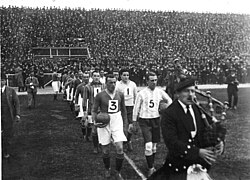
In England, Arsenal FC began wearing numbered shirts in 1928 during a match against Sheffield Wednesday. However, the Football League did not make numbers mandatory for all players until the 1939–40 season.
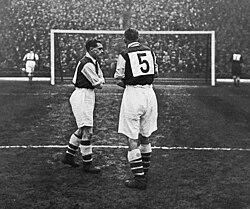
The World Cup Influence
The 1950 FIFA World Cup marked the first time squad numbers were used in a FIFA competition. By the 1954 World Cup, the system evolved into persistent numbering, where each player in a 22-man squad was assigned a specific number for the entire tournament. This shift meant teams no longer had to field players wearing 1 through 11 in every match.
A famous instance of random assignment occurred during the 1958 World Cup. The Brazilian Football Confederation forgot to submit their numbering list, leading official Lorenzo Villizzio to assign numbers randomly. This fluke resulted in Pelé receiving the number 10, a shirt that would eventually become synonymous with his greatness.
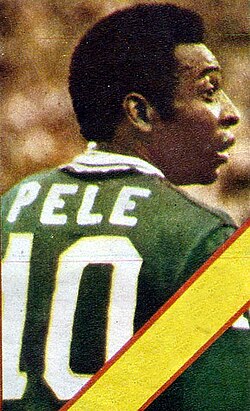
Tactical Evolution and Position Numbers
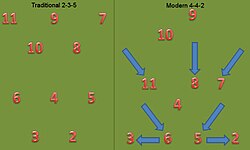
As football tactics shifted, so did the numbers. The transition from the 2–3–5 formation to the 4–4–2 saw certain numbers migrate. For instance, the centre half back moved into a defensive role, which is why central defenders often wear number 5 today.
Regional Conventions
Different nations developed their own standards. In the UK's traditional 4–4–2, number 4 was often a defensive midfielder and 8 an attacking one. In contrast, Brazil's system often assigns number 5 to the Primeiro Volante (defensive midfielder) and 8 to the Segundo Volante (central midfielder).
| Position | UK (Traditional 4-4-2) | Brazil (Traditional) | Argentina (Traditional) |
|---|---|---|---|
| Goalkeeper | 1 | 1 | 1 |
| Right Back | 2 | 2 | 4 |
| Left Back | 3 | 6 | 3 |
| Centre Back | 5 / 6 | 3 / 4 | 2 / 6 |
| Defensive Mid | 4 | 5 | 5 |
| Playmaker/Attacking Mid | 8 / 10 | 8 / 10 | 10 |
| Striker | 9 | 9 | 9 |
Unusual and Commemorative Numbers
While most players stick to traditional roles, some use their jerseys to make a statement. In 2008, AC Milan signings Andriy Shevchenko (76), Ronaldinho (80), and Mathieu Flamini (84) chose numbers representing their birth years.
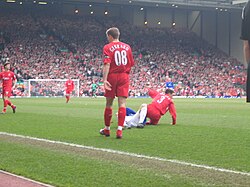
Some players use numbers for commemorative reasons. For example, Steven Gerrard wore number 08 in 2006 to celebrate Liverpool becoming the 2008 European Capital of Culture.
Other notable examples include:
- Rogério Ceni: Wore number 618 during his 618th game for São Paulo.
- Iván Zamorano: Wore "1+8" for Internazionale after losing number 9 to Ronaldo.
- Diego Lainez: Debuted for Club America with number 340.
- Thomas Oar: Wore number 121 during an AFC Asian Cup qualifier.
Goalkeeper Numbering Trends
While the starter wears 1, backup goalkeepers often wear 12, 13, or 16. In the A-League Men, second-choice keepers frequently wear 20. In major international tournaments, third-choice goalkeepers often take number 23 or 26, reflecting the total squad size allowed by FIFA.

Frequently Asked Questions
Why is the number 10 so special in football?
The number 10 is emblematic because it has historically been worn by the team's primary playmaker or most creative attacking player, and has been worn by many of the sport's greatest legends.
Can players choose any number they want?
It depends on the league. In Ligue 1 (France) and Serie A (Italy), players can generally choose any number between 1 and 99. However, in La Liga (Spain), A-squad players are restricted to numbers 1–25.
What does the number 9 typically represent?
The number 9 is traditionally worn by the centre-forward or main striker, the player positioned furthest forward whose primary role is to score goals.
Why do some players wear very high numbers?
High numbers are often used for commemorative reasons (such as club anniversaries), to represent a birth year, or because they are young players debuting from a reserve squad with higher assigned numbers.
Who was the first player to wear a numbered shirt in England?
Arsenal FC was the first English team to use numbered shirts, appearing in a match against Sheffield Wednesday in 1928.