Taxonomy: The Science and Practice of Classification
At its core, taxonomy is the science and practice of categorization. It is a dual-process discipline: first, it involves the development of an underlying scheme of classes (the taxonomy itself), and second, it involves the allocation of specific items into those classes (the process of classification). While the term was originally reserved for the biological classification of organisms based on shared characteristics, its modern application has expanded to encompass the organization of virtually any set of things or concepts, from digital documents and videos to complex economic activities.
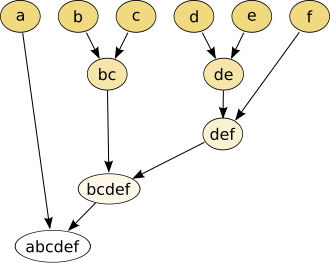
Taxonomies organize units known as taxa (singular: taxon). In many instances, these taxa are arranged in hierarchies, moving from broad, generic categories to increasingly specific ones.
Key Facts
- Scope: Taxonomy applies to natural sciences, business, computing, education, and safety.
- Biological Roots: Carl Linnaeus established the original rank-based scientific classification system.
- Modern Use: It is used in digital environments via folksonomies (user-generated tags) and search engine optimization.
- Theoretical Debate: Experts debate whether taxonomic units are mental "concepts" or objectively existing "universals" (natural kinds).
- Dynamic Nature: Some taxonomies, like the DSM for mental disorders, evolve significantly over time as theories change.
Taxonomy Across Disciplines
Natural Sciences
In biology, taxonomy has evolved from simple descriptions to complex genetic analyses. Alpha taxonomy focuses on the basic description of new species and subspecies. Other specialized approaches include:
- Linnaean Taxonomy: The traditional rank-based system.
- Phylogenetics: Classification based on the ancestral descent of organisms.
- Phenetics: Ordering species based on overall physical similarity.
- Numerical Taxonomy: The use of numeric algorithms to categorize taxa.
- Nosology: The specific classification of diseases.
Business and Economics
Economic taxonomies provide a standardized language for analyzing industry activity and financial reporting. Key examples include:
- Global Industry Classification Standard (GICS): Developed by MSCI and Standard & Poor's.
- NAICS: The North American Industry Classification System used in the US, Canada, and Mexico.
- ISIC: The United Nations system for classifying economic data.
- XBRL Taxonomy: A specialized language for eXtensible Business Reporting Language.
Computing and Software Engineering
In the digital realm, taxonomy is essential for data retrieval and system design. This includes the classification of static-code analysis tools and model-based testing techniques. Flynn's taxonomy is used to classify instruction-level parallelism methods, while folksonomy refers to a collaborative classification system based on user-created tags.
Education, Safety, and Law
Taxonomies are used to standardize learning and safety protocols. Bloom's taxonomy is a widely used framework for categorizing educational learning objectives. In safety, the Human Factors Analysis and Classification System helps identify the human causes of accidents. In the legal field, the Moys Classification Scheme provides a subject-based organization for law.
Theoretical Approaches to Classification
The philosophy of taxonomy often centers on knowledge organization. One major debate is whether classes correspond to mental concepts or real-world entities. Realist philosophers, such as Barry Smith, argue that taxonomies should refer to objectively existing entities (universals) rather than subjective concepts. This is evidenced by DNA analysis in biology; for example, birds previously classified as a single "blackbird" species were found to be multiple distinct species that simply evolved similar traits to fit their ecological niches.
Furthermore, classifications can be artificial (based on arbitrary or convenient traits) or natural (based on inherent properties of the objects being classified).
Summary of Major Taxonomic Systems
| Field | Taxonomy/System | Primary Purpose |
|---|---|---|
| Biology | Linnaean System | Hierarchical classification of organisms |
| Chemistry | Periodic Table | Organization of chemical elements |
| Psychiatry | DSM (Diagnostic and Statistical Manual) | Classification of mental disorders |
| Education | Bloom's Taxonomy | Categorization of learning objectives |
| Economics | NAICS / ISIC | Standardizing economic activity data |
| Music | Hornbostel–Sachs | Classification of musical instruments |
Frequently Asked Questions
What is the difference between taxonomy and classification?
Taxonomy is the overall science or practice of categorization, which includes creating the scheme of classes. Classification is the specific act of assigning an item to one of those pre-defined classes.
What is a folksonomy?
A folksonomy is a type of classification where users apply their own tags to content, creating a bottom-up, collaborative taxonomy rather than one imposed by a central authority.
How has the DSM changed over time?
The Diagnostic and Statistical Manual of Mental Disorders has shifted its foundational principles. The first edition (1952) was influenced by psychodynamic theory, whereas the DSM-III (1980) moved toward an atheoretical, descriptive approach.
What are "taxa"?
Taxa (singular: taxon) are the individual units or groups used in a taxonomy. They can represent anything from a biological species to a category of business industry.
Why is DNA analysis important for taxonomy?
DNA analysis allows scientists to move beyond physical similarities (phenetics) to understand actual ancestral descent (phylogenetics), often revealing that organisms which look alike are actually different species.