Taxonomic Rank: The Role of Order in Biological Classification
In the complex world of biological classification, scientists use a hierarchical system to organize every living organism based on shared ancestry and physical characteristics. One of the most critical levels in this system is the order (Latin: ordo). Positioned between the rank of family and class, the order serves as a vital bridge in Linnaean taxonomy—the system of naming and classifying organisms developed by Carl Linnaeus.
Orders reflect evolutionary relationships. For example, all owls are grouped under the order Strigiformes because they share a common ancestor and specific biological traits. The precise definition of what belongs in a particular order is determined by a taxonomist (a scientist specializing in classification). Because there are no rigid rules for recognizing an order, different taxonomists may occasionally disagree on how certain groups should be categorized.
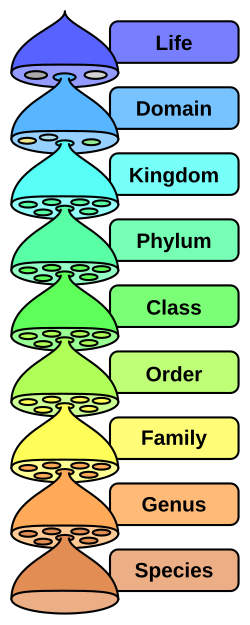
Key Facts
- Position: Order is situated between family (below) and class (above).
- Naming: Plant, fungi, and algae orders typically end in -ales; bird and fish orders often end in -iformes.
- Flexibility: Taxonomists may add intermediate ranks like superorder (above) or suborder (below) for greater precision.
- History: First introduced as a distinct rank by Augustus Quirinus Rivinus in the 1690s.
- Scope: Used across all kingdoms of nature, including animals, plants, and viruses.
Naming Conventions and Suffixes
Order names are generally capitalized. Depending on the group of organisms, specific naming schemes are often applied to make classification more intuitive:
- Plants, Fungi, and Algae: Use the suffix -ales (e.g., Dictyotales).
- Birds and Fishes: Use the Latin suffix -iformes, meaning "having the form of" (e.g., Passeriformes).
- Insects: Most use the suffix -ptera, meaning "wing".
- Mammals, Reptiles, and Amphibians: These groups lack a consistent suffix (e.g., Primates, Anura, Crocodylia).
Variations Across Biological Disciplines
Zoology
In zoology, the International Code of Zoological Nomenclature governs the use of orders. To provide finer detail, taxonomists often use additional ranks. While some are widely accepted, others—such as those proposed by McKenna and Bell (1997) or Michael Benton (2005)—are used more selectively.
| Rank | Latin Prefix | Examples |
|---|---|---|
| Magnorder | magnus (large) | Boreoeutheria, Atlantogenata |
| Superorder | super (above) | Euarchontoglires, Afrotheria |
| Grandorder | grandis (large) | Euarchonta, Ferungulata |
| Mirorder | mirus (wonderful) | Primatomorpha, Ferae |
| Order | - | Primates, Carnivora, Artiodactyla |
| Suborder | sub (under) | Haplorrhini, Vermilingua |
| Infraorder | infra (below) | Simiiformes, Cetacea |
| Parvorder | parvus (small) | Catarrhini, Odontoceti |
Botany
In botanical classification, subclass and suborder are pre-defined secondary ranks. The superorder rank is also common, often utilizing the suffix -anae, a convention popularized by Armen Takhtajan starting in 1966.
Virology
The classification of viruses has evolved significantly. Between 1991 and 2017, order was the highest available rank. However, in 2018, the International Committee on Taxonomy of Viruses introduced higher ranks, culminating in the rank of realm. Virus orders are identified by the suffix -virales.
Historical Evolution of the Order Rank
The concept of the order as a distinct rank began with the German botanist Augustus Quirinus Rivinus in the 1690s. Before this, such groups were simply referred to as "higher genera." Carl Linnaeus later standardized the use of orders across the three kingdoms of nature—minerals, plants, and animals—in the 1735 first edition of Systema Naturae.
![Title page of the 1758 edition of Linnaeus's Systema Naturæ.[9]](/images/45/bb/45bbf3fa3d14c6a235d09fb4bc5b0cc139de277f529a04dd6709757d848cdfc5.jpg)
Historically, the application of the rank differed by field. In early botany, Linnaeus used orders as artificial tools to subdivide classes. By the 19th century, works by de Candolle and Bentham & Hooker used "natural orders" to describe groups that are now classified as families. In contrast, Linnaean orders in zoology were more consistently used to describe natural groups from the start; many of these names, such as Lepidoptera (butterflies and moths), remain in use today.
Frequently Asked Questions
Where does the order rank fit in the biological hierarchy?
The order is a major taxonomic rank that sits directly below the class and directly above the family.
How are plant orders named differently from animal orders?
Plant, fungi, and algae orders typically end with the suffix -ales, whereas many bird and fish orders end in -iformes and most insect orders end in -ptera.
Who decides which organisms belong to a specific order?
Taxonomists determine the membership of an order based on shared characteristics and ancestry, though there is sometimes disagreement among experts regarding these classifications.
What is the difference between a superorder and an order?
A superorder is an additional taxonomic rank placed immediately above the order to provide a broader grouping of related orders.
How has virus classification changed recently?
Until 2017, order was the highest rank for viruses. In 2018, the International Committee on Taxonomy of Viruses added several higher ranks, with realm now serving as the highest level.