Tax Evasion: Mechanisms, Global Impact, and Economic Consequences
Tax evasion, also known as tax fraud, is the illegal attempt by individuals, corporations, trusts, and other entities to defeat the imposition of taxes. Unlike tax avoidance, which uses legal means to minimize liability, evasion involves the deliberate misrepresentation of financial affairs to tax authorities. This typically manifests as dishonest reporting, understating income or profits, overstating deductions, bribing officials, or concealing assets in secret locations.
This activity is closely linked to the informal economy—the part of an economy that is not taxed or monitored by a government. A primary metric used to measure this phenomenon is the "tax gap," which represents the difference between the amount of income tax authorities request to be reported and the actual amount reported by taxpayers.

Key Facts
- Wealth Correlation: Tax evasion rates rise sharply with wealth; the richest 0.01% are approximately 10 times more likely to evade taxes than the average person.
- Global Wealth: Approximately 8% of global financial wealth is held in offshore accounts, often remaining undetected during random audits.
- The Tax Gap: In the U.S., the IRS estimated the tax gap grew from $345 billion in 2001 to $450 billion in 2006.
- European Losses: A dividend tax fraud network cost five European countries at least $62.9 billion, with Germany losing approximately €31 billion.
- High-Profile Leaks: Major data leaks like the Panama Papers and Pandora Papers have exposed systemic evasion by world leaders and the ultra-wealthy.
The Economics of Evasion and Inequality
Research indicates a strong correlation between high net worth and the propensity for tax fraud. A 2017 study by Alstadsæter et al. found that the top 0.01% of wealth holders evade as much as 25% of their taxes. This trend is evident even in regions known for high compliance. In Scandinavia, while the average personal tax evasion rate is about 3%, it jumps to 30% for the top 0.01% of the wealth distribution.
Economists suggest that fighting evasion among the ultra-wealthy is an effective way to increase government revenue, as data shows that those who utilize tax amnesties (government programs allowing taxpayers to settle debts without penalty) do not necessarily pivot to legal tax avoidance afterward.
![U.S. Treasury Department estimates of unpaid taxes indicate that over half of all unpaid taxes are attributable to the top 5% of earners.[13]](/images/d9/f4/d9f40b34d3f782db421904f4791ecd4dba0524e5f9ecc5265d01a7a9c6c29319.webp)
Global Perspectives on Tax Fraud
United States
In the U.S., the IRS has tracked a significant tax gap. By 2008, the gap was estimated between $450 billion and $500 billion, with unreported income reaching roughly $2 trillion—meaning 18% to 19% of total reportable income was not properly reported. As of 2007, the most common method of evasion was the overstatement of charitable contributions, specifically donations to churches.
United Kingdom
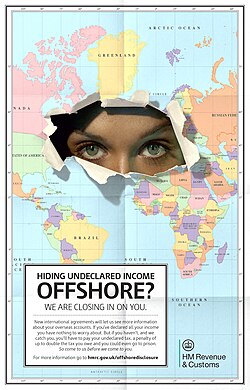
The UK's tax collection agency, HMRC, estimated a total tax gap of £33 billion for the 2016–17 tax year, representing 5.7% of liabilities. Of this, "pure" tax evasion (excluding the hidden economy) accounted for £5.3 billion. To combat this, the UK government has implemented aggressive strategies, including a 2010 voluntary amnesty for middle-class professionals that raised £500 million and increased prosecutions for tax evasion.
European Union and Global Havens
Tax havens—jurisdictions with low or no taxes—are frequently used to hide assets. The 2021 Pandora Papers leak exposed 11.9 million financial records, revealing the secret offshore accounts of around 35 world leaders. This included the ruler of Dubai and Prime Minister of the UAE, Sheikh Mohammed bin Rashid al-Maktoum, who was linked to firms in the Bahamas and British Virgin Islands.
![The ratio of German assets in tax havens in relation to the total German GDP, 1996–2008.[3] The "Big 7" shown are Hong Kong, Ireland, Lebanon, Liberia, Panama, Singapore, and Switzerland.](/images/00/95/00955d6b522a7ca7e957d8a1fddd2263d54104cb5a3335df967d407810d481a2.png)
The Shadow Economy
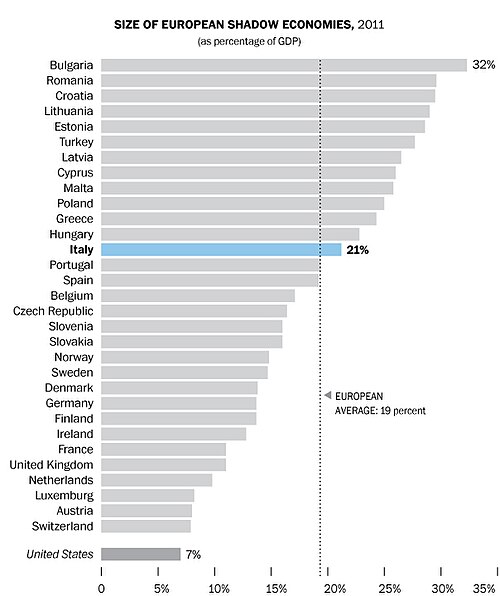
Tax evasion is a cornerstone of the shadow economy. Beyond income tax, this includes the evasion of customs duties, value-added tax (VAT), and sales taxes. In some regions, this extends to smuggling and the corruption of tax officials to overlook discrepancies.
Summary of Regional Tax Evasion Impacts
| Region/Country | Estimated Loss/Gap | Key Detail/Context |
|---|---|---|
| United States | $450–$500 Billion | 2008 Tax Gap estimate |
| United Kingdom | £33 Billion | Total tax gap (2016–17) |
| Germany | €31 Billion | Losses from dividend tax fraud |
| France | €17 Billion | Losses from dividend tax fraud |
| Scandinavia | 30% (Top 0.01%) | Evasion rate among ultra-wealthy |
![Tax campaigner Richard Murphy's estimate of the ten countries with the largest absolute levels of tax evasion. He estimated that global tax evasion amounts to 5 percent of the global economy.[18]](/images/f5/6d/f56d140480edb53acdf1bf48e62565342596890f34e29eaa325f78b67fc175fc.jpg)

Frequently Asked Questions
What is the difference between tax evasion and tax avoidance?
Tax evasion is the illegal non-payment or underpayment of taxes through deliberate misrepresentation or concealment. Tax avoidance is the legal utilization of the tax regime to one's own advantage to reduce the amount of tax that is payable.
What is the "tax gap"?
The tax gap is the difference between the total amount of tax that should be paid to the government according to the law and the amount that is actually collected.
How do tax havens facilitate tax evasion?
Tax havens provide secret offshore accounts and low-tax environments that allow individuals and corporations to hide wealth and income from their home country's tax authorities.
Who is most likely to engage in tax evasion?
While evasion occurs across various income levels, research indicates that the probability and scale of evasion increase significantly with wealth, particularly among the top 0.01% of the wealth distribution.
What are the Pandora Papers?
The Pandora Papers are a massive leak of 11.9 million financial records released in 2021 by the ICIJ, exposing the use of offshore accounts by world leaders and wealthy individuals to evade taxes.