Tax Havens: Mechanics, Global Impact, and Financial Secrecy
A tax haven is a jurisdiction that offers very low tax rates for non-domiciled investors. While the term is often used pejoratively, it describes a complex global financial ecosystem where official tax rates may differ from the effective rates paid by foreign entities. In modern economic discourse, the term is frequently used interchangeably with Offshore Financial Centre (OFC), though not all OFCs engage in harmful tax practices; many are leaders in international tax reporting and Anti-Money Laundering (AML) protocols.
Historically, tax havens were defined primarily by their level of financial secrecy. However, contemporary analysis distinguishes between jurisdictions that provide secrecy and those that provide low effective tax rates. For instance, some nations may maintain high secrecy but also high tax rates, while others, such as Ireland, are recognized for low effective rates despite higher transparency.
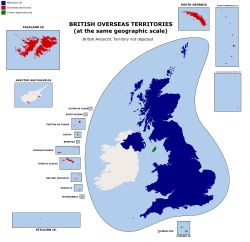
Key Facts
![2018 Global Innovation Property Centre (GIPC) Legal Systems League Table: Patents Sub-Category[200]](/images/34/ec/34ece132aeaed4bd63be6da876053a550bcbb3711360b4ec9fed26f65604d72e.png)
- Effective Tax Rates: Tax havens are characterized by low effective tax rates for non-residents, regardless of official statutory rates.
- Economic Scale: Estimates suggest annual global tax revenue losses between USD 190 billion and 255 billion.
- Corporate Strategy: U.S. multinationals book over half of their non-U.S. profits in tax havens using BEPS tools.
- OFC Types: Financial centers are often categorized as either "Conduits" (facilitating the flow of capital) or "Sinks" (where capital ultimately rests).
- Regulatory Oversight: The OECD and EU maintain blacklists to counter harmful tax practices and lack of transparency.
Defining the Tax Haven
Defining a tax haven is a subject of academic and political debate. Between 1998 and 2018, the OECD and IMF identified four primary criteria that characterize a jurisdiction as a tax haven:
- No or only nominal taxes on relevant income.
- A lack of transparency in financial dealings.
- A lack of effective exchange of information with other governments.
- A lack of substantial economic activity (e.g., the presence of "brass plate companies" which exist only on paper).
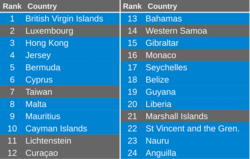
Types of Offshore Financial Centres
Researchers distinguish between different roles that jurisdictions play in the global movement of capital. Two primary categories are Conduit OFCs and Sink OFCs. Conduit OFCs act as intermediaries, allowing profits to flow through them to another destination, while Sink OFCs are the final destination where the assets are held.
Corporate Tax Havens
These are sovereign states that primarily attract corporate entities. Examples include the Netherlands and Ireland, which are often used as conduits for Base Erosion and Profit Shifting (BEPS)—a tax planning strategy used by multinational enterprises to "shift" profits from higher-tax jurisdictions to lower-tax ones.
![U.S. multinationals book over half of their non-U.S. profits in tax havens by using BEPS tools (2016 BEA).[66][67]](/images/a3/3b/a33b6c2760bca46e8ad83e2ab3cb5436991dd94de715c36f88248183213409df.png)
Traditional Tax Havens
Traditional havens often focus on individual wealth and asset protection. These may include various Caribbean territories and small island nations that offer high levels of secrecy and low to zero tax rates.
![Distribution of U.S. corporate profits (as a % of U.S. GDP) booked in foreign locations (BEA Data)[174]](/images/78/04/7804786c782f7835f7991e9232f784c00918ba0203c9eac800a41760adeae67e.png)
The Economic Impact and Scale
The scale of offshore finance is immense. Data from the Bureau of Economic Analysis (BEA) indicates that a significant portion of U.S. corporate profits are booked in foreign locations. Furthermore, the phenomenon of tax inversion—where a company relocates its legal headquarters to a lower-tax country—has become a common tool for reducing tax liabilities.
The impact on national accounts can be dramatic. In 2015, a restructuring of Apple's BEPS tools led to a massive restatement of Ireland's national accounts, a phenomenon famously dubbed "leprechaun economics" by Nobel laureate Paul Krugman.

Global Rankings and Data
Different research bodies use various metrics to rank tax havens, including Foreign Direct Investment (FDI) and the volume of profits booked. The following table summarizes the top jurisdictions across different academic and institutional lists.
| Rank | Hines (2010) | ITEP (2017) | Zucman (2018) |
|---|---|---|---|
| 1 | Luxembourg | Netherlands | Ireland |
| 2 | Cayman Islands | Ireland | Caribbean (Cayman/BVI) |
| 3 | Ireland | Bermuda | Singapore |
| 4 | Switzerland | Luxembourg | Switzerland |
| 5 | Bermuda | Cayman Islands | Netherlands |
Countermeasures and Transparency
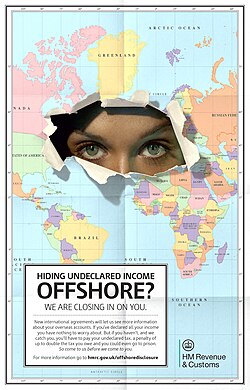
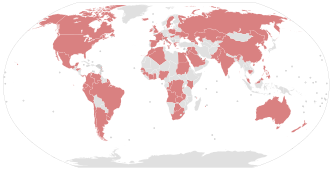
To combat tax evasion and the erosion of tax bases, international bodies have implemented several transparency measures. The Foreign Account Tax Compliance Act (FATCA) in the U.S. and the OECD's Common Reporting Standard (CRS) require the automatic exchange of financial information between countries.
Additionally, the European Union maintains a blacklist of non-cooperative jurisdictions to pressure nations into adopting fairer tax standards. Despite these efforts, massive data leaks—such as the Panama Papers, Paradise Papers, and Pandora Papers—continue to reveal the extent of offshore wealth holdings by global elites.
Frequently Asked Questions
What is the difference between tax avoidance and tax evasion?
Tax avoidance involves using legal methods to minimize tax liability, such as utilizing BEPS tools in a tax haven. Tax evasion is the illegal non-payment or underpayment of taxes.
What are "brass plate companies"?
Brass plate companies are entities that have a registered address in a tax haven (the "brass plate" on the door) but conduct no actual business operations or have no employees in that jurisdiction.
How does a "tax inversion" work?
Tax inversion occurs when a corporation merges with a smaller foreign company in a low-tax jurisdiction and relocates its legal headquarters there to reduce its overall corporate tax burden.
What is the role of the OECD in managing tax havens?
The OECD establishes global standards for transparency and the exchange of information, identifies "harmful tax practices," and works with member nations to implement the BEPS framework to prevent profit shifting.
Why are some countries called "Conduit OFCs"?
Conduit OFCs are jurisdictions that allow funds to pass through them to another tax haven, often using preferential tax rulings to ensure the money is not taxed as it moves between locations.