Panama Papers: The Massive Leak Exposing Global Offshore Finance
The Panama Papers represent one of the most significant data breaches in history, exposing the inner workings of the global offshore financial system. Published on April 3, 2016, this massive leak consisted of 11.5 million documents—totaling 2.6 terabytes of data—that detailed the financial and attorney-client information of more than 214,488 offshore entities (companies or trusts registered in a country other than where the owner resides, often to benefit from lower taxes).
The documents were sourced from Mossack Fonseca, a former Panamanian law firm and corporate service provider. Some of the records dated back as far as the 1970s, providing a decades-long window into how the wealthy and powerful used shell companies to hide assets.
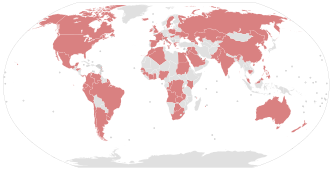
Key Facts
- Volume: 11.5 million leaked documents (2.6 TB of data).
- Scope: Information on 214,488 offshore entities.
- Source: Mossack Fonseca, a Panamanian law firm.
- Publication Date: April 3, 2016.
- Impact: Implicated numerous heads of state, their family members, and global financial institutions.
The Role of Mossack Fonseca and Tax Havens
At the center of the scandal was Mossack Fonseca, which specialized in creating offshore structures. These structures are often located in tax havens—jurisdictions with low or no taxes and high levels of financial secrecy. While offshore entities can be used for legal business purposes, the leak highlighted their frequent use for tax evasion and hiding wealth from authorities.
The leak prompted a global conversation on international banking and the need for automated information exchange between governments to prevent illegal financial activities.
Global Figures and Political Implications
The leaked files revealed a complex web of connections involving some of the world's most powerful individuals. The documents identified 61 family members and close associates of presidents, prime ministers, and kings.
Prominent Individuals Named
- China: The brother-in-law of paramount leader Xi Jinping.
- Malaysia: The son of former Prime Minister Najib Razak.
- Pakistan: Children of former Prime Minister Nawaz Sharif.
- Azerbaijan: Children of President Ilham Aliyev.
- South Africa: Clive Khulubuse Zuma, nephew of former President Jacob Zuma.
- Kazakhstan: Nurali Aliyev, grandson of President Nursultan Nazarbayev.
- Morocco: Mounir Majidi, personal secretary to King Mohammed VI.
- United Nations: Kojo Annan, son of former Secretary-General Kofi Annan.
- United Kingdom: Mark Thatcher, son of former Prime Minister Margaret Thatcher.
Additionally, former prime ministers such as Bidzina Ivanishvili of Georgia and Pavlo Lazarenko of Ukraine were mentioned in the papers.
Financial Institutions Involved
The leak did not only implicate individuals but also the banks that facilitated the creation of these offshore foundations. Several major global banks were linked to a high number of foundations managed by Mossack Fonseca.
| Bank / Entity | Headquarters | Number of Foundations |
|---|---|---|
| Experta Corporate & Trust Services (BIL subsidiary) | Luxembourg | 1,659 |
| Credit Suisse Channel Islands Limited | UK (Guernsey) | 918 |
| HSBC Private Bank (Monaco) S.A. | Monaco | 778 |
| HSBC Private Bank (Suisse) S.A. | Switzerland | 733 |
| UBS AG (Rue du Rhône, Geneva) | Switzerland | 579 |
| Coutts & Co Trustees (Jersey) Limited | UK (Jersey) | 487 |
| Société Générale Bank & Trust Luxembourg | Luxembourg | 465 |
| Rothschild Trust Guernsey Limited | UK (Guernsey) | 378 |
| Banco Santander | Spain | 119 |
| BBVA | Spain | 19 |
Global Responses and Investigations
The fallout from the Panama Papers was felt worldwide, leading to raids, audits, and legal investigations across multiple continents. In Panama, the government faced pressure to investigate Mossack Fonseca, while the firm itself claimed it was a victim of a hack.
Beyond national governments, the leak triggered investigations into international bodies. For example, the International Federation of Association Football (FIFA) and UEFA became subjects of scrutiny, with Swiss police searching UEFA offices in relation to the findings.
Frequently Asked Questions
What exactly are the Panama Papers?
The Panama Papers are 11.5 million leaked documents from the Panamanian law firm Mossack Fonseca that expose how wealthy individuals and public officials used offshore shell companies to hide assets and avoid taxes.
Who was Mossack Fonseca?
Mossack Fonseca was a Panamanian law firm and corporate service provider that specialized in creating and managing offshore entities for clients globally.
Is owning an offshore company illegal?
No, owning an offshore entity is not inherently illegal. However, these structures are often used to facilitate illegal activities such as tax evasion, money laundering, or avoiding international sanctions.
Which banks were most involved in the leak?
Several major banks were linked to the leak, with Experta Corporate & Trust Services (a subsidiary of BIL) in Luxembourg having the highest number of foundations, followed by Credit Suisse and HSBC.
What was the impact on world leaders?
The leak implicated numerous world leaders and their families, including associates of the leaders of China, Malaysia, Pakistan, and Azerbaijan, leading to widespread political scrutiny and investigations into their financial dealings.