Tanker Ships: Engineering, Classification, and Global Logistics
A tanker, also known as a tank ship, is a specialized vessel designed to transport or store liquids or gases in bulk. While most commonly associated with the petroleum industry, these ships are essential for moving a vast array of commodities, including chemicals, vegetable oils, citrus juice, molasses, and wine. In military contexts, such as the US Navy, these vessels are often called oilers, particularly when they are used to refuel other ships at sea.
The evolution of the tanker began in the late 19th century. Before this era, liquids were transported in casks—a practice that gave rise to the term "tonnage," referring to the number of wine tuns a ship's hold could accommodate. The transition to bulk transport was made possible by the development of iron and steel hulls and advanced pumping systems.
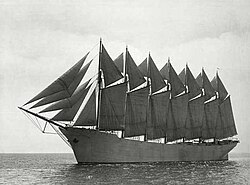
Key Facts
- Diverse Cargo: Tankers carry hydrocarbons (oil, LPG, LNG), chemicals (ammonia, chlorine), and food-grade liquids.
- Environmental Progress: Oil spills from tankers dropped 99.8% between 1979 and 2020.
- Global Fleet: As of 2005, over 4,000 tankers of 10,000 LT DWT or greater were in operation.
- Dominant Builders: Over 70% of the world's tankers were built in South Korea, Japan, and China.
- Top Owners: Greece, China, and Japan are the leading owners by asset value.
The Evolution of Bulk Liquid Transport
The shift from casks to bulk tanks required overcoming three primary engineering hurdles:
- Hull Integrity: Timber ships leaked and were not airtight. The introduction of iron and steel hulls provided the necessary seal to prevent cargo spoilage and leakage.
- Loading and Discharge: Moving bulk liquids required efficient pumps and piping systems, with early systems powered by steam engines. This also necessitated the creation of dedicated shoreside terminals.
- The Free Surface Effect: A large body of liquid shifting in a wide tank can destabilize a ship, potentially causing it to capsize. Engineers solved this by implementing extensive subdivision of the tanks.
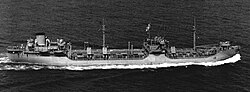
Types of Tankers and Specialized Designs
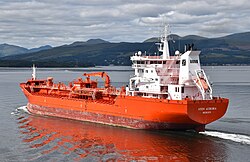
Because different liquids have different chemical properties, the industry developed specialized variants. Oil tankers handle petroleum and its derivatives, while chemical tankers are built for hazardous substances like styrene monomer. Gas carriers, including LNG (Liquefied Natural Gas) carriers, utilize advanced containment systems to monitor temperature, volume, and pressure in accordance with the IGC Code.
For heavy cargoes such as asphalt, wax, or heavy crude oil, tankers are equipped with heaters to keep the substance fluid for offloading. Additionally, many oil tankers use inert gas systems to replace oxygen in cargo tanks, preventing the formation of explosive atmospheres.
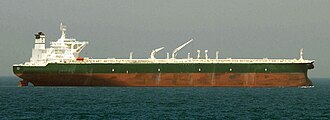
Supertankers
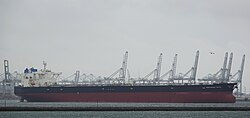
Designed for long-range haulage, particularly from the Middle East around the Horn of Africa, supertankers are among the most efficient ways to move oil. The Seawise Giant, scrapped in 2010, remains a historic example of scale, measuring 458 meters in length.
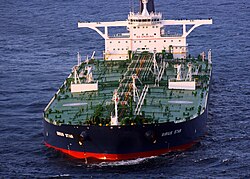
Tanker Capacity and Classification
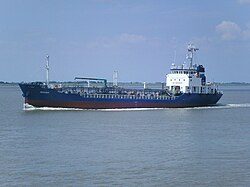
Tankers are classified by their Deadweight Tonnage (DWT)—the total weight a ship can carry. The industry uses two primary scales: the AFRA (Average Freight Rate Assessment) scale and a general market scale.
| AFRA Class | DWT Range | Market Class | DWT Range |
|---|---|---|---|
| General Purpose | 10,000–24,999 | Product Tanker | 10,000–60,000 |
| Medium Range | 25,000–44,999 | Panamax | 60,000–80,000 |
| Long Range 1 (LR1) | 45,000–79,999 | Aframax | 80,000–120,000 |
| Long Range 2 (LR2) | 80,000–159,999 | Suezmax | 120,000–200,000 |
| VLCC | 200,000–320,000 | VLCC | 160,000–319,999 |
| ULCC | 320,000–550,000 | ULCC | 320,000–549,999 |
Regulations and Environmental Safety
The maritime industry has seen a drastic reduction in environmental disasters. High-profile accidents like the Exxon Valdez and Prestige led to tighter international regulations. Today, the International Maritime Organization (IMO) governs safety through the SOLAS Convention and MARPOL 73/78 (Annex I), which focuses on preventing oil pollution.
In the United States, tankers are further regulated by the Code of Federal Regulations (CFR) across titles covering navigation, environment, shipping, telecommunications, and transportation.
Global Fleet and Ownership
The global tanker fleet is characterized by a concentration of ownership and construction. Panama is the leading flag state, followed by Liberia, the Marshall Islands, Singapore, Greece, and the Bahamas. While Asian shipyards dominate the construction phase, Greece holds the highest asset value in tanker ownership.
Frequently Asked Questions
What is the difference between a VLCC and a ULCC?
A VLCC (Very Large Crude Carrier) typically ranges from 160,000 to 320,000 DWT, while a ULCC (Ultra Large Crude Carrier) is larger, ranging from 320,000 to 550,000 DWT.
How do tankers prevent explosions in cargo tanks?
Tankers use inert gas systems to replace the oxygen in the tanks, ensuring that the atmosphere inside cannot support combustion. Additionally, tank lids and pipe joints are bonded to prevent static electricity sparks.
What is the "free surface effect"?
The free surface effect occurs when liquid cargo shifts as the ship moves, which can negatively impact stability. This is mitigated by subdividing the cargo hold into smaller, separate tanks.
Which countries lead the world in tanker ownership?
By asset value, Greece, China, and Japan are the top three owners. In terms of the total number of vessels, China owns the most tankers.
How has oil spill prevention improved over time?
Through stricter regulations like MARPOL and the SOLAS Convention, as well as design improvements like double hulls, oil spills dropped from 636,000 tonnes in 1979 to approximately 1,000 tonnes in 2020.