Containerization and the Evolution of Intermodal Freight Transport
Containerization is a sophisticated system of intermodal freight transport that utilizes standardized containers—often called shipping or ISO containers—to move goods across the globe. At its core, containerization is the process of unitization, where various export cargoes are grouped into a single unit. This method has largely replaced older systems like palletization or barge systems, becoming the dominant force in modern international trade.
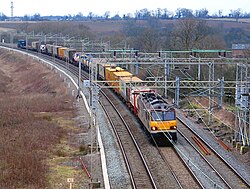
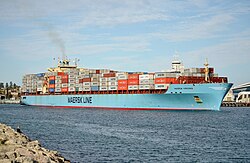
The brilliance of the system lies in its standardization. Because containers have uniform dimensions, they can be loaded, stacked, and transferred between different modes of transport—such as container ships, rail flatcars, and semi-trailer trucks—without ever being opened. This seamless transition is managed by mechanized handling systems, including massive cranes and specialized forklift trucks, with every unit tracked via computerized systems.
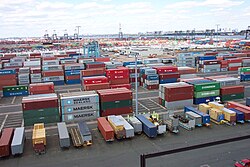
Key Facts
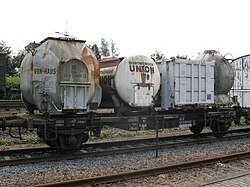
- Intermodal Efficiency: Containers move between ships, trains, and trucks without needing to be unpacked.
- Standard Measure: Capacity is measured in TEUs (Twenty-foot Equivalent Units).
- Economic Impact: Dramatically reduced transport costs and fueled post-WWII globalization.
- Material Variety: Constructed from steel, aluminum, or fibre-reinforced polymer; weathering steel is often used to reduce maintenance.
- Speed: In 2021, average unloading times ranged from 27 seconds in Asia to 76 seconds in North America.
The History and Origin of the Container
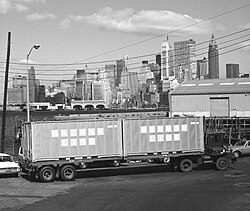
While the concept of using boxes for transport existed centuries ago, it did not reach industrial maturity until after World War II. Before the rise of the modern container, dock workers handled break bulk cargo—individual items that had to be sorted and moved manually. This was a slow, labor-intensive process that required extensive dock-front warehousing.
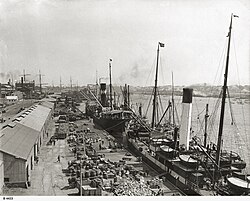
The shift toward mechanization eliminated manual sorting and reduced port congestion, significantly shortening shipping times and lowering losses due to theft or damage. However, this efficiency came at a social cost, displacing thousands of dock workers whose manual skills were no longer required.
Early 20th Century Developments
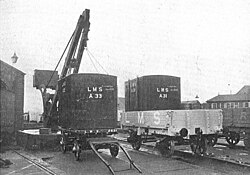
Early attempts at standardization appeared in the 1920s and 30s. In 1926, containers were used to transport baggage for the luxury Golden Arrow / Fleche d'Or passenger train between London and Paris. By February 1931, the UK's Southern Railway launched the Autocarrier, the world's first container ship, featuring 21 slots for railway containers.
The Post-War Boom and the CONEX System
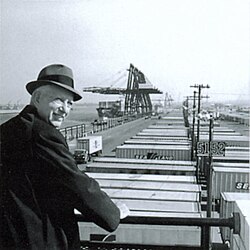
In 1952, the U.S. Army developed the CONEX (Container Express) box system. This modular system introduced a standard unit and a smaller half-size unit, allowing boxes to be stacked three high and protecting contents from the elements.
The First True Intermodal Service
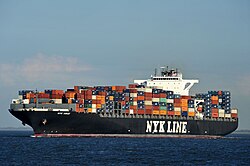
The Clifford J. Rodgers, built in Montreal in 1955, is recognized as the world's first purpose-built container vessel. On November 26, 1955, it carried 600 containers from North Vancouver to Skagway, Alaska. This operation marked the first true intermodal service, integrating trucks, ships, and railroad cars into a single chain where goods moved from shipper to consignee without being opened.
Standardization and Technical Specifications
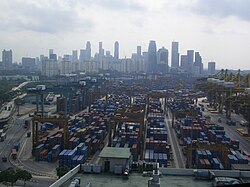
To ensure global compatibility, the International Organization for Standardization (ISO) established specific dimensions. The most common measure of capacity is the TEU, which represents the volume of one standard 20-foot container. Regardless of height (such as "high cube" or "half height" versions), a 20-foot long container is counted as one TEU.
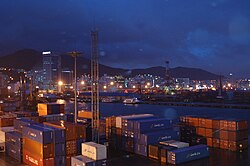
Common Container Lengths
- 20 ft (6.10 m)
- 40 ft (12.19 m)
- 45 ft (13.72 m)
- 48 ft (14.63 m) - largely phased out in favor of 53 ft
- 53 ft (16.15 m) - common for US domestic rail and truck transport
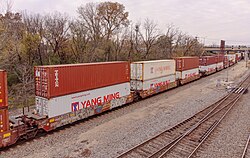
Weight and Payload
The maximum gross mass for a 20 ft dry cargo container was initially set at 24,000 kg, while 40 ft containers were set at 30,480 kg. After accounting for the tare mass (the weight of the empty container), the actual payload capacity is approximately 22,000 kg for 20 ft units and 27,000 kg for 40 ft units.
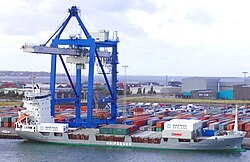
Advancements in Land Transport
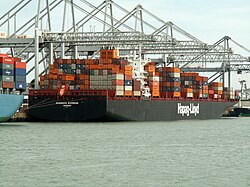
The evolution of containerization extended beyond the sea to the rails. In the United States, double-stack rail transport—where containers are stacked two high on flatcars—was developed by Sea-Land and the Southern Pacific railroad. The first standalone double-stack well car arrived in July 1977, and the five-unit well car became the industry standard by 1981.
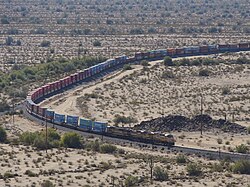
The introduction of dedicated double-stack services, such as the 1984 route between Los Angeles and Chicago initiated by American President Lines, led to a rapid increase in transport volumes.
Container Specifications Summary
| Container Type | Common Lengths | Key Feature | Primary Use |
|---|---|---|---|
| Standard ISO | 20, 40, 45 ft | Global Standardization | International Shipping |
| US Domestic | 48, 53 ft | Optimized for Land | US Rail and Truck |
| Pallet-wide | 20, 40, 45 ft | Wider (2.484m external) | European EUR-pallets |
| CONEX | Modular sizes | Military origin | US Army Logistics |
Alternative Uses and Specialized Systems
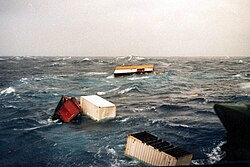
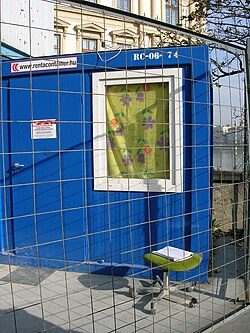
Beyond freight, containers have found new lives in architecture and urban design. Due to their structural integrity, converted containers are frequently used as portable offices or temporary housing on building sites.
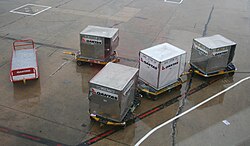
Other specialized systems include Unit Load Devices (ULDs) for air freight, which are designed to fit the contours of aircraft holds.
Frequently Asked Questions
What is a TEU?
TEU stands for Twenty-foot Equivalent Unit. It is a standard measure of cargo capacity based on the dimensions of a 20-foot long by 8-foot wide container. It allows the industry to measure capacity regardless of the actual mix of container sizes on a ship.
How did containerization affect the global economy?
Containerization dramatically reduced the cost and time associated with transporting goods. By eliminating manual sorting and reducing port congestion, it supported the post-war boom in international trade and served as a primary driver of globalization.
What is the difference between a standard ISO container and a pallet-wide container?
Pallet-wide containers are used primarily in Europe. While they share the same length and height as ISO containers, they are slightly wider (2.484m externally) to better accommodate the dimensions of EUR-pallets.
What is double-stack rail transport?
Double-stack rail transport is a method used primarily in North America where containers are stacked two high on specialized railway well cars, effectively doubling the capacity of a single train.
What materials are used to make shipping containers?
Containers are typically made from steel, aluminum, or fibre-reinforced polymer. Many are constructed from weathering steel, which is specifically designed to resist corrosion and minimize the need for ongoing maintenance.