Ports: The Engines of Global Trade and Maritime History
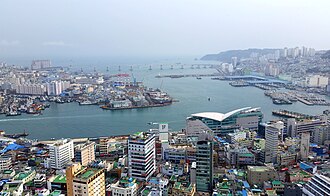
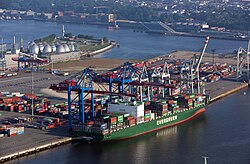
A port is a specialized maritime facility consisting of one or more wharves or loading areas designed for ships to load and discharge cargo and passengers. While most are located on sea coasts or estuaries, some are situated far inland—such as Hamburg, Manchester, and Duluth—accessing the ocean via a network of rivers and canals.
Beyond their physical infrastructure, ports serve as critical gateways for immigrants and military forces, often transforming their surrounding cities into multi-ethnic and multicultural hubs. Today, they are the backbone of the global economy, with approximately 70% of global merchandise trade by value passing through a port.
Key Facts
- Economic Impact: 70% of the value of global merchandise trade is handled by ports.
- Global Growth: The fastest development is currently occurring in Asia, home to the world's busiest ports like Shanghai and Singapore.
- Environmental Challenge: Roughly 100 million cubic metres of marine sediment are dredged annually to maintain waterways.
- Technological Shift: The rise of "Smart Ports" integrates AI and IoT to automate logistics and improve efficiency.
The Evolution of Historical Ports
Ancient civilizations relied on ports to project power and facilitate trade. In Ancient Greece, the port of Piraeus served as the base for the Athenian fleet, proving decisive during the Battle of Salamis in 480 BCE. In India, the city of Lothal was a prominent hub of the Indus Valley civilization as early as 3700 BCE. Similarly, Egypt utilized Canopus for Greek trade before the rise of Alexandria, and China developed Guangzhou during the Qin dynasty.
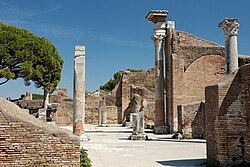
One of the most significant archaeological examples is Ostia Antica, the ancient port of Rome. Located at the mouth of the Tiber, it provided essential insights into Roman urbanism. However, due to silting and sand invasion, the site now lies 3 km inland from the sea.
In Africa, post-classical Swahili kingdoms established trade port islands that connected with Asia and the Islamic world. Famous hubs such as Mombasa, Zanzibar, Mogadishu, and Kilwa were documented by the Chinese explorer Zheng He and the Berber voyager Abu Abdullah ibn Battuta.
The Maritime Republics of Italy
During the Middle Ages, several Italian city-states emerged as thalassocracies (states with primary control over the sea). These maritime republics enjoyed immense political autonomy and wealth. The four most prominent were Amalfi, Genoa, Pisa, and Venice, though others like Ancona, Gaeta, Noli, and Ragusa also played vital roles.
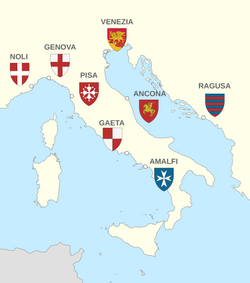
The fortunes of these republics fluctuated over centuries. Amalfi and Gaeta peaked in the 9th and 10th centuries, followed by the ascent of Venice and Genoa. By the 16th century, Venice, Genoa, and Ragusa remained the dominant powers until the Napoleonic invasions signaled the end of their era.
Modern Port Classifications and Technology
![The Darsena, Milan [it], Italy, the inland port of the city](/images/cc/ce/ccce19271799477bdf8240ec3a42eb962da623921e0a7bb19e46c492cc191bc6.jpg)
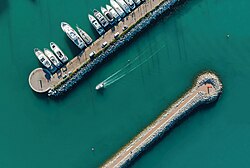
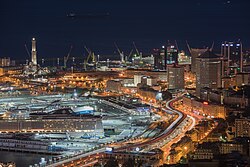
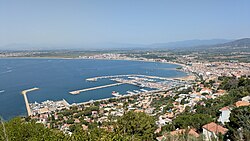
Modern ports are categorized based on their primary function and location. A seaport is located on a sea or ocean shore and can be further divided into commercial ports (such as container ports for cargo) and non-commercial ports (such as marinas for recreational boating or fishing ports).
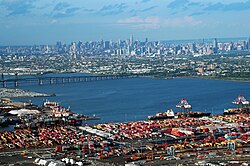
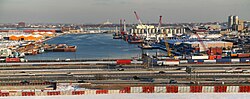
As shipping evolved, some ports declined while others adapted. The Port of London, once a global leader, declined as ships grew too large for the River Thames. Conversely, the Port Newark–Elizabeth Marine Terminal in the U.S. became the world's first maritime container seaport, pioneering the modern logistics era.
The Rise of the Smart Port
To handle increasing trade volumes, the industry is shifting toward Smart Ports. These facilities utilize the Internet of Things (IoT), artificial intelligence (AI), and cloud-based software to automate operating flows. This technological integration aims to increase efficiency and reduce human error in cargo handling.
Environmental Challenges
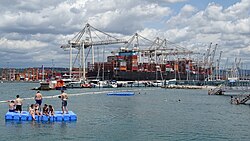
The operation of massive maritime hubs comes with significant ecological costs. Dredging—the removal of sediment to deepen channels—disturbs local ecosystems and can stir up dormant pollutants into the water column.
Furthermore, ports are primary vectors for invasive species. These organisms are often transported in bilge water or attached to ship hulls. It is estimated that over 7,000 invasive species are moved daily, leading to predation of native species or the introduction of new diseases.
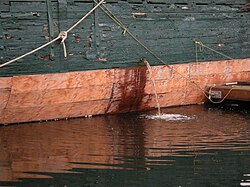
Water quality is also a concern, as ports face direct pollution from shipping activities and indirect pollution from urban runoff and trash from surrounding communities.
Global Port Overview
| Region | Notable Port(s) | Key Characteristic |
|---|---|---|
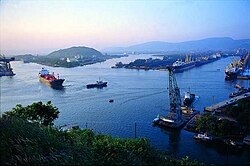
| Asia | Shanghai, Singapore | World's largest by cargo tonnage and activity. |
| Africa | Tangier Med, Port Said | Tangier Med is the largest in Africa/Mediterranean by capacity. |
| Europe | Port of Helsinki | Busiest passenger port in Europe (as of 2020). |
| Oceania | Port of Melbourne | Largest port in the Oceania region. |
Frequently Asked Questions
What is the difference between a seaport and an inland port?
A seaport is located directly on a sea or ocean coast. An inland port is located further inside a landmass but maintains access to the sea via navigable rivers or canals, such as the ports in Hamburg or Manchester.
How do invasive species enter port ecosystems?
Invasive species are typically transported via bilge water (water collected in the lowest part of a ship's hull) or by attaching themselves to the exterior hulls of vessels as they travel between different geographic regions.
What defines a "Smart Port"?
A Smart Port is a facility that integrates advanced technologies like AI, IoT, and cloud computing to automate logistics, optimize the flow of goods, and increase overall operational efficiency.
Why did some ancient ports, like Ostia Antica, stop functioning?
Many ancient ports fell out of use due to natural processes such as silting (the accumulation of sand and sediment) or coastal erosion, which physically separated the harbor from the open sea.
Which port is currently the busiest in the world?
The port of Shanghai is the largest in the world in terms of both activity and cargo tonnage.