The Evolution and Engineering of Tanker Ships
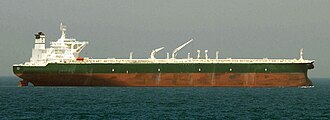
In the global maritime industry, a tanker (also known as a tank ship or tankship) is a specialized vessel designed to transport or store liquids and gases in bulk. While many people immediately associate tankers with crude oil, these vessels are incredibly versatile, carrying everything from hazardous chemicals and liquefied natural gas (LNG) to everyday commodities like vegetable oils, citrus juice, molasses, and wine.
From the massive supertankers that traverse the oceans to small coastal vessels servicing local harbors, tankers are the unsung workhorses of international trade. They ensure that the energy and raw materials required for modern life move efficiently across the globe.
Key Facts
- Versatility: Tankers carry hydrocarbons, chemicals, fresh water, and food products like wine and juice.
- Scale: Capacities range from a few hundred tons for coastal use to several hundred thousand tons for long-range haulage.
- Safety Progress: Due to tighter regulations, oil spills from tankers dropped from 636,000 tonnes in 1979 to approximately 1,000 tonnes in 2020.
- Global Leaders: China owns the largest number of tankers, while Greece, China, and Japan lead in total tanker value.
- Construction: Over 70% of the world's tankers are built in South Korea, Japan, and China.
The History of Bulk Liquid Transport
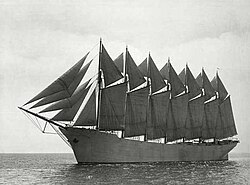
Before the late 19th century, the technology to carry bulk liquids safely did not exist. Most ships carried diverse products in individual casks (large wooden barrels). This method was inefficient and limited the volume of liquid that could be transported. The term "tonnage" actually originates from this era, referring to the volume of a ship's holds measured by how many wine casks they could carry.
The development of iron and steel hulls revolutionized the industry by providing water-tight and air-tight compartments. This was paired with the invention of efficient pumping systems and steam engines, which allowed liquids to be loaded and discharged directly rather than manually moving individual casks. This shift allowed the oil industry to move refined fuel in bulk from refineries to dedicated storage terminals.
Overcoming Engineering Challenges
Early engineers had to solve several critical problems to make bulk transport viable:
- The Holds: Timber ships were prone to leaking or allowing cargo to spoil. Steel hulls solved this structural issue.
- Loading and Discharging: The transition from cranes lifting casks to sophisticated piping and pumping systems was essential for speed and volume.
- Free Surface Effect: A major safety concern where a large, moving body of liquid inside a tank can cause a ship to lose stability and capsize. Modern tankers solve this through extensive subdivision of tanks to limit liquid movement.
Types of Tanker Vessels
Because different liquids possess different physical and chemical properties, the industry has developed highly specialized vessel types:
Oil and Chemical Tankers
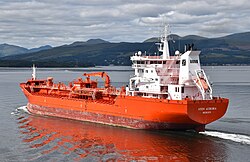
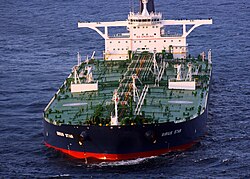
Oil tankers are designed for petroleum products. Among these, supertankers are the largest, often used to transport massive quantities of crude oil across long distances. Chemical tankers are specifically engineered to handle dangerous substances like ammonia, chlorine, and styrene monomer, requiring specialized materials to prevent corrosion or reaction.
Gas Carriers
Gas carriers, such as LNG (Liquefied Natural Gas) and LPG (Liquefied Petroleum Gas) carriers, require advanced containment systems. These vessels must manage high vapor pressure and extreme temperatures, utilizing pressurized tanks and sophisticated relief valves to ensure safety.
Coastal and Inland Tankers
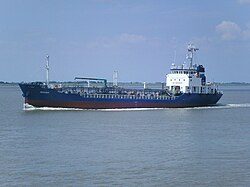
Not all tankers are ocean-going giants. Small coastal tankers service small harbors and settlements, while inland-waterway tankers operate on rivers and canals, typically carrying up to a few thousand tons.
Classification and Capacity
The industry uses various scales to classify tankers by their Deadweight Tonnage (DWT)—a measure of how much weight a ship can safely carry. One of the most recognized systems is the AFRA (Average Freight Rate Assessment) scale, developed by Shell in 1954.
| Class (AFRA Scale) | Size in DWT | Market Class | Size in DWT |
|---|---|---|---|
| General Purpose | 10,000–24,999 | Product Tanker | 10,000–60,000 |
| Medium Range (MR) | 25,000–44,999 | Panamax | 60,000–80,000 |
| LR1 (Long Range 1) | 45,000–79,999 | Aframax | 80,000–120,000 |
| LR2 (Long Range 2) | 80,000–159,999 | Suezmax | 120,000–200,000 |
| VLCC (Very Large Crude Carrier) | 160,000–319,999 | VLCC | 200,000–320,000 |
| ULCC (Ultra Large Crude Carrier) | 320,000–549,999 | ULCC | 320,000–550,000 |
Safety and Environmental Regulation
Following several high-profile environmental disasters in the 20th century, such as the Exxon Valdez and Torrey Canyon, international regulations have become significantly stricter. Today, tankers are governed by the International Maritime Organization (IMO), specifically through MARPOL (to prevent oil pollution) and the SOLAS Convention (for construction safety).
Modern safety features include inert gas systems, which fill cargo tanks with non-reactive gas to prevent the formation of an explosive atmosphere. Additionally, many modern vessels utilize double hulls to provide an extra layer of protection against leaks in the event of a collision or grounding.
Frequently Asked Questions
What is the difference between a tanker and an oiler?
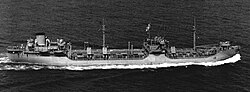
While the terms are often used interchangeably, in the United States Navy and Military Sealift Command, a tanker used to refuel other ships is specifically called an oiler. If the vessel can also supply dry stores, it is known as a replenishment oiler.
What is a Very Large Crude Carrier (VLCC)?
A VLCC is a massive tanker designed to carry between 200,000 and 320,000 deadweight tons of crude oil. They are one of the most common sizes for large-scale oil transport.
How do tankers prevent explosions?
Tankers use several methods to prevent explosions, including the use of inert gas systems to displace flammable vapors, bonding tank lids and pipe joints to prevent static electricity buildup, and utilizing pressure relief valves.
Why do some tankers need heaters?
Certain cargoes, such as heavy crude oil, asphalt, wax, or molasses, can become too thick to pump at ambient temperatures. Tankers are equipped with heaters to maintain these substances in a fluid state for easy offloading.
Which countries lead the tanker industry?
In terms of ship registration (flag states), Panama is the leader, followed by Liberia and the Marshall Islands. In terms of ownership value, Greece holds the top position, followed by China and Japan.