The Legend of Tan'gun: The Mythic Founder of Korea
In the tapestry of Korean history, few figures loom as large as Tan'gun (also known as Tan'gun Wanggeom). As the legendary founder and first king of Gojoseon—the first Korean kingdom—Tan'gun represents the spiritual and ancestral roots of the Korean people. His story, a blend of divine lineage and earthly transformation, has served as a cornerstone of national identity for centuries.
According to tradition, Tan'gun established his kingdom around 2333 BC in the northern regions of the Korean Peninsula. While historians debate the exact timeline and the literal truth of the accounts, the myth of Tan'gun remains a powerful symbol of legitimacy, culture, and national unity.
The Myth of Ancestry and Transformation
The legend of Tan'gun begins in the heavens. His grandfather, Hwanin, was the "Lord of Heaven." Hwanin's son, Hwanung, desired to live among humans on Earth. Granted permission by his father, Hwanung descended to Mount Paektu (historically referred to as Taebaeksan) with 3,000 followers. There, he established Sinsi, the "City of God," where he taught humanity essential skills such as agriculture, medicine, and moral laws. Legend even credits these early teachings with the development of acupuncture and moxibustion (traditional medical practices involving heat).
The Bear and the Tiger
One of the most famous segments of the myth involves a tiger and a bear who prayed to Hwanung to become human. To test their resolve, Hwanung commanded them to eat only twenty cloves of garlic and a bundle of mugwort while remaining in a cave away from sunlight for 100 days. The tiger failed the test after only twenty days, but the bear persevered, eventually transforming into a woman known as Ungnyeo.
Ungnyeo, grateful for her transformation, prayed beneath a "divine birch" tree for a child. Moved by her devotion, Hwanung took her as his wife, and she gave birth to a son: Tan'gun Wanggeom.
The Establishment of Gojoseon
Upon ascending the throne, Tan'gun founded the kingdom of Joseon (now referred to as Gojoseon to distinguish it from a later dynasty). He established his capital at Asadal, a walled city located near modern-day Pyongyang. The ritualistic honoring of his ancestors became a central political and religious practice, serving as a way to unify the people under a shared divine mandate.
The historical perception of Tan'gun has evolved significantly over time:
- Goryeo and Joseon Dynasties: Tan'gun was increasingly worshiped as a national ancestor, with shrines dedicated to him in Pyongyang.
- Late 19th Century: The figure of Tan'gun became a central pillar of nationalism and a spiritual foundation for the independence movement during the Japanese colonial period.
- Modern South Korea: October 3rd is celebrated as Gaecheonjeol (National Foundation Day), a public holiday commemorating the birth of the nation.
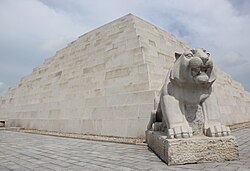
- Modern North Korea: Following the direction of Kim Il Sung, North Korea treats Tan'gun as a real historical figure rather than a myth, even constructing the Mausoleum of Tan'gun.
Key Facts
- Title: First King of Gojoseon.
- Traditional Reign: Began approximately 2333 BC.
- Family: Son of Hwanung and the bear-woman Ungnyeo.
- National Holiday: Gaecheonjeol (National Foundation Day) is celebrated on October 3rd.
- Cultural Impact: The "Dan-Gun" pattern is used in International Taekwondo.
Summary of Tan'gun's Lineage and Reign
| Category | Details |
|---|---|
| Kingdom | Gojoseon |
| Predecessor | Hwanung |
| Mother | Ungnyeo (a transformed bear) |
| Capital City | Asadal |
| Primary Source | Samguk yusa (13th century) |
Frequently Asked Questions
What is the significance of the "Dangi" era?
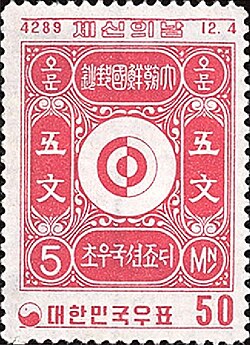
The Dangi was the official era name used in South Korea for numbering years, beginning from the founding of Gojoseon in 2333 BC. It was used officially until 1961.
How is Tan'gun viewed in different religions?
Tan'gun is a central figure in Daejongism, a religion that worships him. He is also worshiped as a "King god" (Wangshin) in Korean shamanism (Muism) and is a deity in Cheondoism.
Is Tan'gun a real historical person?
Historical perspectives vary. Many historians view the accounts as mythology used to establish political legitimacy. However, North Korea maintains that Tan'gun was a real historical figure and has built a mausoleum to honor him.
What does the name "Wanggeom" mean?
In the context of Tan'gun Wanggeom, Wanggeom refers to an overlord or a high priest who governs the country, suggesting his role was both political and spiritual.
How is Tan'gun honored in martial arts?
In International Taekwondo, the second pattern (teul) is named Dan-Gun. It is taught to students as a representation of the legendary founder of Korea in 2333 BC.