Gimhae: A Journey Through South Korea's Historic and Vibrant City
Located in the Yeongnam region of South Korea, near the banks of the Nakdong River, Gimhae is a city where ancient heritage meets modern vitality. As a significant hub in South Gyeongsang Province, Gimhae offers a unique blend of deep historical roots—tracing back to the ancient royal house of Geumgwan Gaya—and a bustling contemporary lifestyle.
Whether you are interested in the legacy of the Gimhae Kim clan, the local sports scene, or the city's mild subtropical climate, Gimhae stands as a vital part of the South Korean landscape.
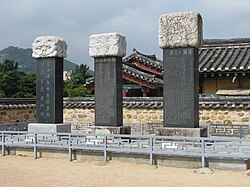
Key Facts
- Location: South Gyeongsang Province, near the Nakdong River.
- Population: Approximately 531,966 (as of September 2024).
- Historical Significance: Seat of the Gimhae Kim clan and home to the Geumgwan Gaya heritage.
- Climate: Humid subtropical, known for being one of the mildest regions in Korea.
- Major Transport: Served by Gimhae International Airport and the Busan–Gimhae Light Rail Transit.
Historical and Cultural Heritage
Gimhae holds a prestigious place in Korean genealogy. It is the seat of the Gimhae Kim clan, one of the largest clans in the country, which claims descent from the ancient royal house of Geumgwan Gaya. This connection to antiquity is physically represented in the city's landscape through various historical sites.
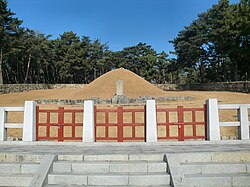
The city is also famously known as the birthplace of Roh Moo-hyun, the 16th President of South Korea. This connection adds a layer of modern political significance to the city's rich historical tapestry.
Geography and Climate
Spanning an area of 463.45 km², Gimhae features a diverse administrative structure consisting of 1 eup, 7 myeon, and 9 dong. The city experiences a humid subtropical climate (Köppen classification Cwa/Cfa), characterized by warm summers and cold winters. Due to its coastal influence, Gimhae is considered one of the mildest regions in South Korea.
Climate Statistics Overview
| Metric | Value |
|---|---|
| Annual Average Temperature | 15 °C |
| Annual Average Precipitation | 1,200 mm |
| Annual Sunshine Hours | 2,434.1 hours |
| Average Relative Humidity | 62.0% |
Modern Infrastructure and Connectivity
Gimhae is exceptionally well-connected to the rest of South Korea and the world. The city is served by Gimhae International Airport, located just to the east in Busan's Gangseo District, which handles approximately 9.17 million users annually. For rail travelers, the Busan–Gimhae Light Rail Transit provides a vital link to the Busan Metro network at Daejeo and Sasang.
Transportation Options
- Air: Gimhae International Airport.
- Light Rail: Busan–Gimhae Light Rail Transit (connecting to Busan and the airport).
- Rail: Gyeongjeon Line (Hallimjeong and Jinyeong stations).
- High-Speed Rail: The nearest KTX station is Gupo station in Busan.
Sports and Industry
The local sports culture is anchored by Gimhae FC 2008. After competing in the K3 League, the club is set to transition to professional status in the K League 2 starting from the 2026 season. Fans can watch matches at the Gimhae Sports Complex, which opened in September 2024 with a capacity of 15,066.
Beyond sports, Gimhae is a center for the floricultural industry. The city is home to spacious flower gardens and a farming center that has successfully developed the independent Korean rose variety known as "Spray." These flowers are frequently exported to Busan and surrounding regions.
Frequently Asked Questions
What is the historical significance of Gimhae?
Gimhae is the ancestral seat of the Gimhae Kim clan and is deeply connected to the ancient Geumgwan Gaya royal house.
How do I travel from Gimhae to Busan?
The most convenient way is via the Busan–Gimhae Light Rail Transit, which connects the two cities and provides access to the airport and the Busan Metro.
What is the weather like in Gimhae?
Gimhae has a humid subtropical climate. It is generally milder than many other parts of Korea due to its coastal influence, featuring warm summers and cold winters.
Is there professional football in Gimhae?
Yes, Gimhae FC 2008 is transitioning from semi-professional to professional status and is scheduled to compete in K League 2 starting in the 2026 season.
What is Gimhae famous for in agriculture?
Gimhae is well-known for its floriculture, specifically its production and export of flowers and the development of the "Spray" Korean rose.