Syria Administrative Divisions and Major Cities
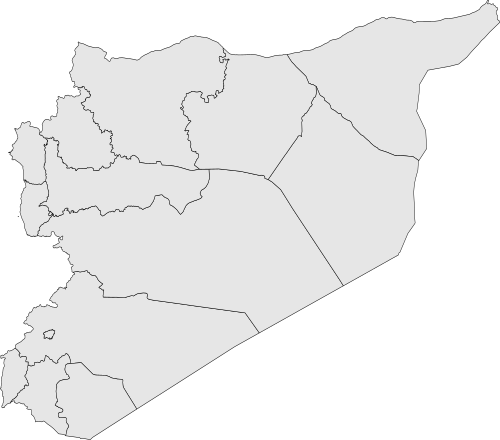
The administrative structure of Syria is organized into a hierarchical system designed to manage the country's governance across various levels of locality. This system ensures that each region, from large provinces to small sub-districts, has a designated center for administration.
At the highest level, Syria is divided into 14 governorates. These governorates are further subdivided into 65 districts, which are then broken down into 284 sub-districts (known as nahiyas). Almost every administrative level possesses its own capital or center, providing a structured framework for regional management.
Key Facts
- 14 Governorates: The primary administrative divisions of Syria.
- 65 Districts: Secondary divisions; 64 of these have an official regional capital.
- 284 Sub-districts: The smallest administrative units, each with its own center.
- Unique Status of Damascus: The city of Damascus serves simultaneously as a governorate, a district, and a sub-district.
- Rif Dimashq Exception: The Rif Dimashq Governorate and the Markaz Rif Dimashq district are the only divisions without their own official administrative centers; headquarters for Rif Dimashq are located in Damascus.
- Naming Conventions: Most districts and sub-districts share the name of their administrative center, except for the Mount Simeon District and Mount Simeon Nahiyah, both of which are centered in the city of Aleppo.
Governorate and District Capitals
The majority of Syria's districts are named after the city that serves as their administrative hub. For instance, the Homs District is centered in the city of Homs, and the Latakia District is centered in Latakia. However, as noted, the Mount Simeon area is a notable exception where Aleppo serves as the center.
Population data for these centers is based on the official 2004 census, highlighting the significant urban concentration in the country's largest metropolitan areas.
Major Urban Centers and Populations
The largest cities in Syria often serve as the centers for both their respective governorates and districts. Aleppo and Damascus stand as the most populous hubs, with Aleppo's metropolitan area recording over 2.1 million residents and Damascus city recording over 1.4 million in 2004.
| City (English) | Population | District | Governorate |
|---|---|---|---|
| Aleppo | 2,132,100 | Mount Simeon | Aleppo |
| Damascus | 1,414,913 | Damascus | Damascus |
| Homs | 652,609 | Homs | Homs |
| Latakia | 383,786 | Latakia | Latakia |
| Hama | 312,994 | Hama | Hama |
| Raqqa | 220,488 | Raqqa | Raqqa |
| Deir ez-Zor | 211,857 | Deir ez-Zor | Deir ez-Zor |
| Hasakah | 188,160 | Hasakah | Hasakah |
Other Notable Urban Areas
Beyond the primary governorate capitals, Syria contains numerous significant cities that play vital roles in their respective regions. In the Rif Dimashq Governorate, cities such as Sayyidah Zaynab (136,427) and Jaramana (114,363) represent substantial population centers despite not being the primary governorate capital.
In the Idlib Governorate, cities like Khan Shaykhun and Saraqib are key urban points, while the Daraa Governorate includes important centers such as Bosra and Nawa.
Frequently Asked Questions
How many governorates are there in Syria?
Syria is administratively divided into 14 governorates.
Which district does not have an official regional center?
Markaz Rif Dimashq is the only district among the 65 that has no official regional center.
What is a nahiyah?
A nahiyah is a sub-district, the third and smallest level of administrative division in Syria, below governorates and districts.
Where is the administrative center for the Mount Simeon District?
The administrative center for the Mount Simeon District (and the Mount Simeon Nahiyah) is the city of Aleppo.
What is unique about the city of Damascus in the administrative system?
Damascus is unique because it functions simultaneously as a governorate, a district, and a sub-district.