Synsacrum: The Specialized Skeletal Structure of Birds and Dinosaurs
In the world of comparative anatomy, few structures illustrate the demands of flight and locomotion as clearly as the synsacrum. This complex bone is a specialized skeletal feature found in birds, certain dinosaurs, pterosaurs, and xenarthran mammals. Unlike the flexible spines of many mammals, the synsacrum represents a strategic fusion of vertebrae designed for maximum stability.
What is the Synsacrum?
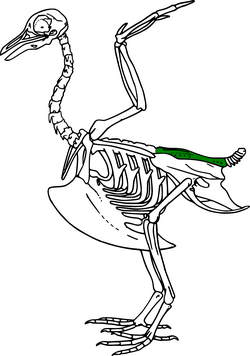
The synsacrum is an extended sacrum—the bone typically connecting the spine to the pelvis—formed by the fusion of several different types of vertebrae. This complex structure is created when some posterior thoracic (chest), lumbar (lower back), sacral, and a few anterior caudal (tail) vertebrae merge into a single, rigid unit.
Externally, the synsacrum corresponds to the area of the rump. By fusing these elements, the body creates a reinforced chassis that can withstand the physical stresses of specific biological activities.
The Avian Pelvis and Flight
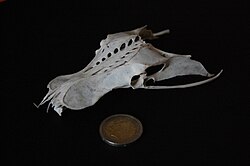
In birds, the synsacrum is a cornerstone of the avian pelvis. Depending on the species, the innominate bones (the hip bones) are fused with the synsacrum to varying degrees. This results in a rigid structure that is far more extensive than the pelvis found in mammals.
This rigidity is not accidental; it is a biological requirement that supports three critical functions: flight, locomotion, and respiration. By providing a stable center of gravity and a firm anchor for the legs, the synsacrum allows birds to maintain balance and efficiency while moving through the air and on land.
The Pygostyle and Tail Structure
While the synsacrum provides rigidity to the midsection, the posterior end of the bird's spine remains more flexible. A few free caudal vertebrae follow the synsacrum, ending in a specialized bone called the pygostyle. The pygostyle serves as the attachment point for the long, stiff tail feathers used for steering and stability.
The Glycogen Body
An intriguing feature of the avian synsacrum is a swollen central section designed to accommodate the glycogen body. This is an organ whose exact function remains unclear to scientists, though current hypotheses suggest it may be associated with the bird's sense of balance.
Key Facts
- Composition: Formed by the fusion of posterior thoracic, lumbar, sacral, and anterior caudal vertebrae.
- Occurrence: Found in birds, pterosaurs, some dinosaurs, and xenarthran mammals.
- Purpose: Provides a rigid structure essential for avian flight, breathing, and movement.
- Tail Attachment: The pygostyle, located after the synsacrum, supports the tail feathers.
- Unique Feature: Houses the glycogen body, which may be linked to balance.
Summary of Synsacrum Characteristics
| Feature | Description | Biological Significance |
|---|---|---|
| Fused Vertebrae | Thoracic, lumbar, sacral, and caudal | Increased skeletal rigidity |
| Avian Pelvis | Synsacrum fused with innominate bones | Support for flight and locomotion |
| Pygostyle | Terminal caudal vertebra | Anchor for stiff tail feathers |
| Glycogen Body | Organ in the central synsacrum | Potential role in balance |
Frequently Asked Questions
Which animals possess a synsacrum?
The synsacrum is found in birds, pterosaurs, certain dinosaurs, and xenarthran mammals.
How does the synsacrum differ from a mammalian pelvis?
The synsacrum creates a much more extensive and rigid structure than the mammalian pelvis, which is necessary to meet the physical demands of flight and avian respiration.
What is the purpose of the pygostyle?
The pygostyle is the final bone following the synsacrum and free caudal vertebrae; it provides the necessary attachment point for a bird's long, stiff tail feathers.
What is the glycogen body?
The glycogen body is an organ located in the swollen central section of the synsacrum. While its exact function is not yet fully understood, it is believed to be associated with balance.
Which vertebrae are involved in the formation of the synsacrum?
It is formed by the fusion of some posterior thoracic vertebrae, the lumbar and sacral vertebrae, and a few anterior caudal vertebrae.