pterosaursflying reptilesPterodactylusQuetzalcoatlusMesozoic era

Pterosaurs: The Masters of Mesozoic Skies

Pterosaurs: The Masters of Mesozoic Skies For over 160 million years, the skies of the Mesozoic Era were dominated by pterosaurs (meaning "wing lizards"). These extraordinary reptiles wer...

Pterosaurs: The Masters of Mesozoic Skies

For over 160 million years, the skies of the Mesozoic Era were dominated by pterosaurs (meaning "wing lizards"). These extraordinary reptiles were the first vertebrates to evolve powered flight, appearing in the Late Triassic and thriving until the mass extinction event at the end of the Late Cretaceous, approximately 66 million years ago.

Far from being mere "gliders," pterosaurs were highly specialized aviators with a diverse range of sizes, diets, and ecological niches. From small, insectivorous forms to the gargantuan azhdarchids that stood as tall as giraffes on the ground, these creatures represent one of the most successful evolutionary experiments in aerial locomotion.
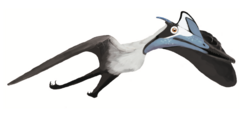
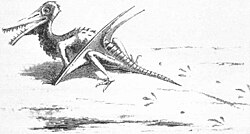
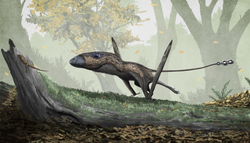
Life reconstruction of Pterodactylus
: Life reconstruction of Pterodactylus

Key Facts

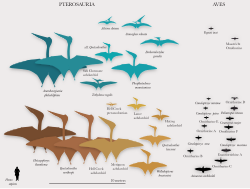
Wide variation in Late Cretaceous pterosaur size, compared to birds and a human
  • Temporal Range: Late Triassic to Late Cretaceous (228–66 Ma).
  • Flight Mechanism: Powered flight using a membrane of skin and muscle fiber supported by an elongated fourth finger.
  • Body Covering: Covered in pycnofibers, branched filaments similar to hair or feathers.
  • Locomotion: Quadrupedal on land, using both forelimbs and hindlimbs for movement.
  • Diversity: Ranged from small species to giants like Quetzalcoatlus.

Anatomy and Physiology
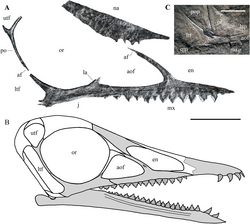
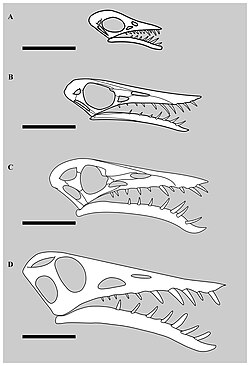
Skull of an early pterosaur, Seazzadactylus

The Skull and Sensory Systems

Pterosaur skulls varied wildly depending on their diet. Some possessed long, toothless beaks, while others had complex dental arrangements. A notable feature in many species was the presence of extensive cranial crests, which may have served for display or aerodynamic stability.
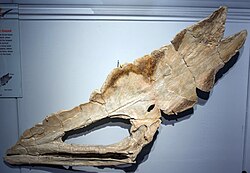
Skull of Thalassodromeus (front on left), showing extensive crest, nasantorbital fenestra, and toothless beak
: Skull of Thalassodromeus (front on left), showing extensive crest, nasantorbital fenestra, and toothless beak

The Flight Apparatus

The most defining feature of the pterosaur was the wing. Unlike birds, which use feathers, pterosaurs utilized a patagium—a taut membrane of skin reinforced by muscle fibers and actinofibrils. This membrane was supported primarily by a massively elongated fourth finger.

The wing structure was complex, consisting of several parts: the propatagium (leading edge), the brachiopatagium (main wing), and the cruropatagium (membrane between the legs).
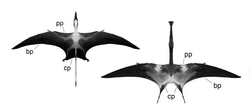
Two pterosaurs (Scaphognathus and Balaenognathus) in dorsal view, with wing parts labeled(bp: brachiopatagium, cp: cruropatagium, pp: propatagium)
: Two pterosaurs (Scaphognathus and Balaenognathus) in dorsal view, with wing parts labeled(bp: brachiopatagium, cp: cruropatagium, pp: propatagium)

Torso and Skeletal Support

To withstand the stresses of flight, pterosaurs evolved a highly specialized skeleton. Many possessed a notarium—a fused section of the thoracic vertebrae that provided a rigid anchor for the shoulder girdle and the large breastbone (sternum).
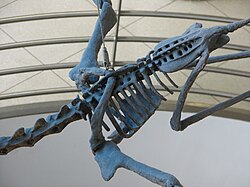
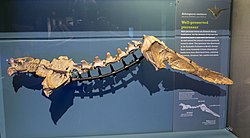
Pterosaur torso showing the fused front of the torso (notarium), shoulder girdle connected to it and the large breastbone, and the fused pelvic region
: Pterosaur torso showing the fused front of the torso (notarium), shoulder girdle connected to it and the large breastbone, and the fused pelvic region

Pycnofibers and Insulation

Evidence from fossils like Tupandactylus reveals that pterosaurs were not scaly like modern lizards. Instead, they were covered in pycnofibers, complex branched filaments that likely provided insulation, suggesting a higher metabolic rate than typical reptiles.
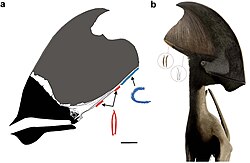
Diagram showing complex branched filaments in Tupandactylus, with a reconstruction at right showing thick pelt of pycnofibers
: Diagram showing complex branched filaments in Tupandactylus, with a reconstruction at right showing thick pelt of pycnofibers

Paleobiology and Behavior

Skull and torso of Anhanguera, showing long neck and compact torso

Flight and Respiration

Pterosaurs likely employed a respiratory system similar to modern birds, utilizing internal air sacs to maintain a constant flow of oxygen through the lungs. This high-efficiency system was essential for the metabolic demands of powered flight.
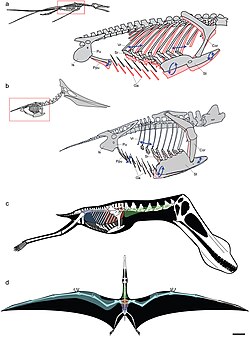
Diagrams showing breathing motion (top two) and internal air sac system (bottom two)
: Diagrams showing breathing motion (top two) and internal air sac system (bottom two)

Terrestrial Locomotion

Contrary to early depictions of pterosaurs as clumsy on land, fossil trackways (such as Haenamichnus) prove they were efficient quadrupeds. They launched into the air using a "quadrupedal launch," vaulting off their front limbs to achieve the necessary lift.
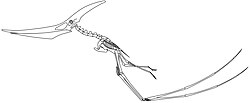
Skeletal reconstruction of a quadrupedally launching Pteranodon longiceps
: Skeletal reconstruction of a quadrupedally launching Pteranodon longiceps

Diet and Ecological Niches

Pterosaur diets were incredibly diverse. While many were piscivorous (fish-eating), others occupied different niches:

  • Piscivores: Pteranodontoids likely fed on fish at sea.
  • Terrestrial Predators: Azhdarchoids, such as Kariridraco, hunted land-based prey.
  • Generalists: Dimorphodon challenged the idea that all pterosaurs ate fish.
  • Herbivores: Recent evidence of phytoliths suggests some species may have eaten plants.
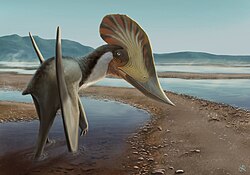
Azhdarchoid pterosaurs such as Kariridraco fed on terrestrial prey
: Azhdarchoid pterosaurs such as Kariridraco fed on terrestrial prey

Evolutionary History

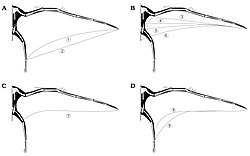
Various configurations proposed for the wings of pterosaurs

Origins and Classification

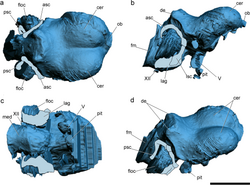
Pterosaurs are part of the Archosauria clade. Their closest relatives are theorized to be the lagerpetids, which share significant anatomical and neuroanatomical similarities. Early primitive forms, such as Eudimorphodon, show the transition toward the specialized flight forms of the later Cretaceous.
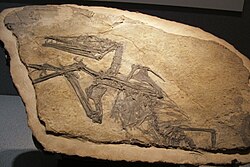
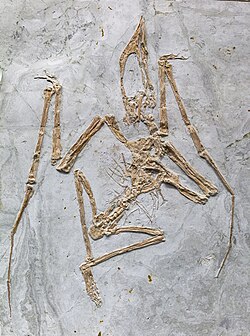
Fossil of Eudimorphodon, one of the most primitive pterosaurs
: Fossil of Eudimorphodon, one of the most primitive pterosaurs

The Path to Extinction

Pterosaurs reached their peak size and diversity in the Late Cretaceous with the azhdarchids. However, they vanished entirely during the Cretaceous-Paleogene (K-Pg) extinction event 66 million years ago, leaving the skies to the birds.
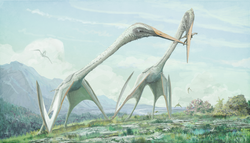
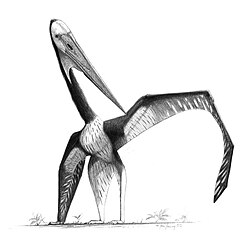
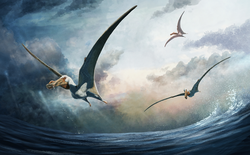
Azhdarchid pterosaurs such as Arambourgiana thrived at the end of the Cretaceous
: Azhdarchid pterosaurs such as Arambourgiana thrived at the end of the Cretaceous

Feature Description Example/Detail
Wing Support Elongated 4th finger Supported the patagium membrane
Body Covering Pycnofibers Branched filaments for insulation
Stance Quadrupedal Walked on four limbs
Respiration Air sac system Bird-like high-efficiency breathing
Time Period Late Triassic – Late Cretaceous 228 to 66 million years ago

Frequently Asked Questions
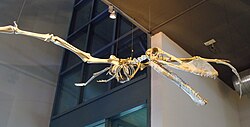
Skeletal reconstruction of Maaradactylus, showing outstretched wings
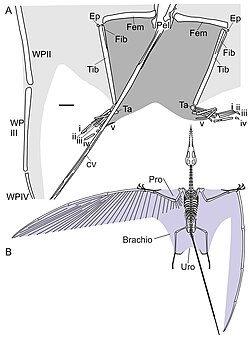
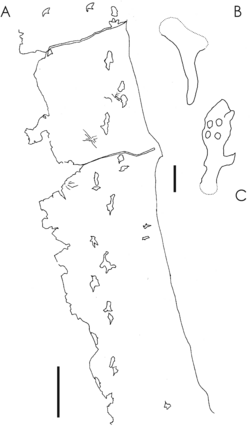
Diagram of hindlimb and uropatagium anatomy of early pterosaur Sordes (A), and in context of entire skeleton in related genus Rhamphorhynchus (B)
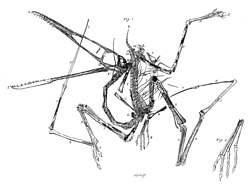
Engraving of the original Pterodactylus antiquus specimen by Egid Verhelst II, 1784
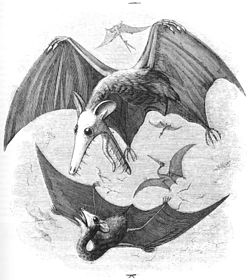
Newman's marsupial pterosaurs
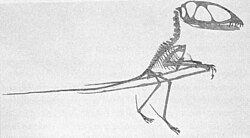
Historical reconstruction of Dimorphodon as a biped by Seeley
Early reconstruction of Rhamphorhynchus
This drawing of Zhejiangopterus by John Conway exemplifies the "new look" of pterosaurs
Specimen of Sinopterus, one of many excellent pterosaur fossils from Liaoning, China
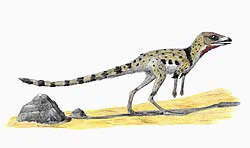
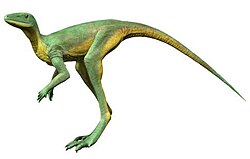
Life restoration of Scleromochlus, an archosauromorph theorized to be related to pterosaurs.
Life restoration of Lagerpeton. Lagerpetids share many anatomical and neuroanatomical similarities with pterosaurs and may be close relatives
Brain endocast of Allkaruen
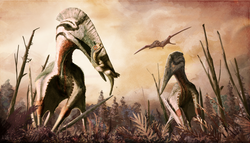
The fossil trackways show that pterosaurs like Hatzegopteryx were quadrupeds, and some rather efficient terrestrial predators.
The probable azhdarchid trace fossil Haenamichnus uhangriensis.
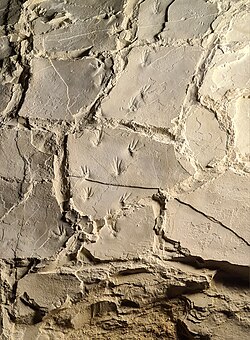
Fossil pterosaur footprints, Pterosaur Beach (France).
Modern interpretations of the diet of Dimorphodon have challenged traditional ideas of all pterosaurs being piscivorous
Ctenochasmatoid pterosaurs such as Lusognathus may have had specialised niches in freshwater ecosystems
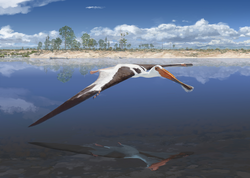
Many pteranodontoid pterosaurs such as Haliskia likely fed on fish at sea
Theropod dinosaur Irritator shown feeding on a pterosaur
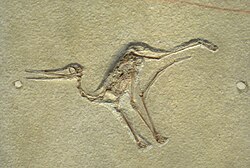
Fossil pterodactyloid juvenile from the Solnhofen Limestone
Growth series of Rhamphorhynchus specimens showing changes throughout life
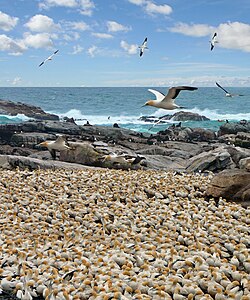
Some pterosaurs may have reproduced in colonies similar to those of modern seabirds
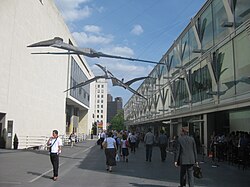
Quetzalcoatlus models on the South Bank, created by Mark Witton for the Royal Society's 350th anniversary
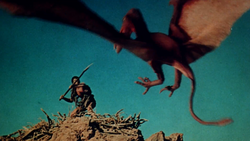
Scene from When Dinosaurs Ruled the Earth depicting an outsized Rhamphorhynchus
Versperopterylus is one of the only pterosaurs with grasping feet, despite popular depictions of them on many pterosaurs

Were pterosaurs dinosaurs?

No. While they are closely related as archosaurs, pterosaurs are a distinct group of flying reptiles and are not classified as dinosaurs.

How did pterosaurs take off?

Research suggests they used a quadrupedal launch, using their powerful forelimbs to vault themselves into the air, rather than jumping with their hind legs.

What were pycnofibers?

Pycnofibers were hair-like, branched filaments that covered the bodies of pterosaurs, serving as insulation to help regulate body temperature.

What was the largest pterosaur?

The azhdarchids, such as Quetzalcoatlus, were the largest, with some species reaching massive sizes that allowed them to act as terrestrial predators.

Did all pterosaurs eat fish?

No. While many were piscivorous, others were insectivores, terrestrial carnivores, or potentially herbivores, depending on their species and environment.

References

  1. /ˈtɛrəsɔːr, ˈtɛr-/ TERR-ə-sor, TERR-oh-[3][4]
  2. from Greek pteron and sauros, meaning 'wing lizard'[5]
  3. Andres, B.; Clark, J.; Xu, X. (2014). "The Earliest Pterodactyloid and the Origin of the Group". Current Biology. 24 (9): 1011–16. Bibcode:2014CBio...24.1011A. doi:10.1016/j.cub.2014.03.030. PMID 24768054.
  4. Baron, Matthew G. (2020). "Testing pterosaur ingroup relationships through broader sampling of avemetatarsalian taxa and characters and a range of phylogenetic analysis techniques". PeerJ. 8 e9604. doi:10.7717/peerj.9604. PMC 7512134. PMID 33005485.
  5. Jones, Daniel (2003) [1917], Peter Roach; James Hartmann; Jane Setter (eds.), English Pronouncing Dictionary, Cambridge: Cambridge University Press, ISBN 978-3-12-539683-8