Tarsometatarsus: The Specialized Leg Bone of Birds and Dinosaurs
In the complex architecture of the avian skeleton, few bones are as specialized as the tarsometatarsus. Found in the lower leg of birds and certain non-avian dinosaurs, this unique structure is a prime example of how biological fusion creates strength and efficiency for movement. While it may appear as a single bone, it is actually a composite structure that serves a critical role in how these animals stand, walk, and fly.
What is the Tarsometatarsus?
The tarsometatarsus is a bone formed by the fusion of several elements that remain separate in other animals. Specifically, it is homologous—meaning it shares a common evolutionary origin—to the tarsus (the ankle bones) and the metatarsals (the foot bones) found in mammals. Because of this fusion, the bone provides a rigid yet lightweight support system.
Despite its technical name, in the context of flying birds, this structure is frequently referred to simply as the shank, tarsus, or metatarsus.
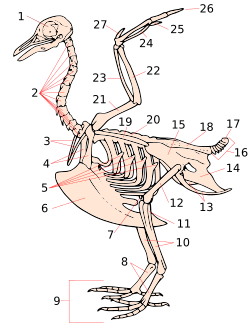
Evolutionary Development and Fusion
The process of tarsometatarsal fusion did not happen uniformly; it occurred in different ways and to varying degrees throughout the evolution of birds. The nature of this fusion helps paleontologists and biologists distinguish between different avian groups.
Modern Birds (Neornithes)
In Neornithes, the bones are joined along their entire length. However, the fusion is most thorough at the distal end, which is the part of the bone furthest from the body (the metatarsal end).
Mesozoic Avialans (Enantiornithes)
The Enantiornithes, a group of birds from the Mesozoic era, exhibited a different pattern. In these creatures, fusion was complete at the proximal end (the tarsal end closest to the body), while the distal metatarsi remained partially distinct.
Parallel Evolution in Dinosaurs
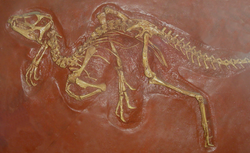
While the tarsometatarsus is a hallmark of avian anatomy, birds were not the first animals to develop this trait. In a striking instance of parallel evolution—where similar traits evolve independently in unrelated lineages—the Heterodontosauridae also possessed tarsometatarsi.
The Heterodontosauridae were tiny ornithischian dinosaurs that were distantly related to birds. Remarkably, the oldest remains of this group date back to the Late Triassic, more than 200 million years ago. This means they possessed this fused bone structure nearly 100 million years before the first birds with tarsometatarsi appeared.
Key Facts
- Composition: Formed by the fusion of tarsal (ankle) and metatarsal (foot) bones.
- Occurrence: Found in birds and some non-avian dinosaurs like Heterodontosauridae.
- Parallel Evolution: Heterodontosaurids developed this bone nearly 100 million years before birds did.
- Anatomical Variation: Modern birds (Neornithes) have stronger fusion at the distal end, whereas Enantiornithes had stronger fusion at the proximal end.
- Mammalian Equivalent: Homologous to the separate ankle and foot bones of mammals.
| Group | Fusion Location (Primary) | Evolutionary Period |
|---|---|---|
| Neornithes (Modern Birds) | Distal (Metatarsal) end | Modern |
| Enantiornithes | Proximal (Tarsal) end | Mesozoic |
| Heterodontosauridae | Fused (Parallel Evolution) | Late Triassic |
Frequently Asked Questions
Is the tarsometatarsus the same as a human ankle?
Not exactly. While it is homologous to the human tarsus and metatarsals, the tarsometatarsus is a single fused bone, whereas humans have separate bones for the ankle and the mid-foot.
Why did birds evolve a fused leg bone?
Fusion generally provides greater structural strength and stability, which is essential for the landing forces and locomotion requirements of avian species.
What is the difference between the proximal and distal ends?
The proximal end is the part of the bone closest to the animal's torso, while the distal end is the part furthest away, closer to the toes.
Did all dinosaurs have a tarsometatarsus?
No. While it is found in birds and the Heterodontosauridae, it is not a universal trait across all dinosaur taxa.
What is the relationship between the tarsometatarsus and the carpometacarpus?
They are analogous structures; while the tarsometatarsus is a fused bone in the leg, the carpometacarpus is a similarly fused bone found in the hands (wings) of birds.