Tibiotarsus: The Specialized Leg Bone of Birds
In the complex architecture of avian anatomy, the leg is engineered for a variety of functions, from perching and walking to swimming and takeoff. Central to this structure is the tibiotarsus, a robust bone that plays a critical role in the bird's locomotion and support.
What is the Tibiotarsus?
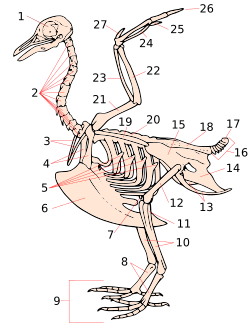
The tibiotarsus is the primary large bone located between the femur (the thigh bone) and the tarsometatarsus (the lower leg/foot bone). Anatomically, it is not a single original bone but rather a fusion of the tibia—the shin bone—and the proximal (upper) portion of the tarsus.
This fusion creates a strong, streamlined element capable of absorbing the impact of landing and providing the leverage necessary for movement.
Comparative Anatomy and Evolution
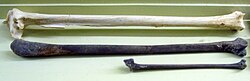
While the tibiotarsus is a hallmark of bird anatomy, similar skeletal structures have appeared in other prehistoric lineages. Specifically, the Heterodontosauridae, a group of small ornithischian dinosaurs from the Mesozoic era, possessed a similar bone structure in their feet.
It is important to note that Heterodontosauridae were not ancestors of birds. Instead, the similarity between their leg bones and those of modern birds is a result of convergent evolution. This occurs when unrelated species independently evolve similar traits as a result of having to adapt to similar environments or ecological niches.
Key Facts
- The tibiotarsus is located between the femur and the tarsometatarsus.
- It is formed by the fusion of the tibia and the proximal part of the tarsus.
- Similar structures were found in the unrelated Mesozoic Heterodontosauridae dinosaurs.
- The anatomical similarity between birds and Heterodontosauridae is attributed to convergent evolution.
| Feature | Description |
|---|---|
| Position | Between femur and tarsometatarsus |
| Composition | Fused tibia and proximal tarsus |
| Occurrence | Birds and Heterodontosauridae (dinosaurs) |
| Evolutionary Driver | Convergent evolution (in non-avian species) |
Frequently Asked Questions
Where exactly is the tibiotarsus located?
The tibiotarsus is the large bone in a bird's leg situated between the femur (upper leg) and the tarsometatarsus (lower leg).
How is the tibiotarsus formed?
It is created through the fusion of the tibia and the proximal part of the tarsus.
Did dinosaurs have a tibiotarsus?
Yes, a similar structure occurred in the Heterodontosauridae, which were small ornithischian dinosaurs from the Mesozoic era.
Are birds related to Heterodontosauridae because of this bone?
No. These two groups are unrelated; the similarity in their foot bones is an example of convergent evolution, where similar traits evolve independently.
What is the difference between the tibia and the tibiotarsus?
The tibia is a standard shin bone, whereas the tibiotarsus is a specialized avian bone resulting from the fusion of the tibia with the upper tarsus.