Syncretism: The Blending of Beliefs and Cultures
Syncretism is the process of combining or merging distinct beliefs, schools of thought, or cultural practices into a new, unified system. While it is most frequently discussed in the context of religion—where features of one faith are absorbed into another—it also manifests in art, mythology, and social customs. Unlike eclecticism, which is the selective adoption of various elements without necessarily blending them, syncretism creates an integrated synthesis that asserts an underlying unity among diverse traditions.
Key Facts
- Definition: The merging of different beliefs or practices into a cohesive, unified system.
- Drivers: Often occurs due to cultural proximity, conquest, or a desire to reduce inter-religious discord.
- Etymology: Likely derived from the Greek sun- ("with") and kerannumi ("mix").
- Political Use: Rulers of multi-ethnic empires have historically used syncretism to foster social cohesion.
- Controversy: Exclusivist religions often view syncretism as a corruption of "pure" truth.
The Origins and Etymology of Syncretism
The word first appeared in English in 1618, stemming from the Modern Latin syncretismus. For a time, it was believed to derive from synkretismós, meaning a "Cretan federation," based on a 1st-century essay by Plutarch describing how Cretans reconciled their differences to face external threats. However, modern scholars suggest a more likely origin from the Greek words for "with" and "mix," reflecting the actual nature of the process.
Religious Syncretism: Integration and Conflict
Religious syncretism occurs when two or more belief systems blend into a new faith, or when a tradition incorporates elements from unrelated sources. This frequently happens in regions where multiple religions coexist or when a conquering force introduces its beliefs without fully eradicating the existing local practices.
The perception of syncretism varies wildly depending on the theological outlook of the practitioners. Non-exclusivist systems often embrace the incorporation of other traditions. In contrast, adherents of "revealed" or exclusivist faiths—such as the Abrahamic religions—may view syncretism as a betrayal of the original faith or a "fatal compromise" of its integrity.
In modern secular contexts, some innovators create syncretic faiths specifically to reduce religious conflict and appeal to a diverse audience. In some historical instances, states have sponsored such movements to limit outside influences, such as the Living Church in Soviet Russia or the German Evangelical Church in Nazi Germany.
Cultural and Societal Impact
Syncretism is often the result of one dominant culture imposing its practices on another. However, historians like Jerry H. Bentley argue that it also serves as a tool for cultural compromise, allowing different values and customs to engage and resonate with one another.
| Region/Period | Syncretic Blend | Outcome/Example |
|---|---|---|
| Hellenistic Period | Greek + Local Deities | Increased kingdom cohesion; rejected by Jews. |
| Roman Empire | Roman + Greek + Provincial | Creation of a unified Greco-Roman pantheon. |
| Mughal Empire | Islam + Hinduism + Others | The Din-i Ilahi ("Divine Faith"). |
| Africa | Abrahamic + Indigenous | Adaptation of Islam/Christianity to local contexts. |
| Ancient Egypt | Kushite + Egyptian | Identification of god Dedun with Osiris. |
Notable Historical Examples
The Greco-Roman World
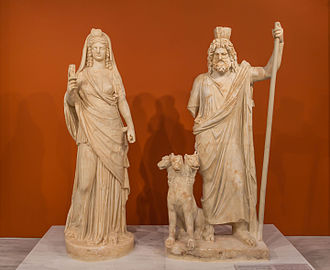
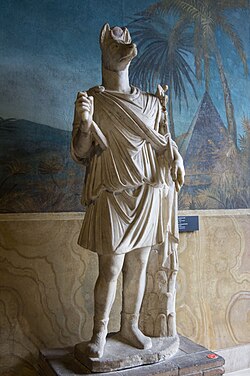
During the Hellenistic and Roman eras, rulers identified local deities with the Greek and Roman pantheons to unify their domains. This produced a blended spiritual landscape where gods were merged based on shared attributes.

The Din-i Ilahi of Akbar the Great
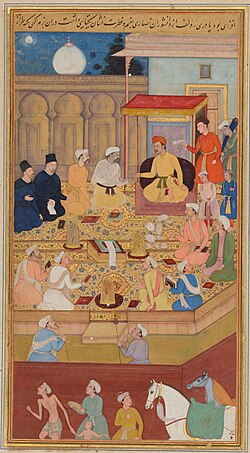
In the 16th century, the Mughal emperor Akbar proposed Din-i Ilahi ("Divine Faith"). This system drew from Islam, Hinduism, Christianity, Jainism, and Zoroastrianism. Rather than a traditional religion with scriptures and a priesthood, it functioned more as a personality cult with a small group of hand-picked disciples. Central to this was the policy of sulh-i-kul, meaning "universal peace," which served as a general imperial administrative policy.

Global Adaptations
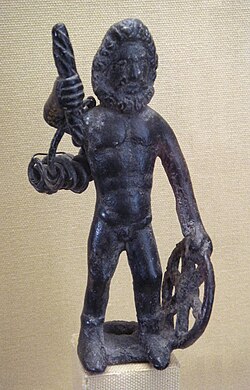
Syncretism is evident in the spread of Christianity into Gaul, Ireland, and Scandinavia, where Germanic and Celtic pagan views were amalgamated into the faith. Similarly, missionaries in North America identified the Algonquian life force, Manitou, with the Christian God. In Africa, many people combine traditional spiritual beliefs with the practice of Islam or Christianity.
Critical Perspectives
Not all scholars view the term "syncretism" neutrally. Véronique Altglas argues that the label can be used to make certain religions seem less legitimate or "impure." She suggests that all religions are inherently syncretic, as they naturally evolve by combining elements from various cultures and spiritualities. From this perspective, the insistence on "pure" religion can be a tool for ethnocentrism.
Frequently Asked Questions
What is the difference between syncretism and eclecticism?
Syncretism involves the integrated merging of different beliefs into a new, cohesive, and unified system. Eclecticism is the selective adoption of elements from various sources without necessarily blending them into a single, new belief system.
Why do some religions reject syncretism?
Exclusivist religions, particularly those that believe in a single "revealed" truth, often view syncretism as a corruption of their faith. They believe that adding incompatible beliefs renders the original religion no longer true.
How did the Roman Empire use syncretism?
The Romans first identified their traditional deities with Greek ones to create a Greco-Roman pantheon, and subsequently identified these gods with the local deities of the provinces they conquered to increase political and social cohesion.
What was the goal of Akbar's Din-i Ilahi?
Akbar sought to create a system that incorporated elements from the various religions of his empire—primarily Islam and Hinduism—to promote universal peace (sulh-i-kul) and unify his diverse subjects.
Is syncretism always a result of conquest?
While conquest often drives syncretism, it also occurs naturally through cultural proximity, trade, and the voluntary desire of innovators to reduce inter-religious discord in diverse societies.